
From April 14 to 19, Milan Art Week returns for its tenth edition and is enriched by a new project, Ghost Track, born from the collaboration between MAC – Milano Art Community and the Municipality of Milan | Culture.
In musical terminology, a ghost track is a hidden track: a piece concealed at the end of an album, invisible in the official tracklist, an unexpected presence that reveals itself only to those who choose to go beyond the intended listening.
Ghost Track brings this device into the museum, activating an unexpected dimension of viewing through a series of interventions by artists who enter into dialogue with the permanent collections of the Civic Museums not dedicated to modern and contemporary art, creating true visual counterpoints to the historical heritage. Inserted within display cases or along exhibition routes, these presences generate perceptual shifts and open up new levels of interpretation.
From April 14 to 19, the works of Thomas Jeppe and Markus Schinwald engage in dialogue with the collections of the Museo del Risorgimento, while a sculpture by Maurizio Cattelan breaks into the Ancient Egypt Gallery of the Castello Sforzesco.
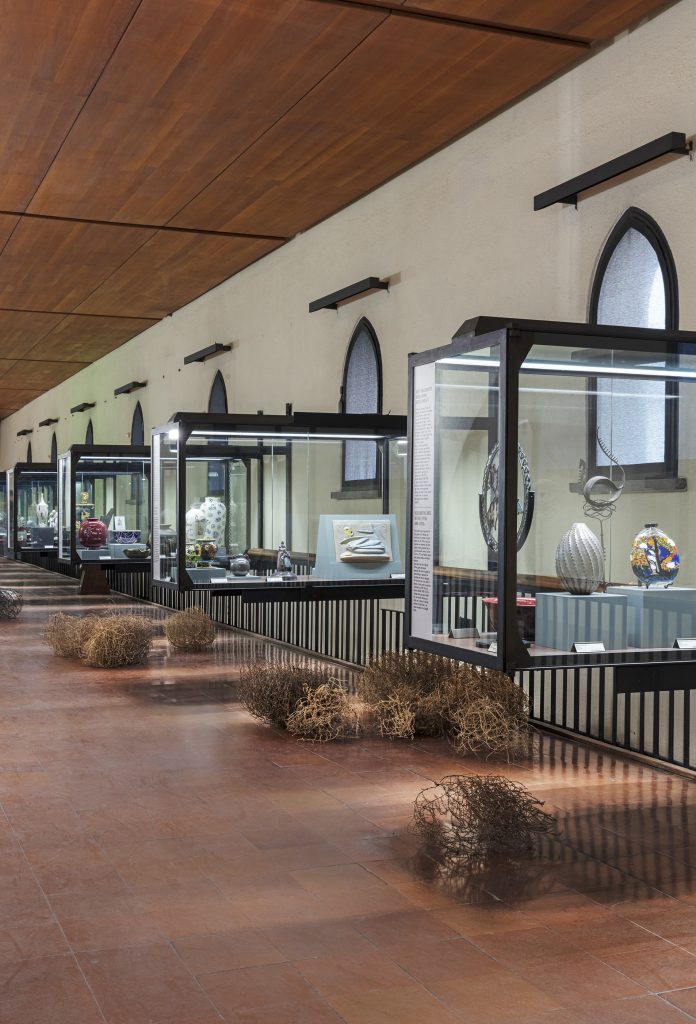
Within the museums of Castello Sforzesco, works are revealed, scattered along the exhibition path, by Alina Chaiderov in the Sala della Griselda, Latifa Echakhch in the Museum of Decorative Arts, Gina Folly and Hans Josephsohn in the Museum of Ancient Art, Matteo Nasini in the Sala della Balla, and Virginia Russolo in the Museum of Ancient Art.
These interventions are joined by installations by Joana Escoval, Vasilis Papageorgiou, RM, and Natália Trejbalová at the Natural History Museum, paintings by Xiao Zhyiu at the Biblioteca Sormani, and an installation by Alessandro Carano at the Parco Sempione Library.
“Ghost Track is an invitation to lose oneself in the city’s museums by following subtle traces, deviations, and apparitions. It is a project that reactivates the gaze, places past and present in tension, and transforms heritage into a living space, traversed by presences that do not impose themselves but rather emerge,” stated the Councillor for Culture, Tommaso Sacchi.