

- This event has passed.



vivian suter: worm in a water glass
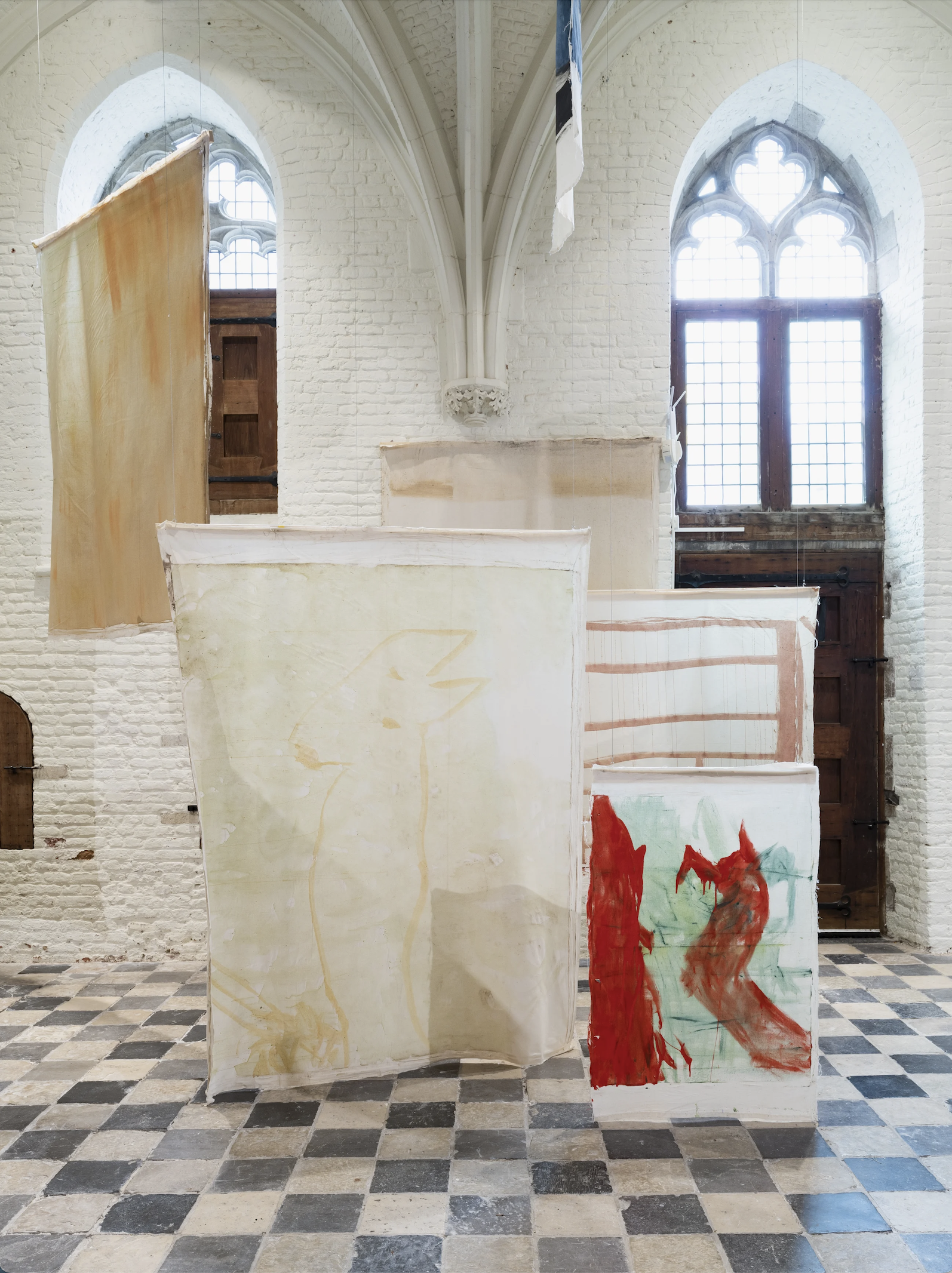
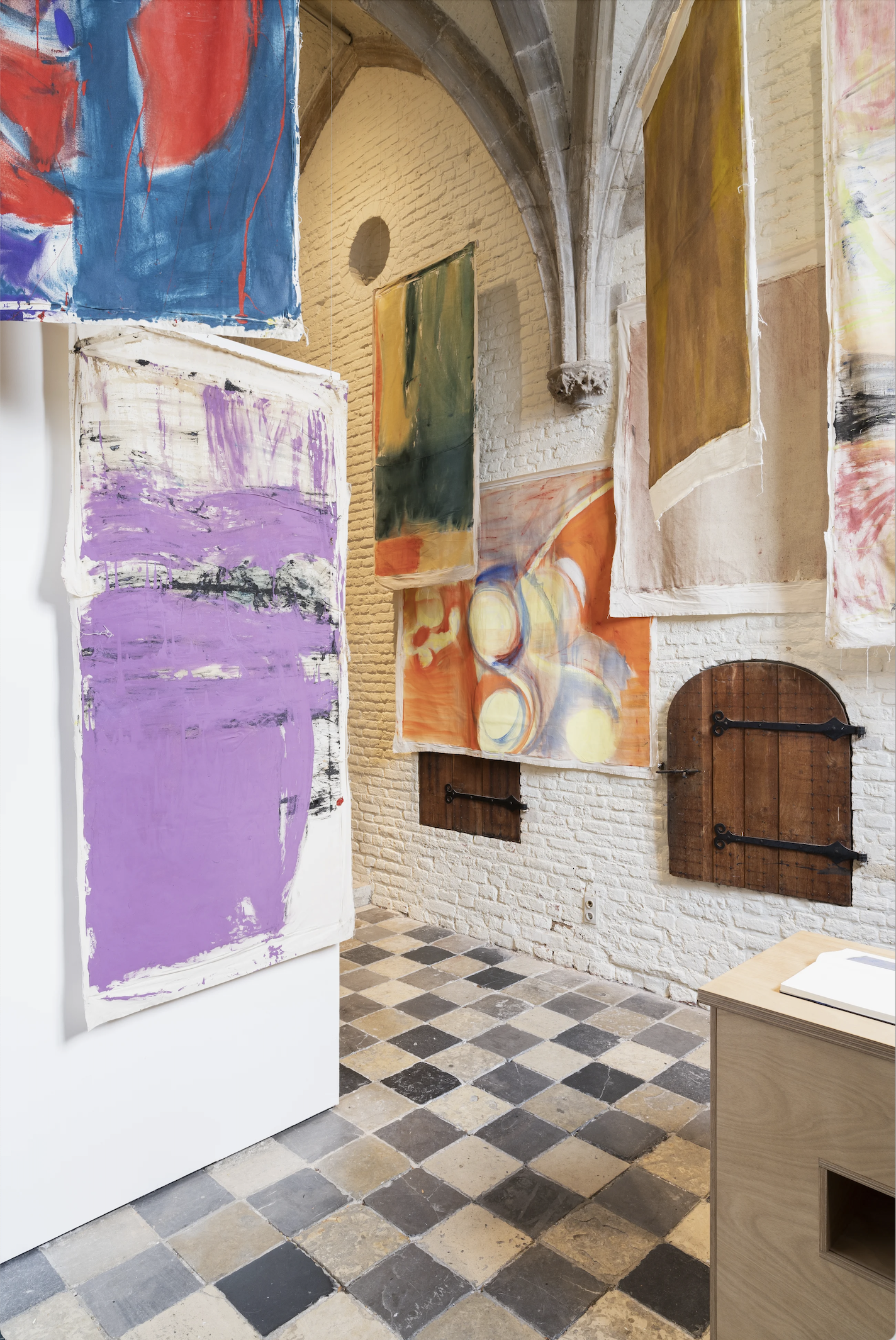
We dared, we went and selected 89 paintings for Vivian Suter’s show at Vleeshal, which we dedicated to the worm in the water glass. It is impossible to consider the paintings of Swiss-Argentinian artist Vivian Suter without discussing where and how she lives and works. Since 1983, Suter has resided on the grounds of a former coffee plantation just outside Panajachel, Guatemala. This small village is situated along the shores of the breath-taking and incredibly deep Lake Atitlán, which is enclosed by volcanoes. Here, in her own refuge just outside the village, the incredibly productive Suter paints whenever she can, in a life guided by recurring rituals. Each day, for example, she decides where to paint: down by the mango tree, which is covered by the shade of tall tropical greenery, or in and around her studio further up the hill. From up there, you could once admire an incredible vista of Atitlán and the surrounding mountain range. In the present, you can only see a dense labyrinth of branches and foliage from trees that the artist planted on the slope of the mountain. Over the years, Suter observed how the view gradually changed, letting it happen, and enjoying every stage of the process equally.
This approach also characterizes Suter’s work. The natural environment, her direct surroundings, have become part of the painterly process. Tropical rains wash away new brushstrokes, leaves and mud stick to drying paint, and her three beloved dogs leave their footprints on the canvases, whether she likes it or not. For Suter, life and making art are not only intertwined, but also possess a certain inevitability.
There is a risk of exotisizing and romanticizing Vivian Suter’s life-work in Guatemala. A repeated version of this story goes as follows: by leaving the vibrant Basel art scene in the 1980s, Suter chose a reclusive life in Panajachel, turning her back on the rest of the world to focus solely on her art. In many ways, however, Suter is in fact very much connected with the world. She exists at an intersection where countless axes of global displacement and struggle come together — be it her family history shaped by migration, recurring natural disasters in the tropics, or histories of colonialism and civil war that determine her conditions in the present. But above all, Vivian Suter is in a constant and reciprocal relationship with her surroundings, being as near to them as possible, by attempting to put them into her paintings, as they exist for her in that very moment. Painting is a liberating act for Suter. At the same time, however, it is also a necessary one.
Considering the above, it is not surprising that Suter has no interest in linear chronology. When her paintings are made, they continue to live. Nature continuously intervenes as co-author, during the painting itself but also in the different stages of piling, hanging, drying, moving and nailing. Most importantly, Vivian’s works do not exist as individual entities. Each time she installs her paintings together in a space, collectively, they
establish a new work of art, formulating other relationships, meanings and perspectives in that present. An exhibition by Suter is much like a unique ecosystem, made up of climatic, sensorial and emotive experiences that are all interconnected.
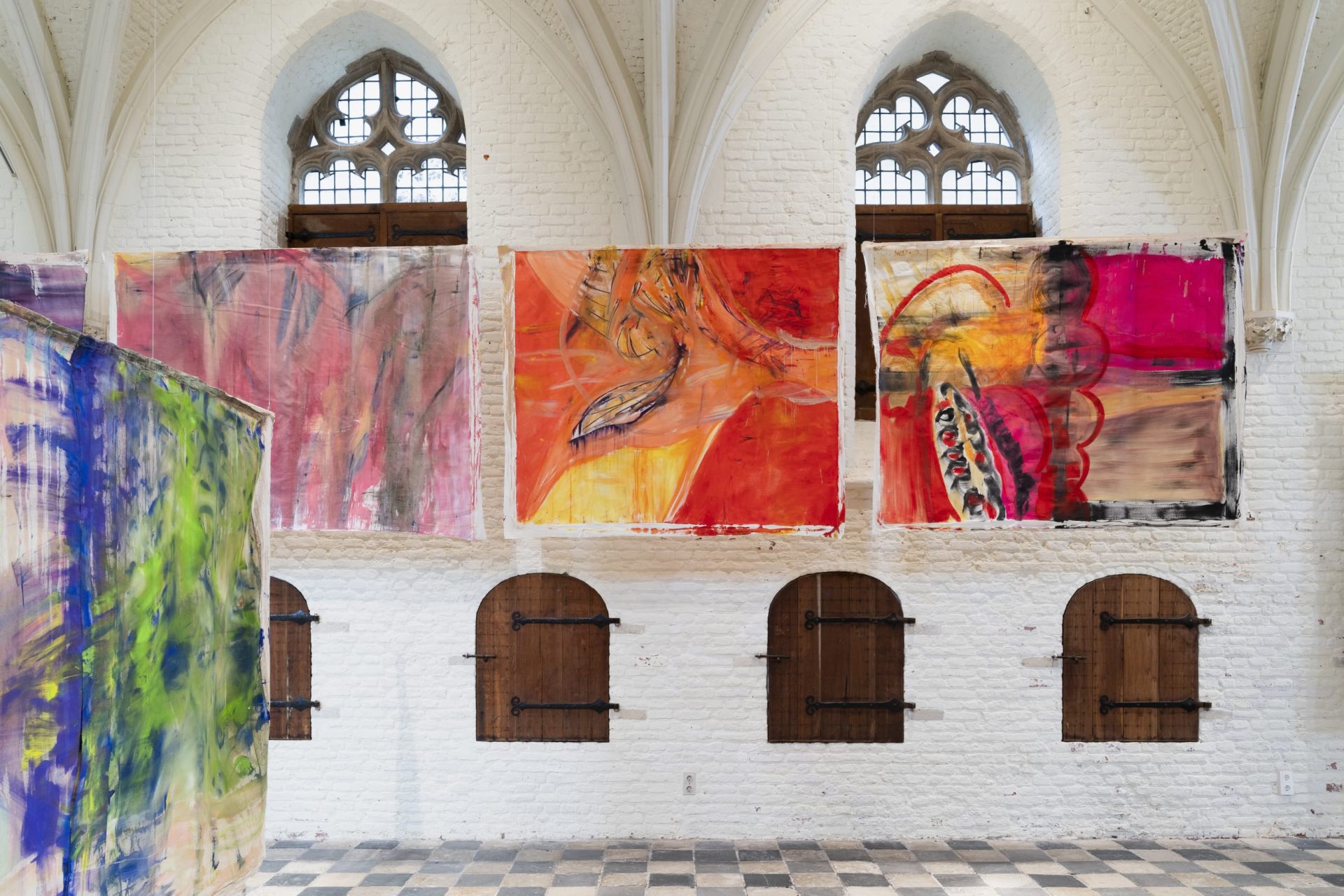
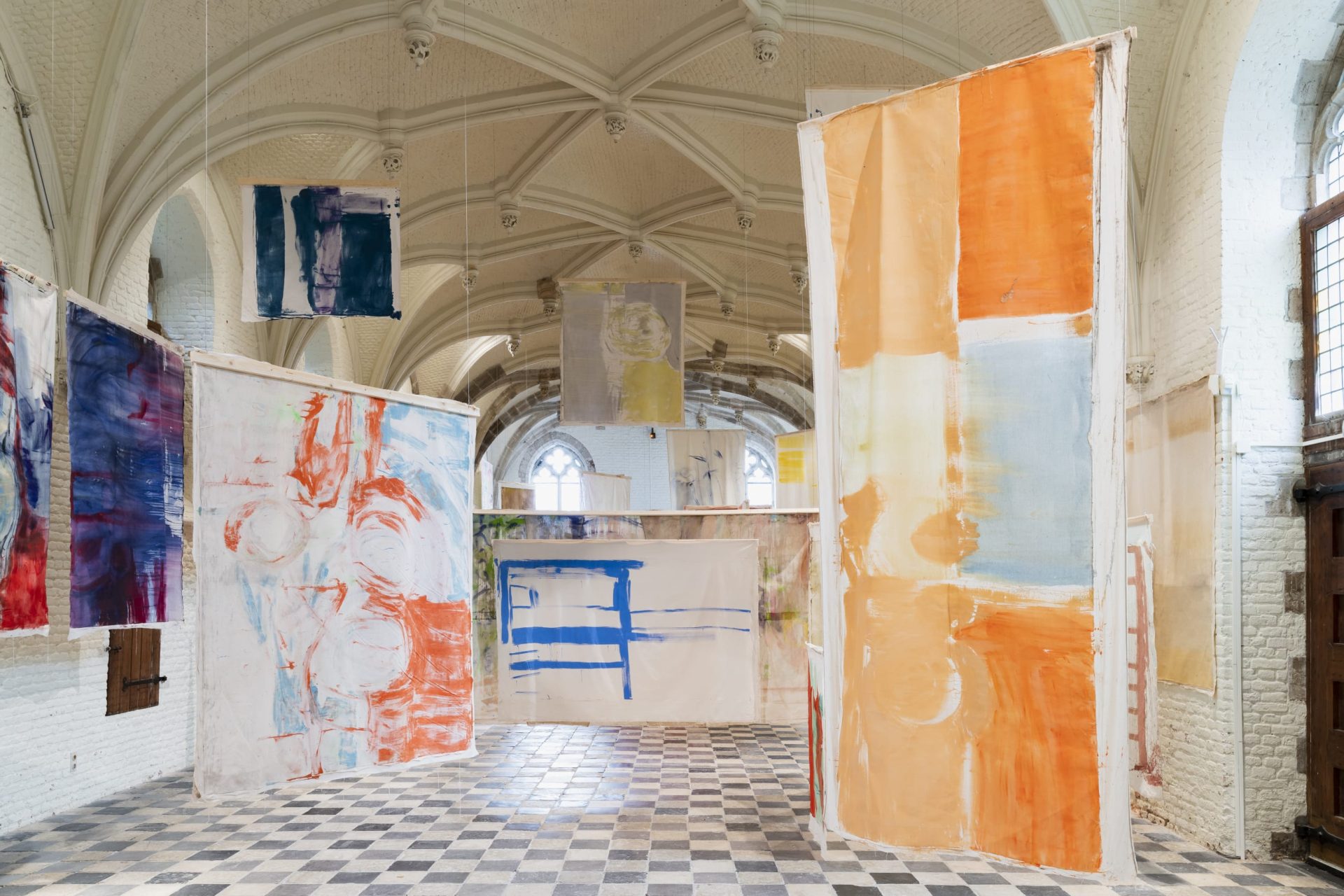
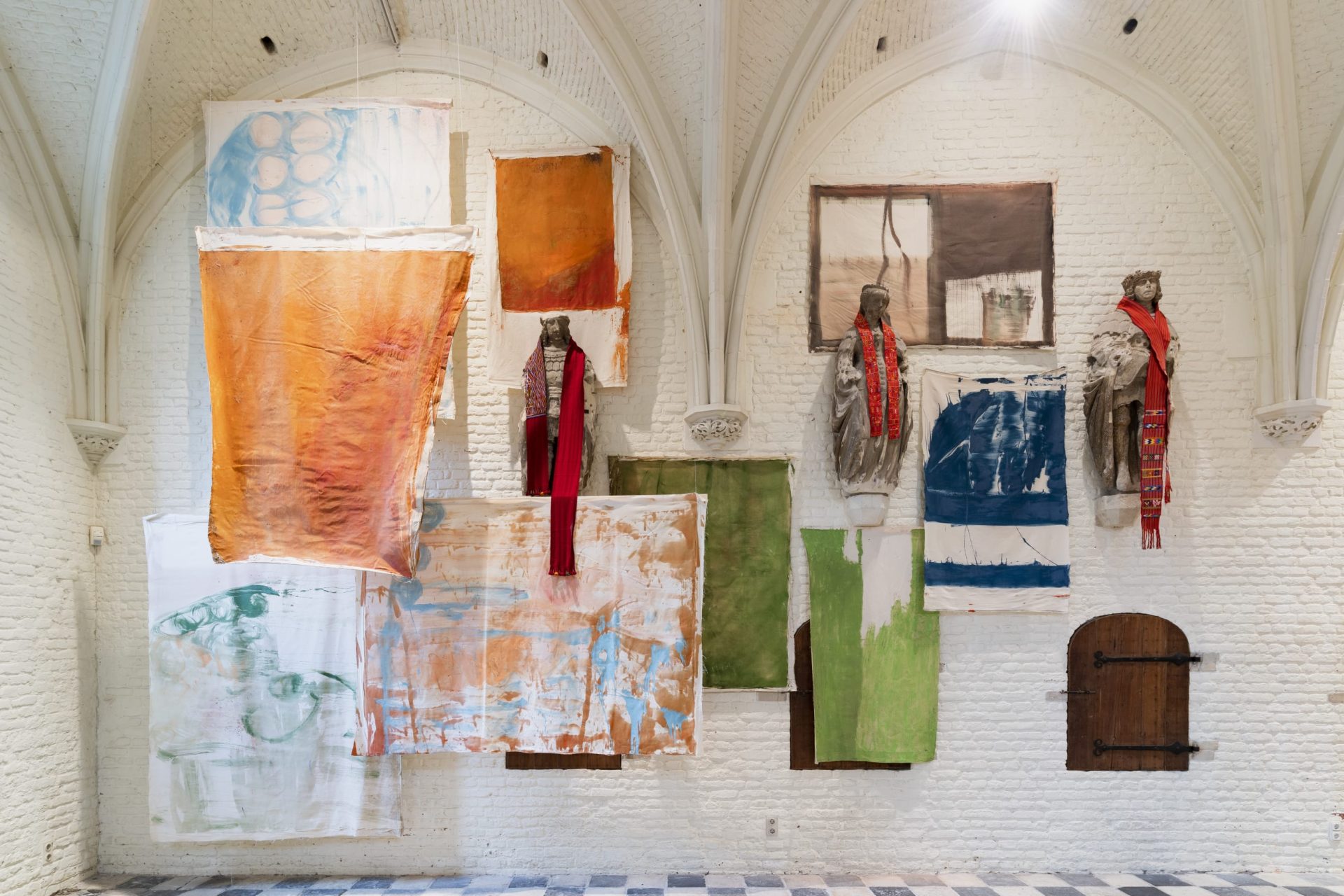
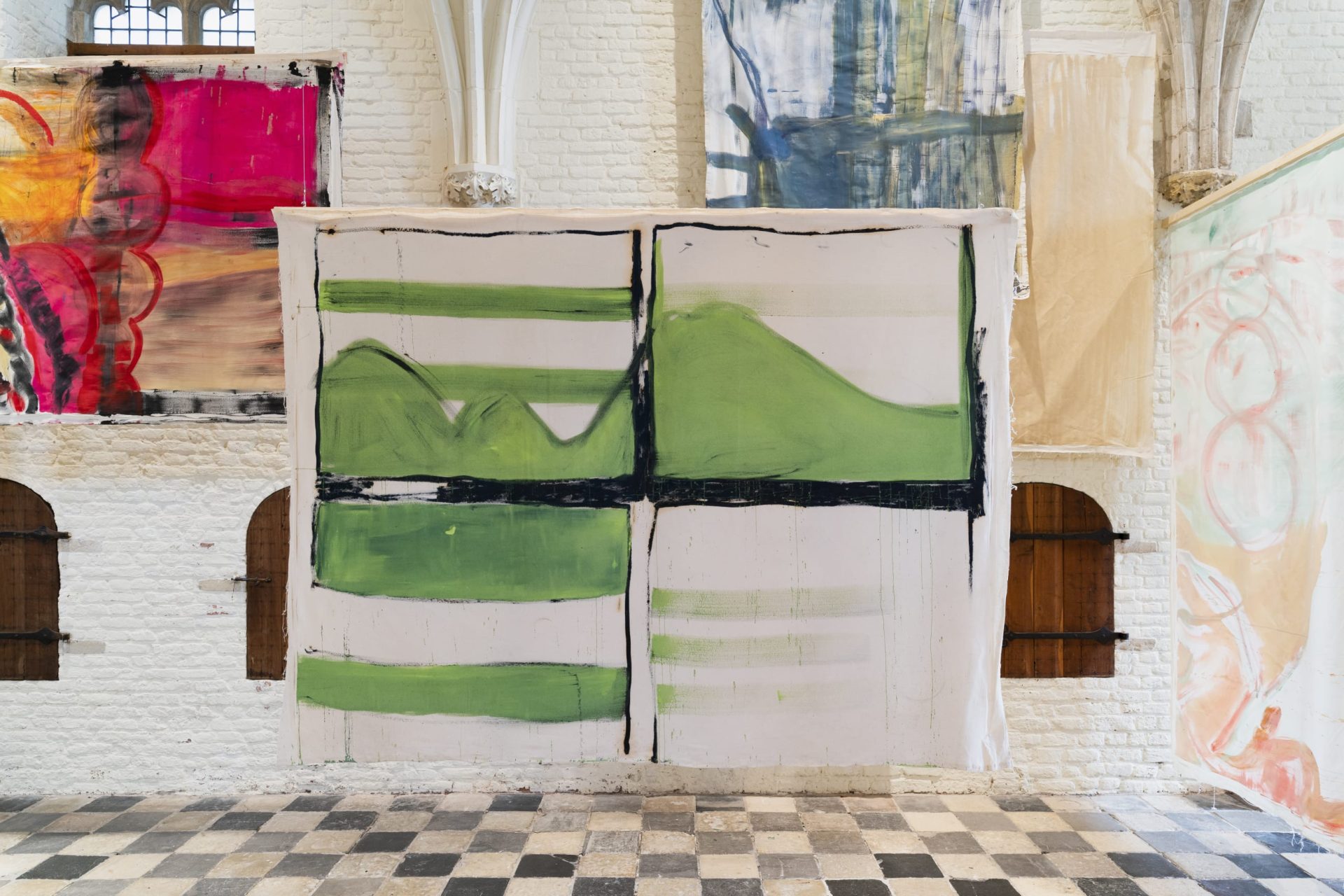
Worm in a Water Glass is an echo of the specific context in which Suter makes her paintings. At the same time, it enters into a dialogue with Vleeshal’s exhibition space. While painting is a solitary act for Suter, installing an exhibition is a collaborative one. The artist and curator spent days at Vleeshal to select the right places for her canvases. Slowly but surely, a cosmos of panoramamic views, a painting corridor, and different colourful confrontations arose. This exhibition invites to explore new and familiar emotions, to get lost in this cosmos and find recurring motifs such as the plants from Suter’s garden, the veranda at her studio, and her three dogs. As Nabila Abdel Nabi has once written: “Entering the universe of Vivian Suter’s paintings shifts one’s sense of being in time.”