
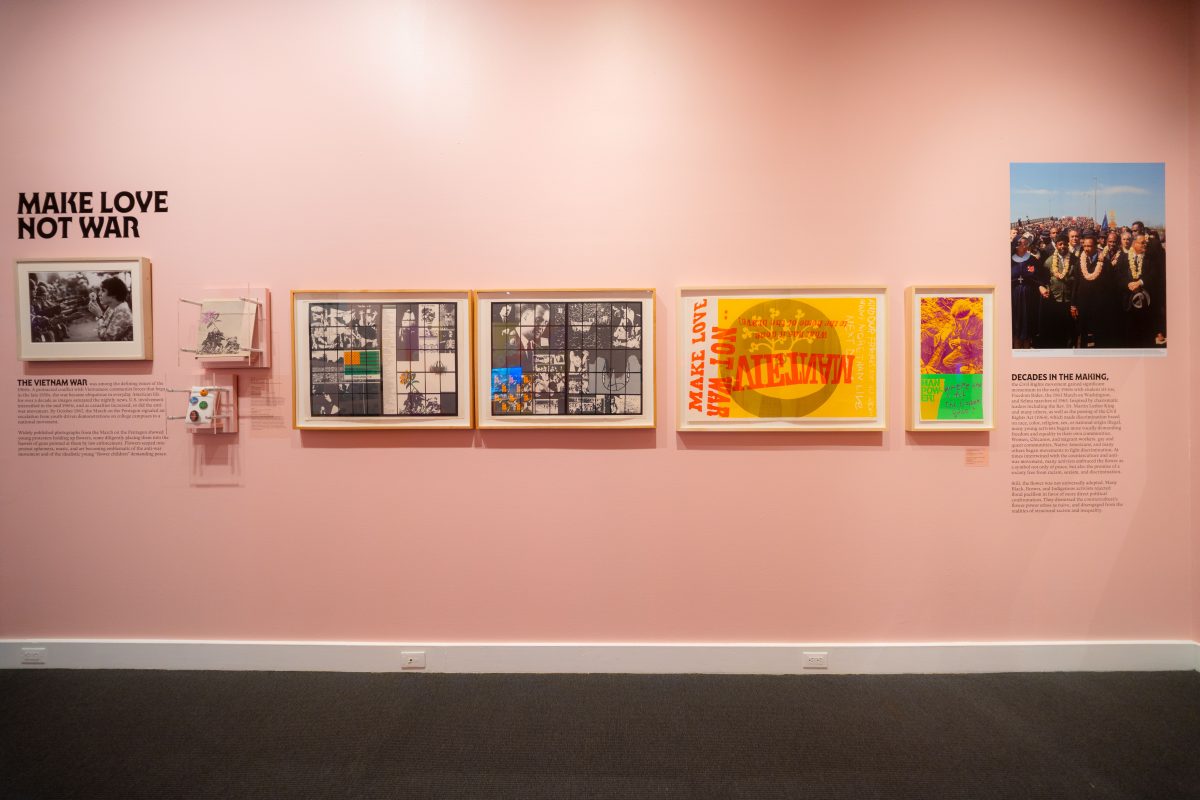
This summer, the New York Botanical Garden (NYBG) presents Flower Power, a multidisciplinary exhibition celebrating flowers as a cultural symbol of peace and love that advances closer relationships with the natural world. The gallery show and gardens combine a vibrant flower show and monumental installations with paintings, photography, and posters from the 1960s and ‘70s, including three works by pop art icon Andy Warhol. Other pieces by Milton Glaser, Joe Brainard, and Carlos Irizarry highlight how flowers take on resonance as creative and enduring symbols spanning generations.
Site-specific installations are on view in the Enid A. Haupt Conservatory and its lawn, while additional sculptures and artist-designed buses evoking the era can be found throughout the Garden. The exhibition invites visitors to “come together” and embrace flowers as meaningful symbols in our own lives.
“Flower Power unites world-class art with our living plant collections and our historic landmark buildings and landscape,” said Jennifer Bernstein, CEO and The William C. Steere Sr. President of the New York Botanical Garden. “It’s an opportunity for us to present a cultural experience that can only happen at a botanical garden of this scale and scope, where art, history, and the natural world coexist.” Visitors can step back in time in the Art Gallery of NYBG’s Mertz Library Building with an extraordinary display of paintings, photographs, screenprints, and collages by artists from the 1960s and ‘70s that depict flowers as symbols of peace and love. Andy Warhol’s Flowers (1964) will be on view alongside the image used as source material for the work, a photograph taken by nature photographer and environmental activist Patricia Caulfield.
Other highlights within the gallery include artworks by Joe Brainard, Milton Glaser, Carlos Irizarry, Corita Kent, and many others, as well as original fashion from the period, posters, and first editions of critical feminist and environmental texts including Betty Friedan’s The Feminine Mystique and Rachel Carson’s Silent Spring. Together with reproductions of photographs by Bernie Boston, Bob Edelman, and other photojournalists, archival audio, and news footage, these displays will exemplify the era’s social movements and culture. By placing these works in conversation with each other, Flower Power explores how flowers took on resonance as creative and enduring symbols in the social movements of the 1960s, including the early environmental movement, as well as art, music, and fashion to champion a closer relationship with the natural world. A fifteen-foot diameter peace sign filled with live plants welcomes everyone at the Leon Levy Visitor Center.
In various locations, colorful buses inspired by the festively-adorned hippie buses that conveyed the crowds to Woodstock in 1969 are on display, designed by New York-based artists Snoeman, Blanka Amezkua, and Carlos Wilfredo EncarnaciónVazquez. The Conservatory Lawn features large, hand-painted fabric canopies created by Mushuman, known for vibrant, light-reactive, and dreamlike designs. Nearby, an interactive art fence, inspired by one at the original Woodstock Festival, allows visitors to participate in an ever-growing textile artwork, accompanied by reproductions of archival photos and graphics. Inside the Enid A. Haupt Conservatory, monumental sculptures by artist Amie Jacobsen dazzle in a rainbow of colors and daisy shapes amid horticultural delights. Outside in the Conservatory’s Hardy Pool Courtyard, water lilies and lotuses create a meditative, peaceful space for visitors to connect to the 1960s-era interest in spirituality and enlightenment.
“We are proud to present an exhibition that celebrates how flowers have been used as enduring symbols of peace and creative possibility, from the transformative movements of the 1960s to today,” said Joanna L. Groarke, Vice President of Exhibitions and Programming at the New York Botanical Garden. “Flower Power reminds us that plants have always been a shared language, one that artists return to again and again to express hope, harmony, and connection.”