

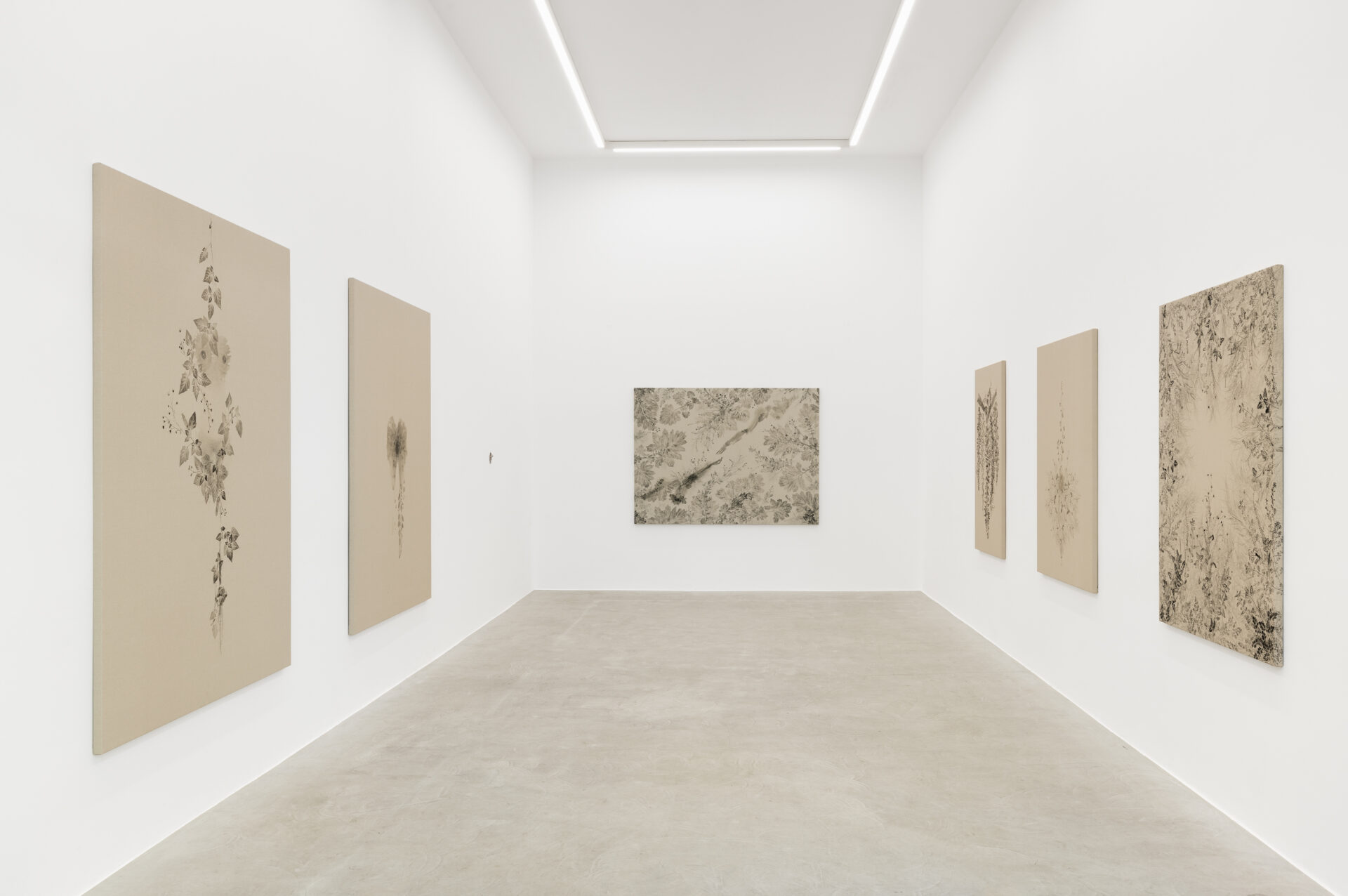
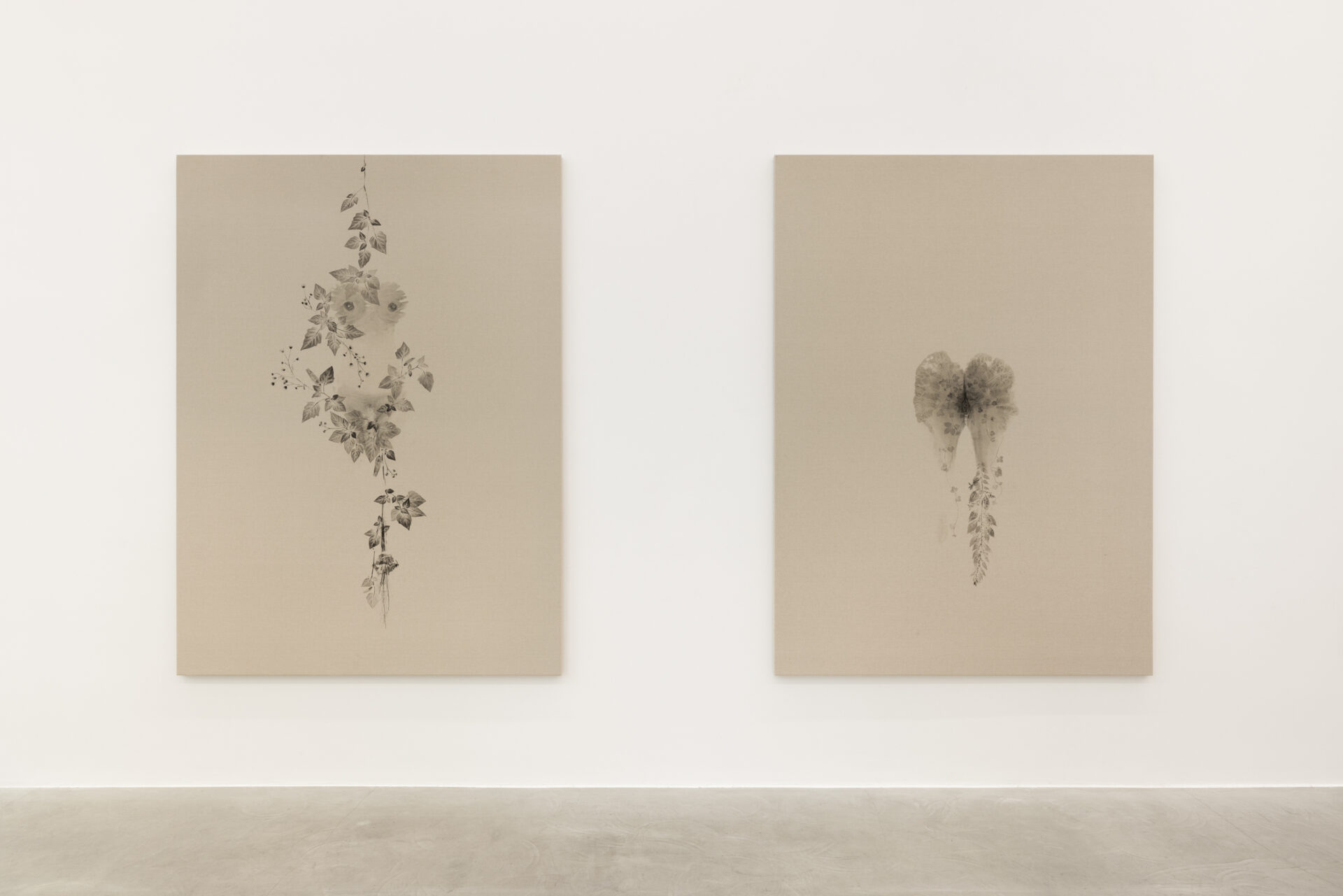
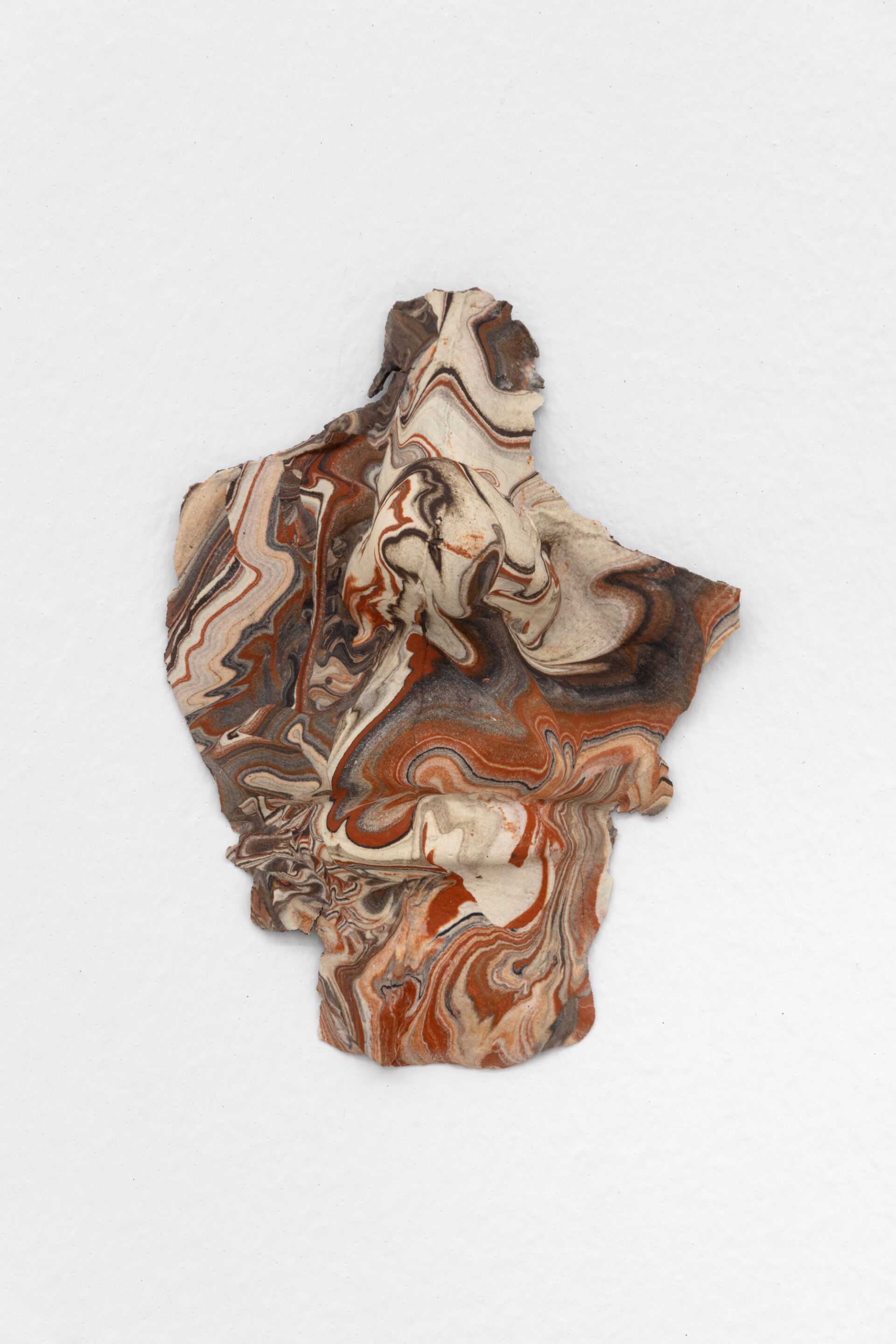
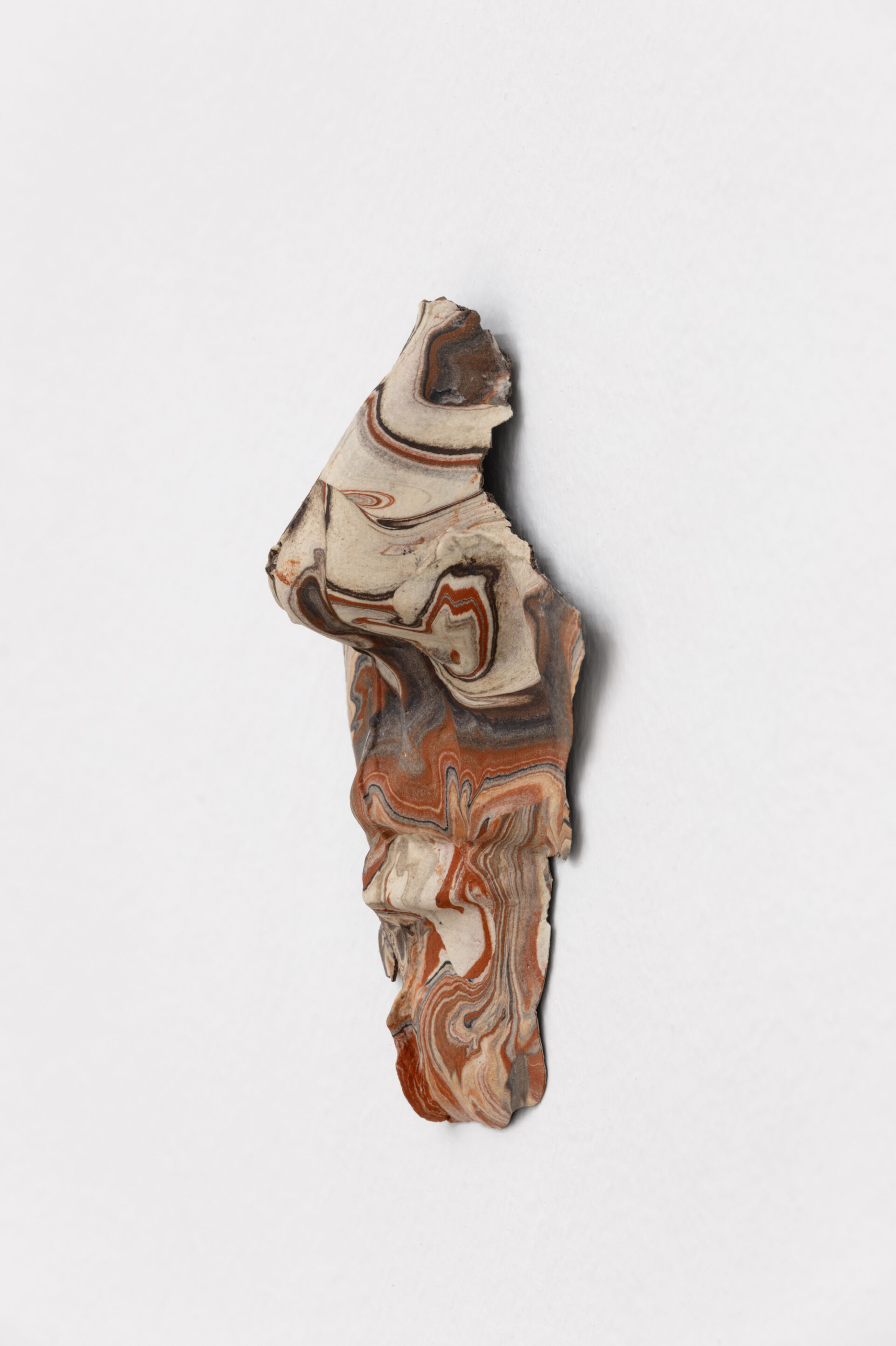
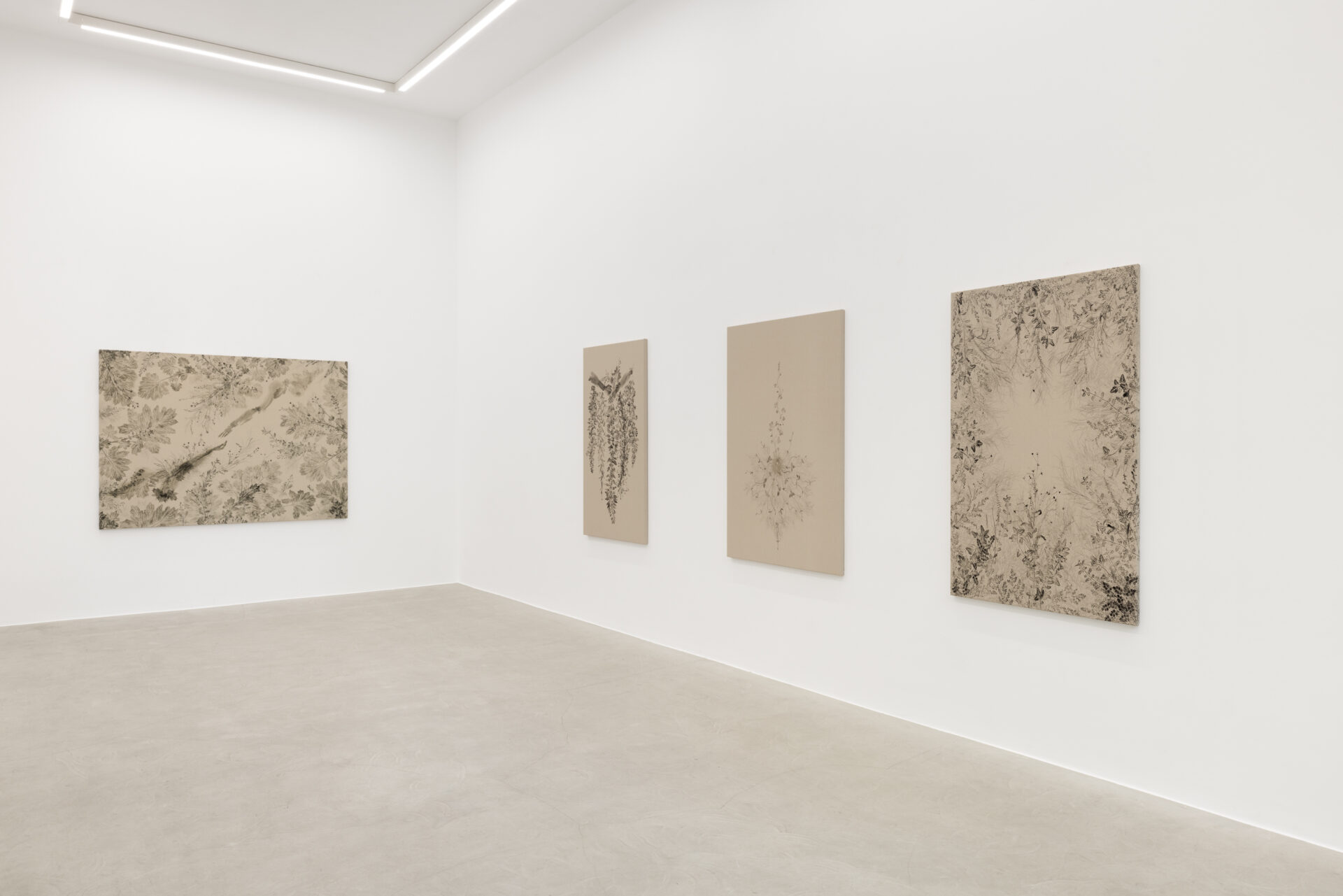
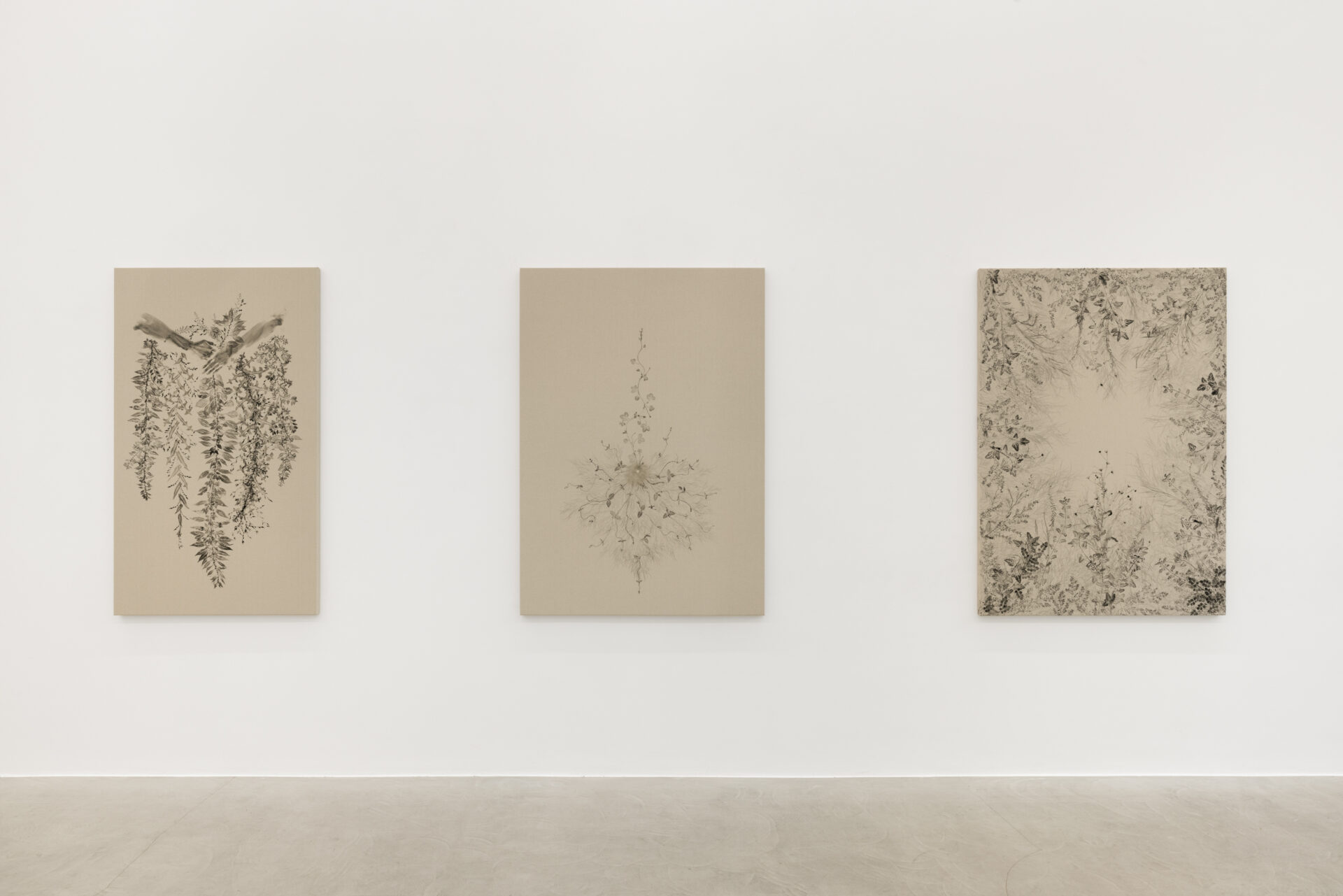
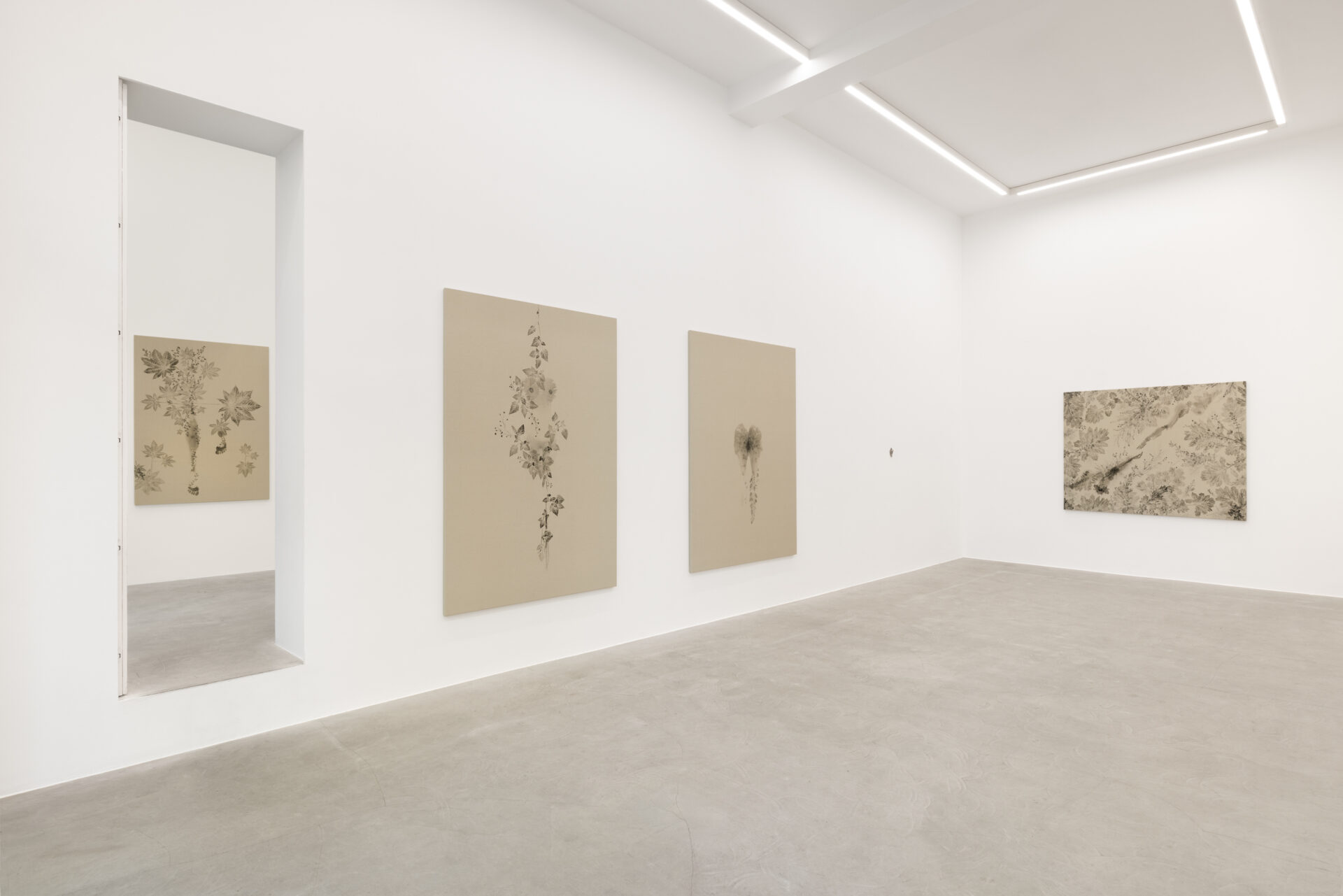
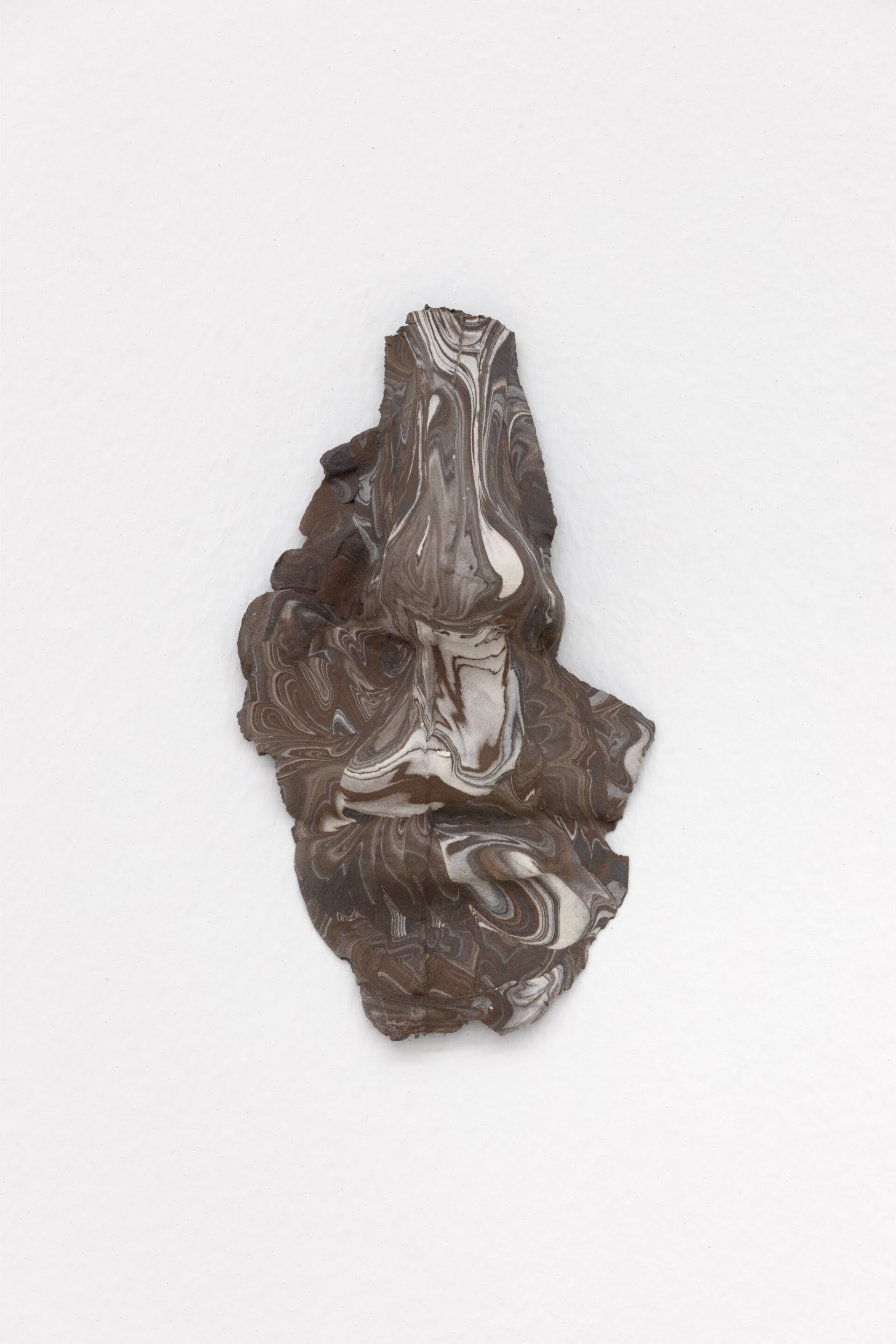
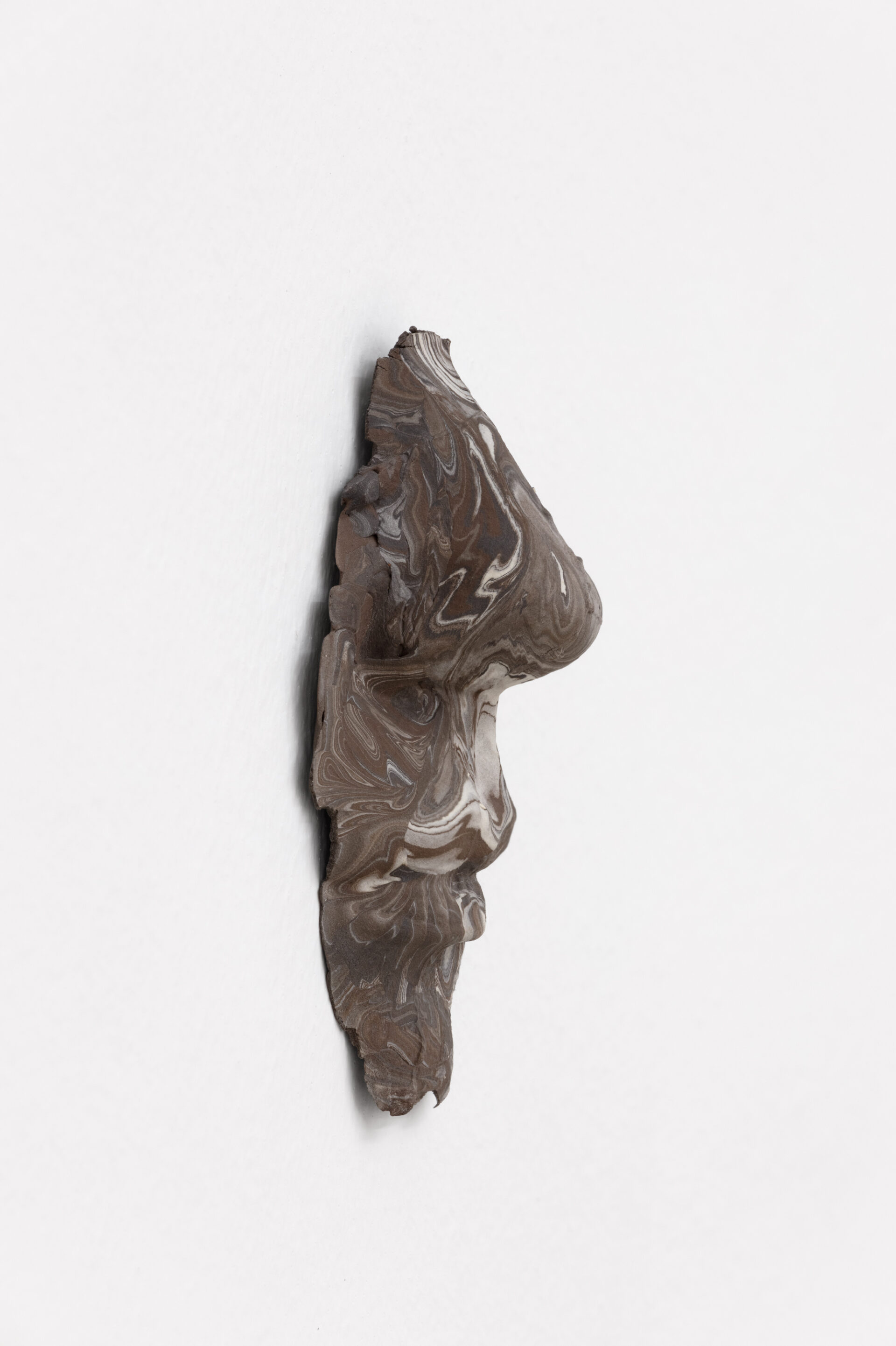
kaufmann repetto is pleased to present Piante Vagabonde (Wandering Plants), the first solo exhibition with the gallery by Brazilian artist Clarissa Tossin, bringing together a new body of recent works. Through painting, sculpture, installation, and video, Tossin develops a practice that intertwines ecology, colonial history, and the exploitation of natural resources, examining the relationship between the body, the landscape, and socioeconomic infrastructures. Her work is grounded in the idea that nature is not a realm separate from human experience, but rather a network of relationships of which we are an integral part — one shaped by material and political histories that continue to inform the present. In recent years, her work has been presented at major international institutions, including the recent survey exhibition Point of No Return at the Museu de Arte de São Paulo (MASP), which closed in February 2026, further consolidating a practice that addresses the legacies of extractivism and contemporary ecological transformations.
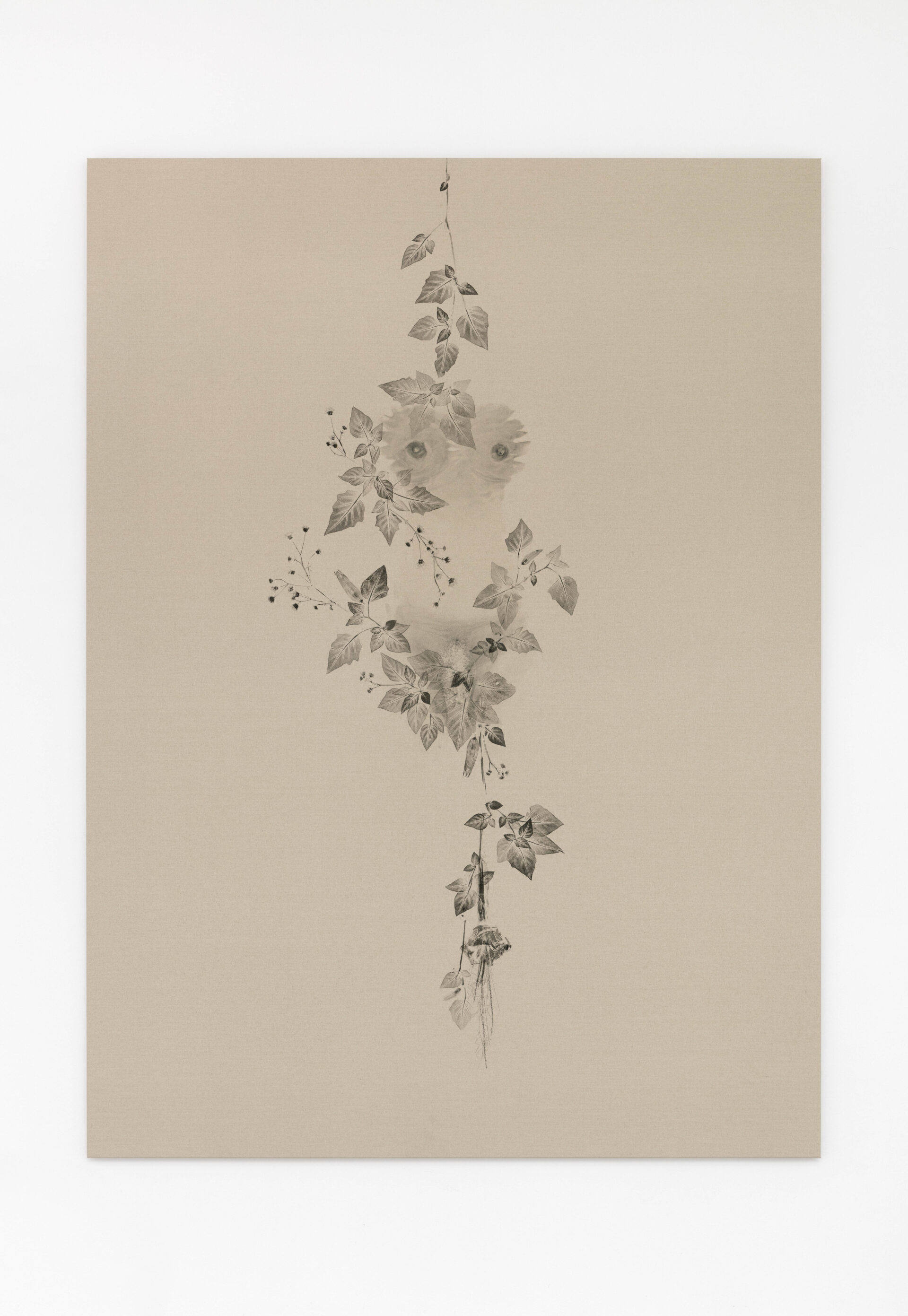
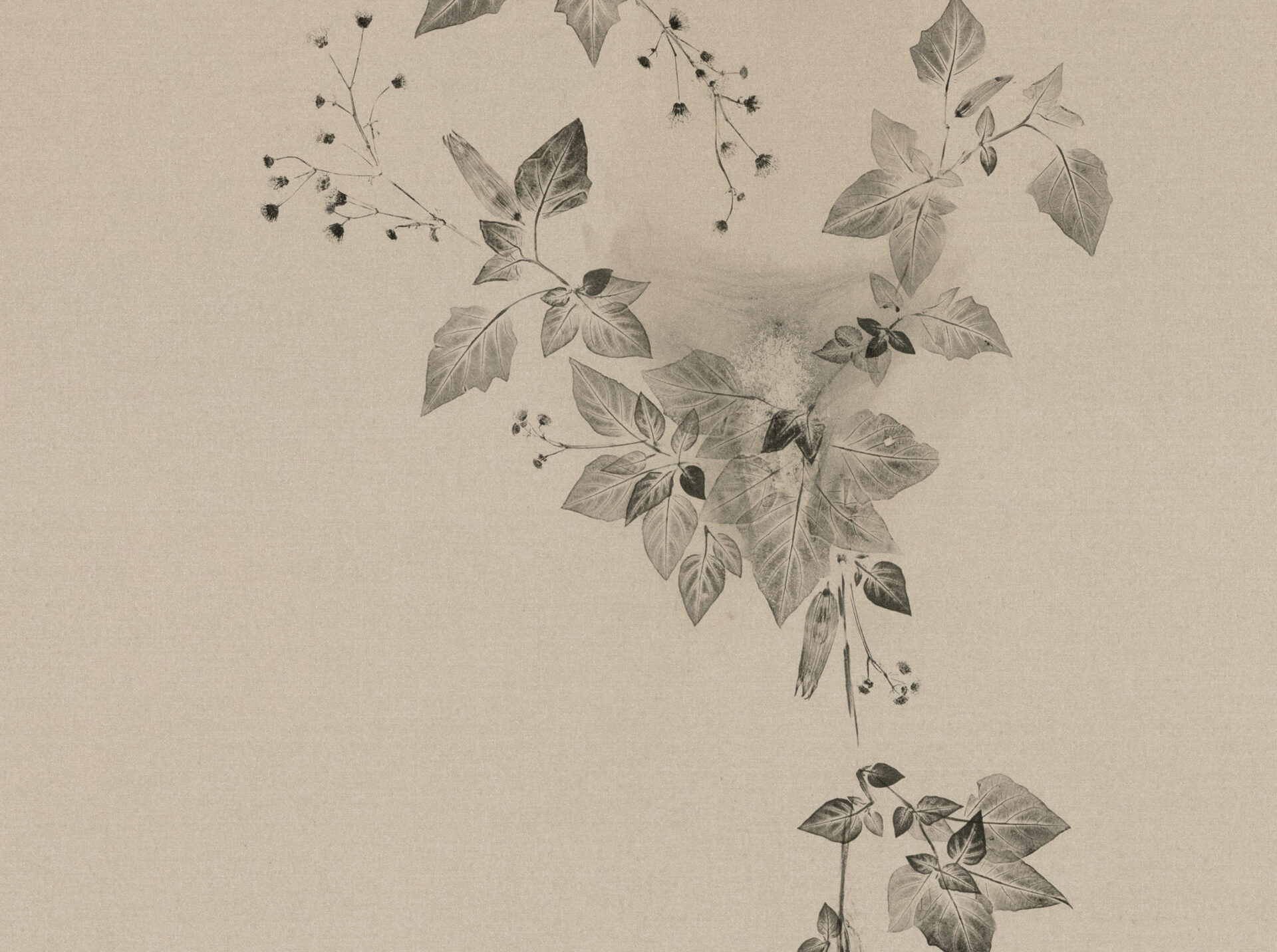
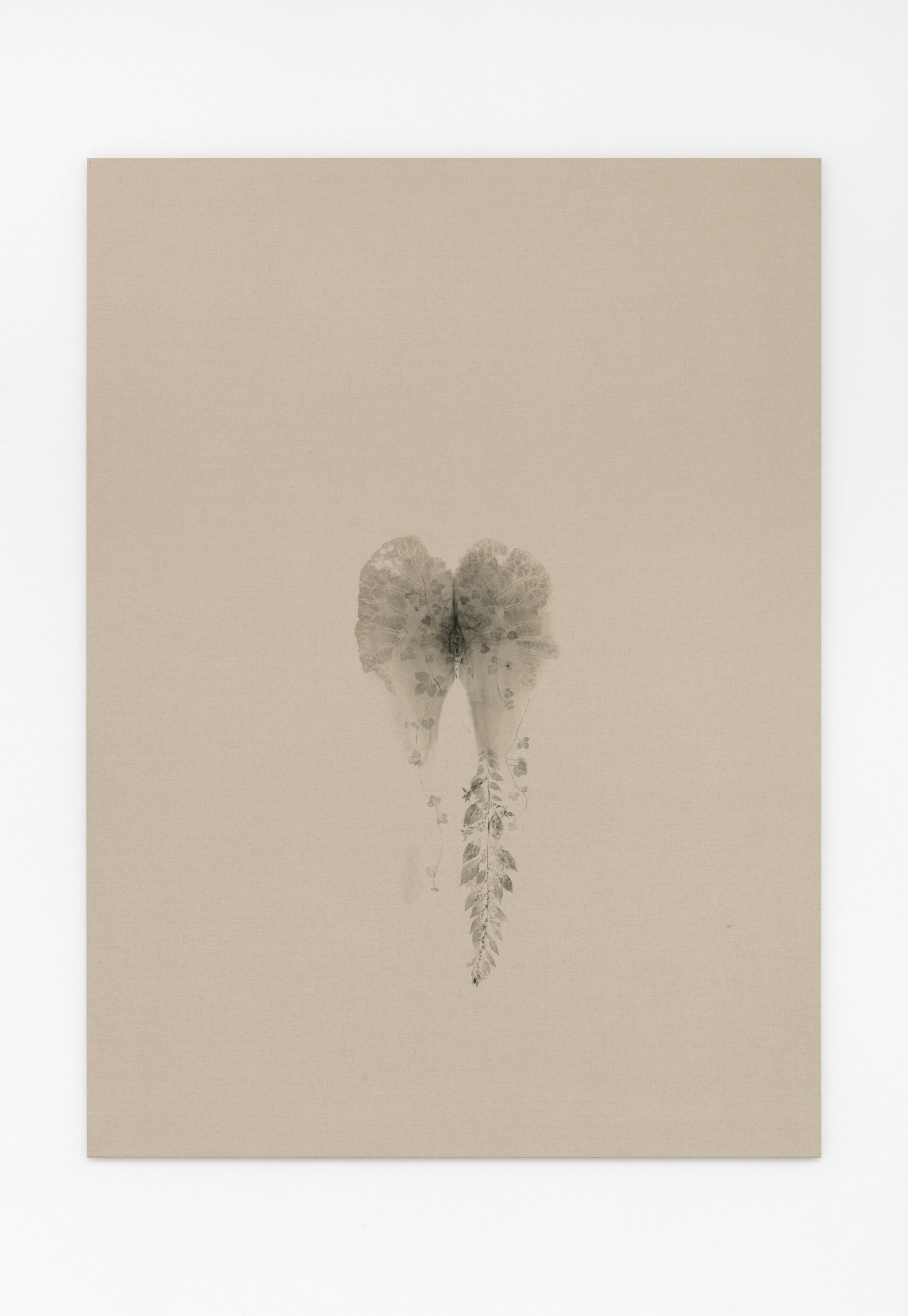
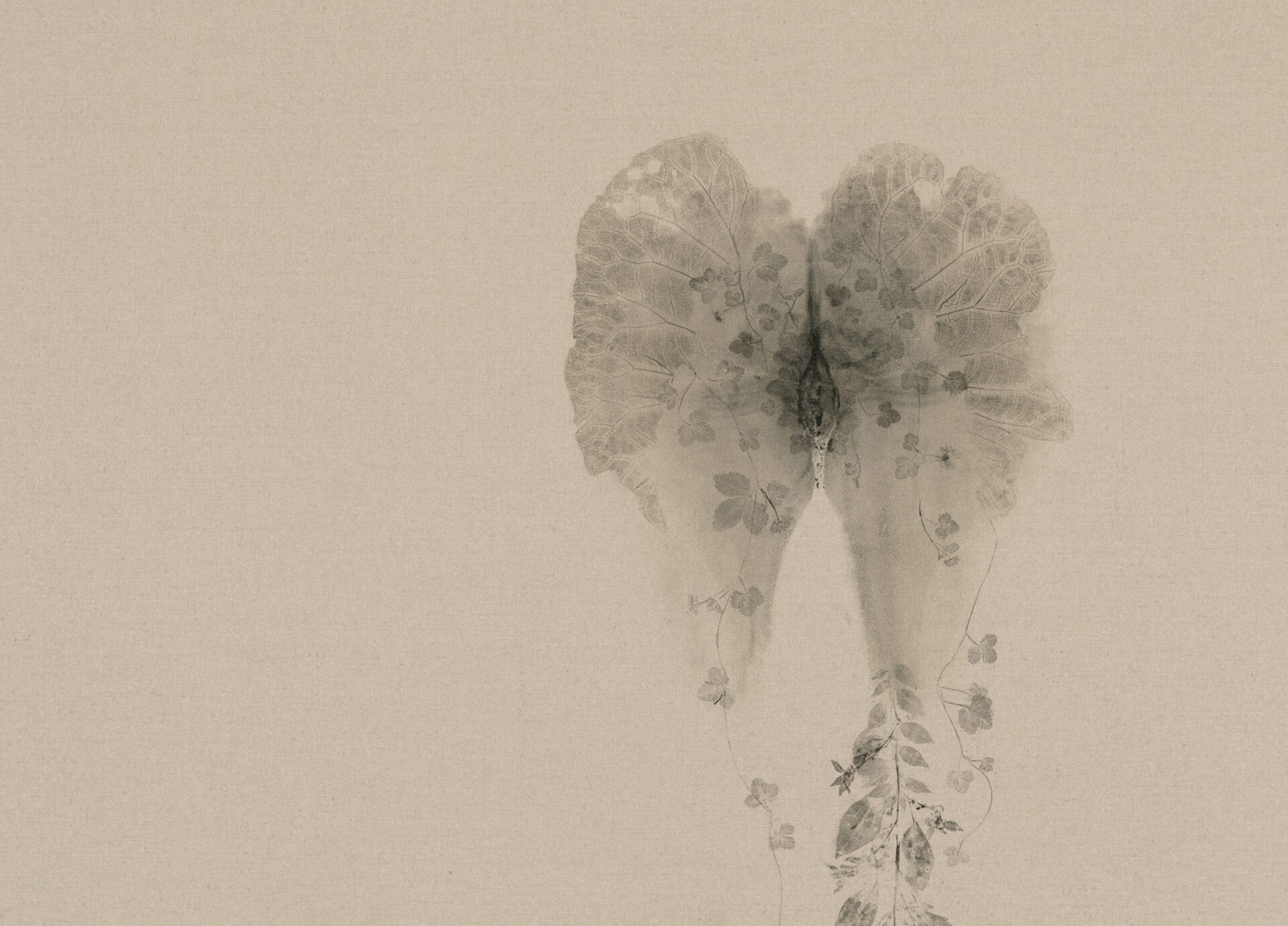
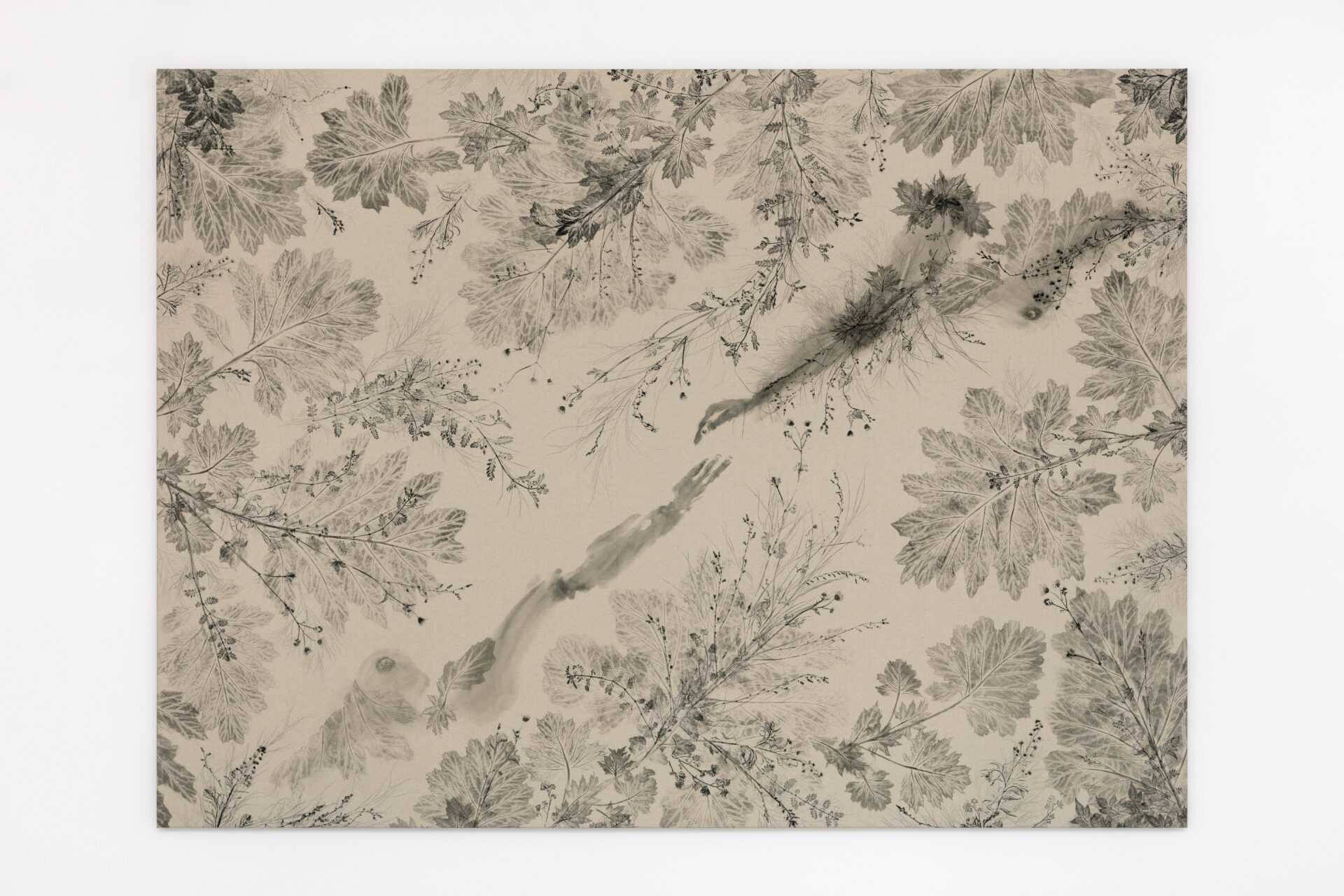
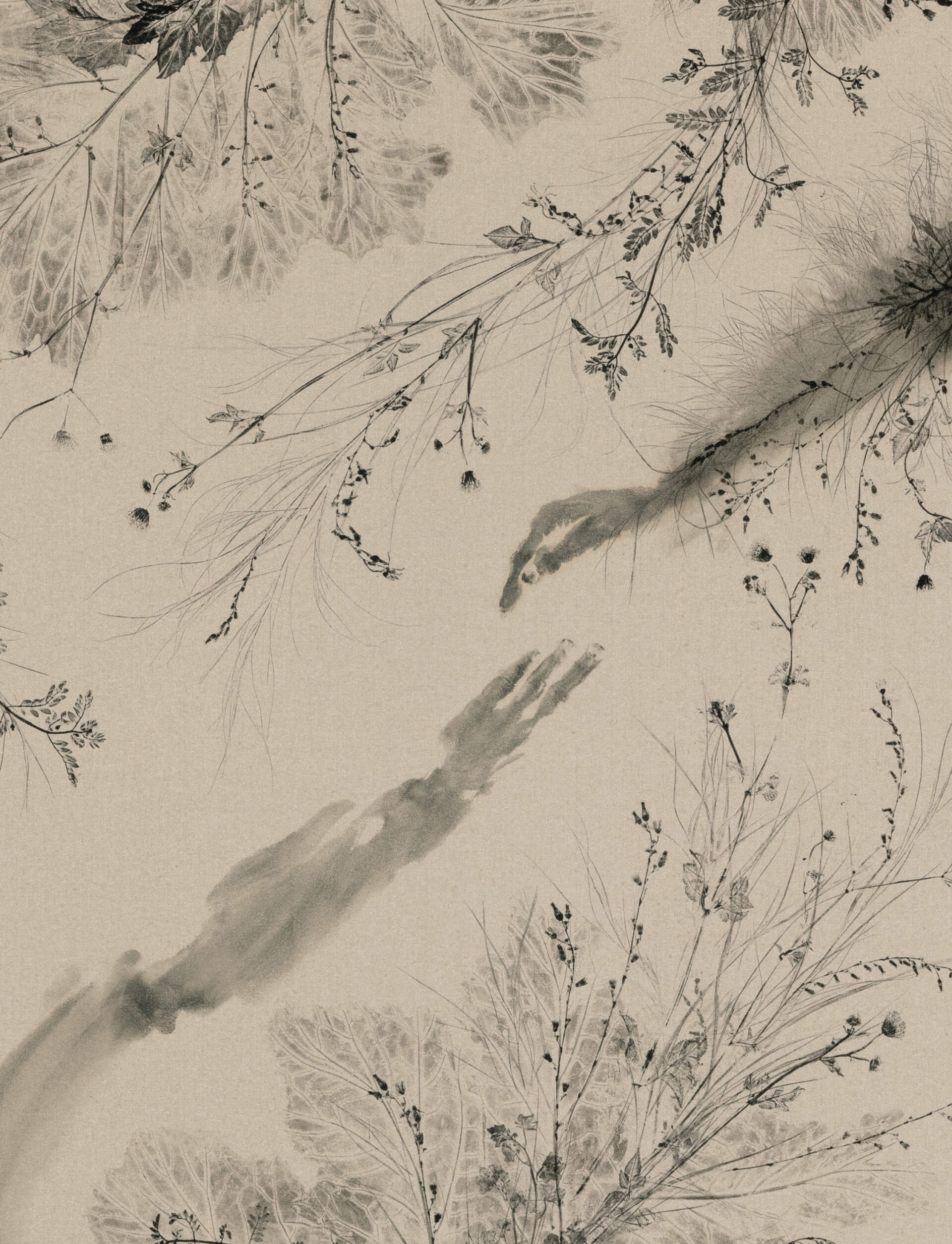
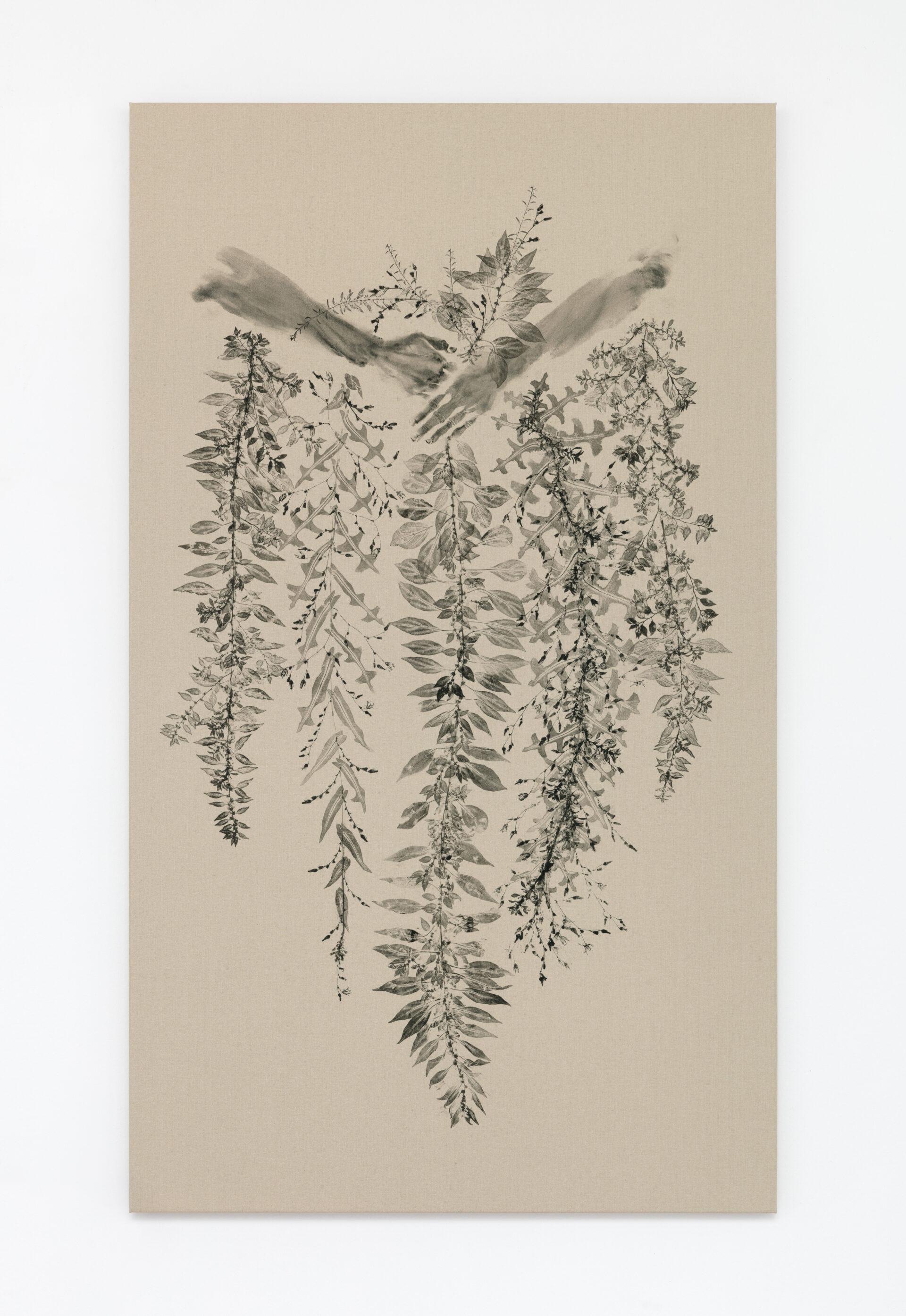
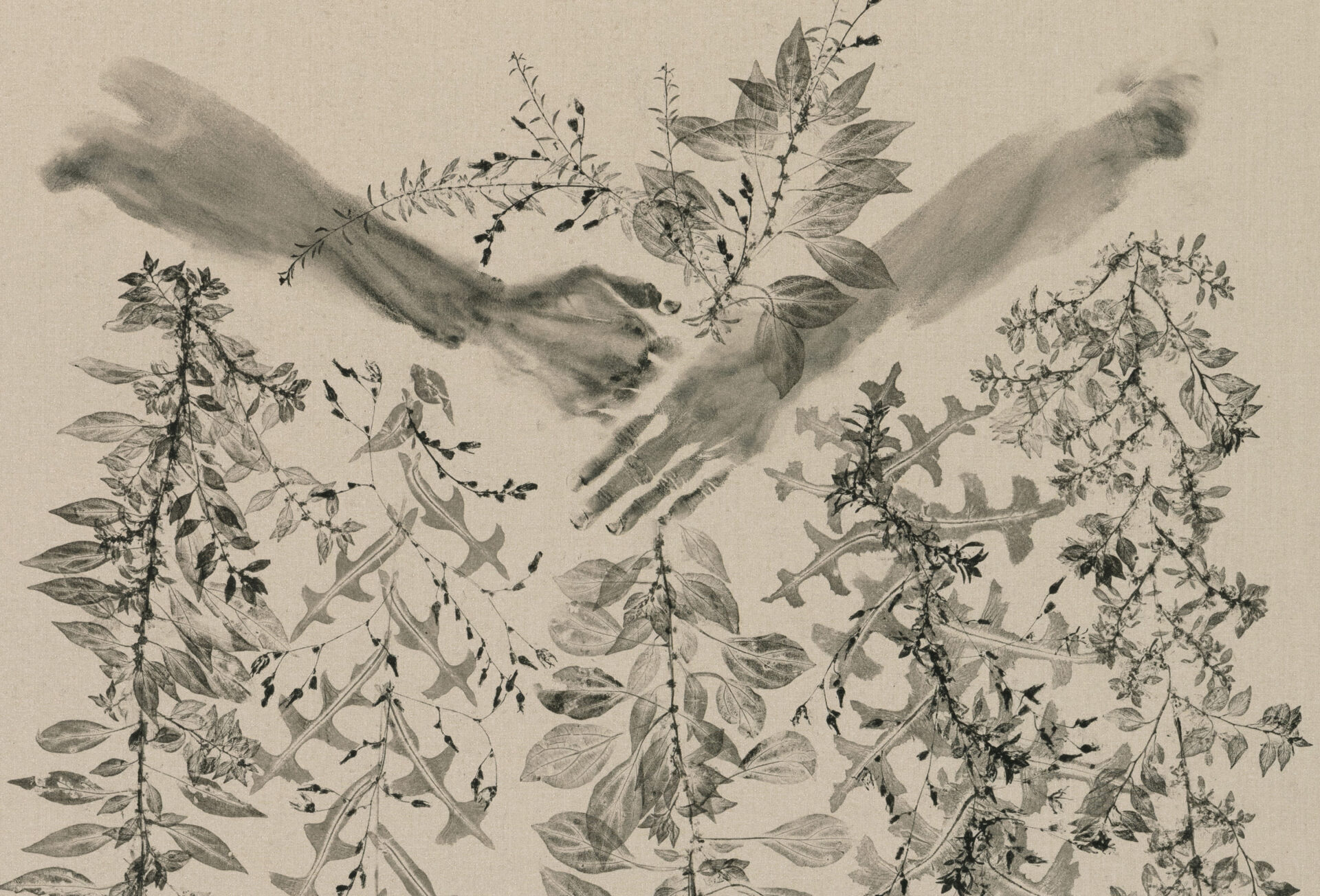
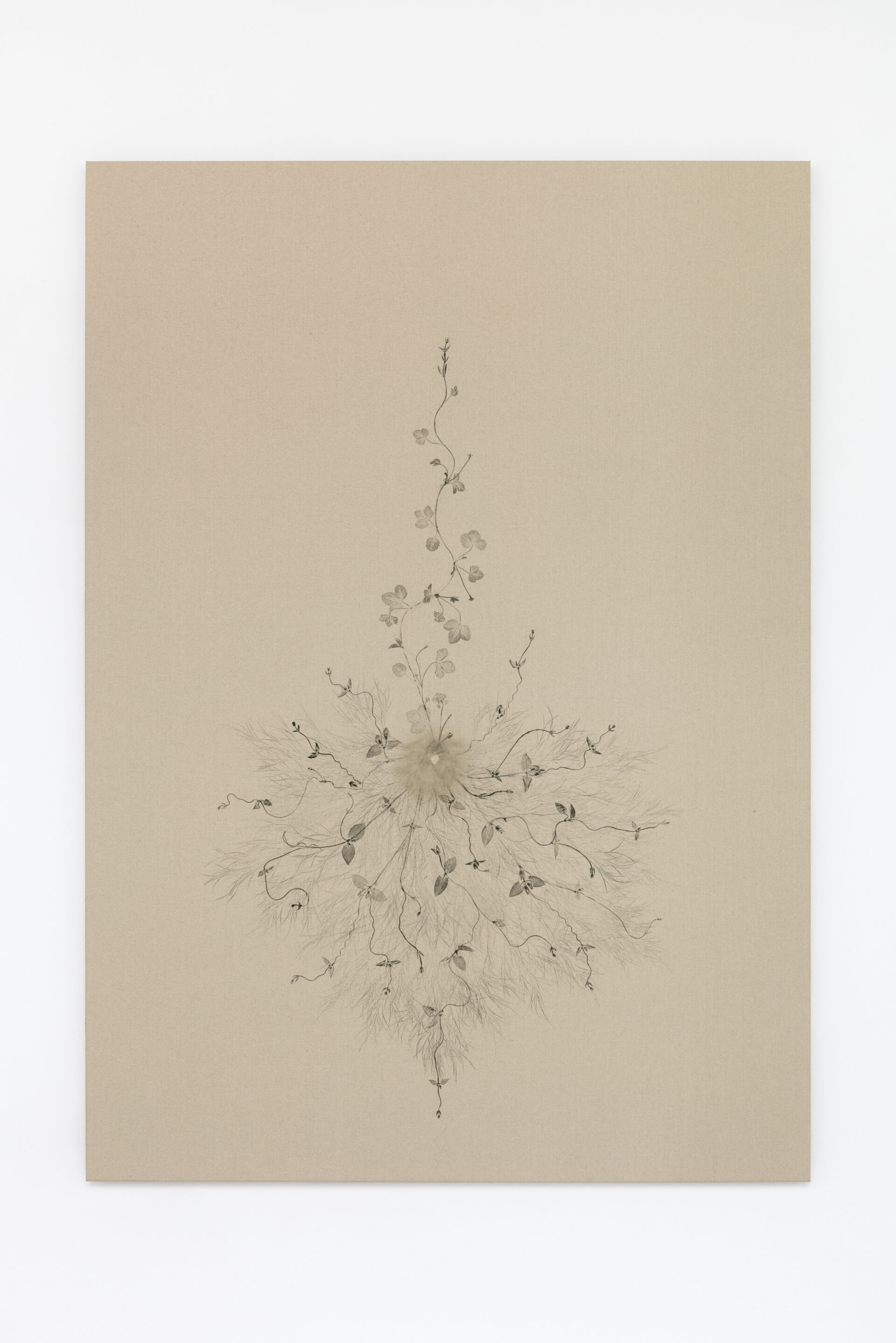
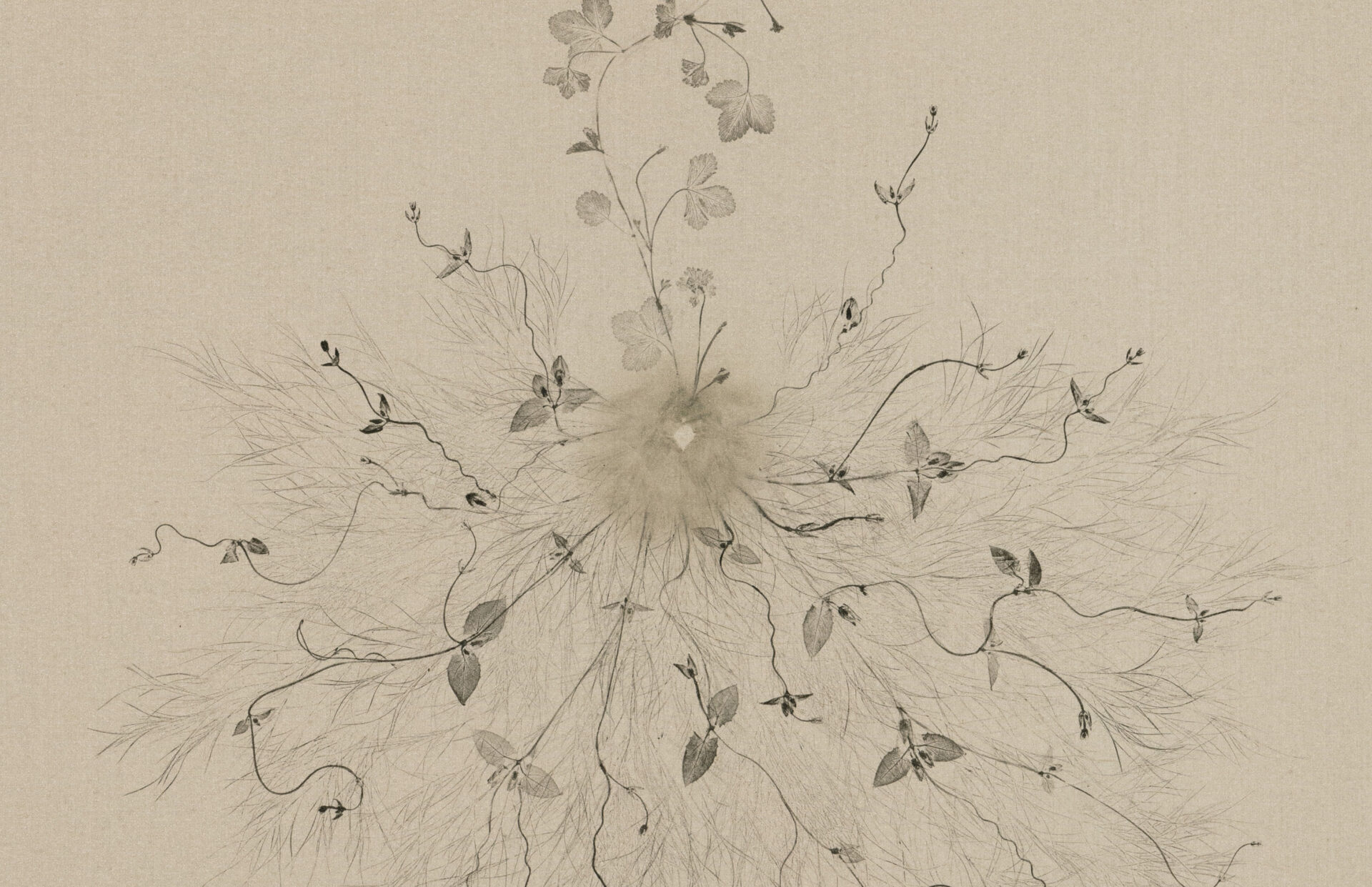
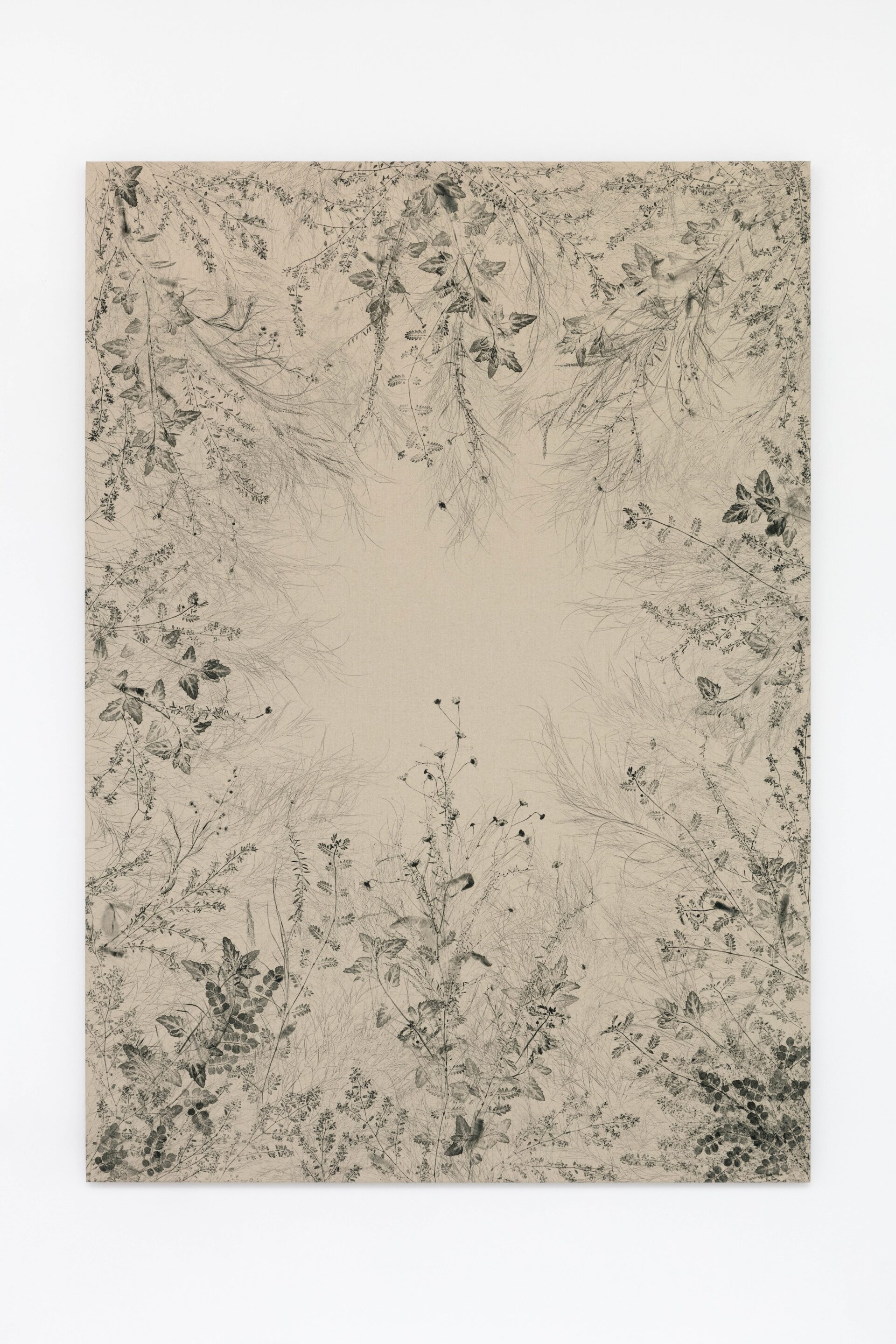
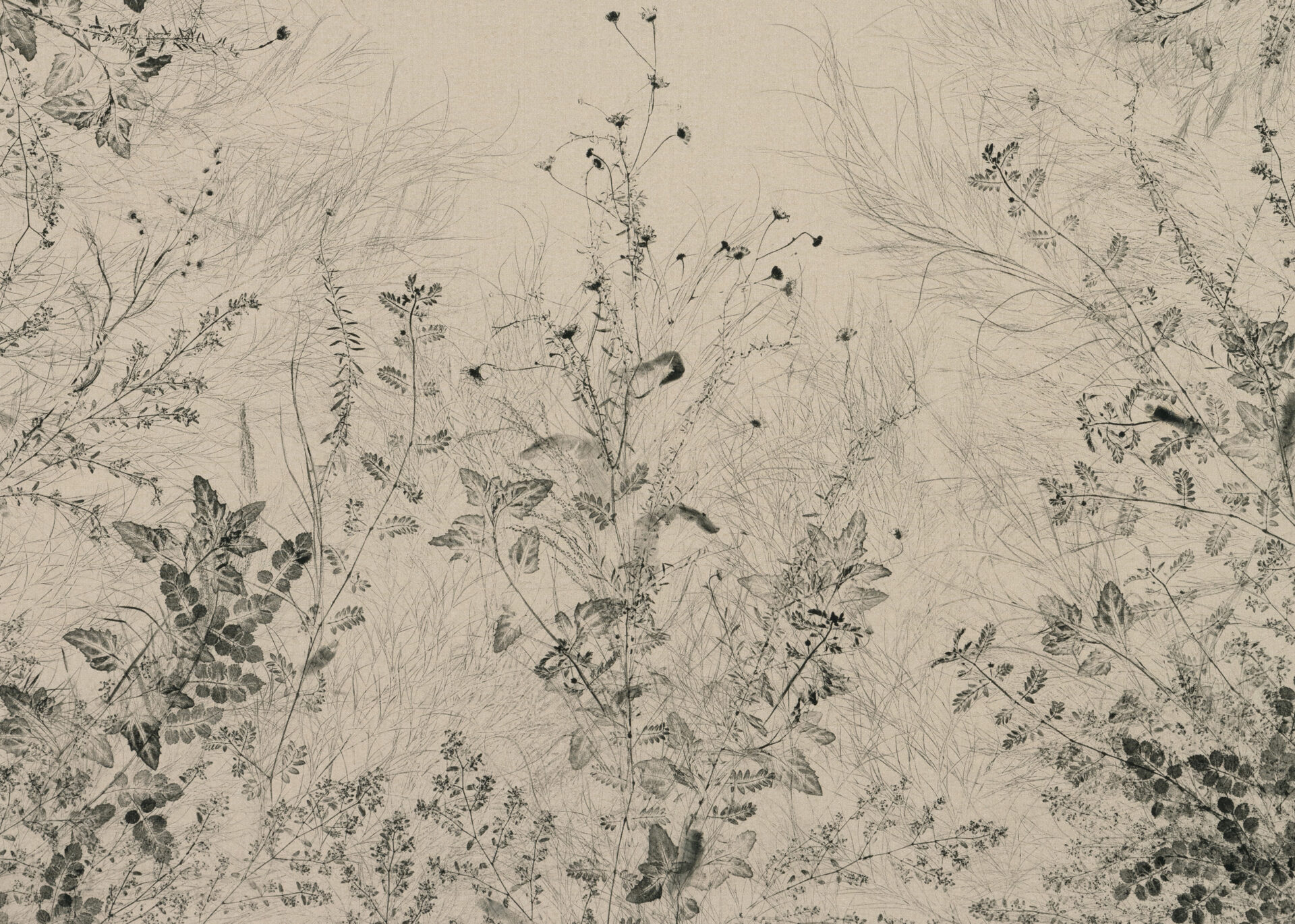
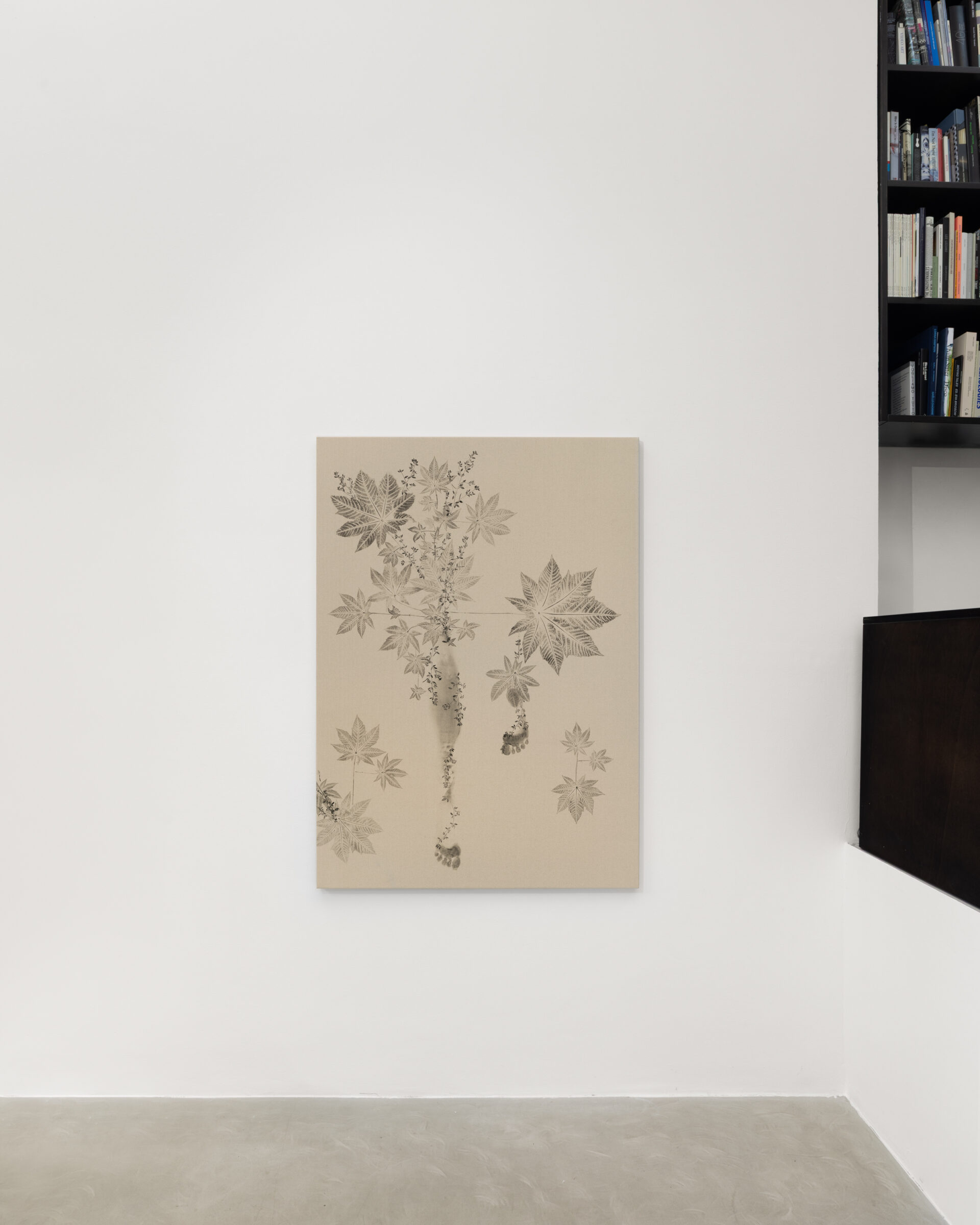
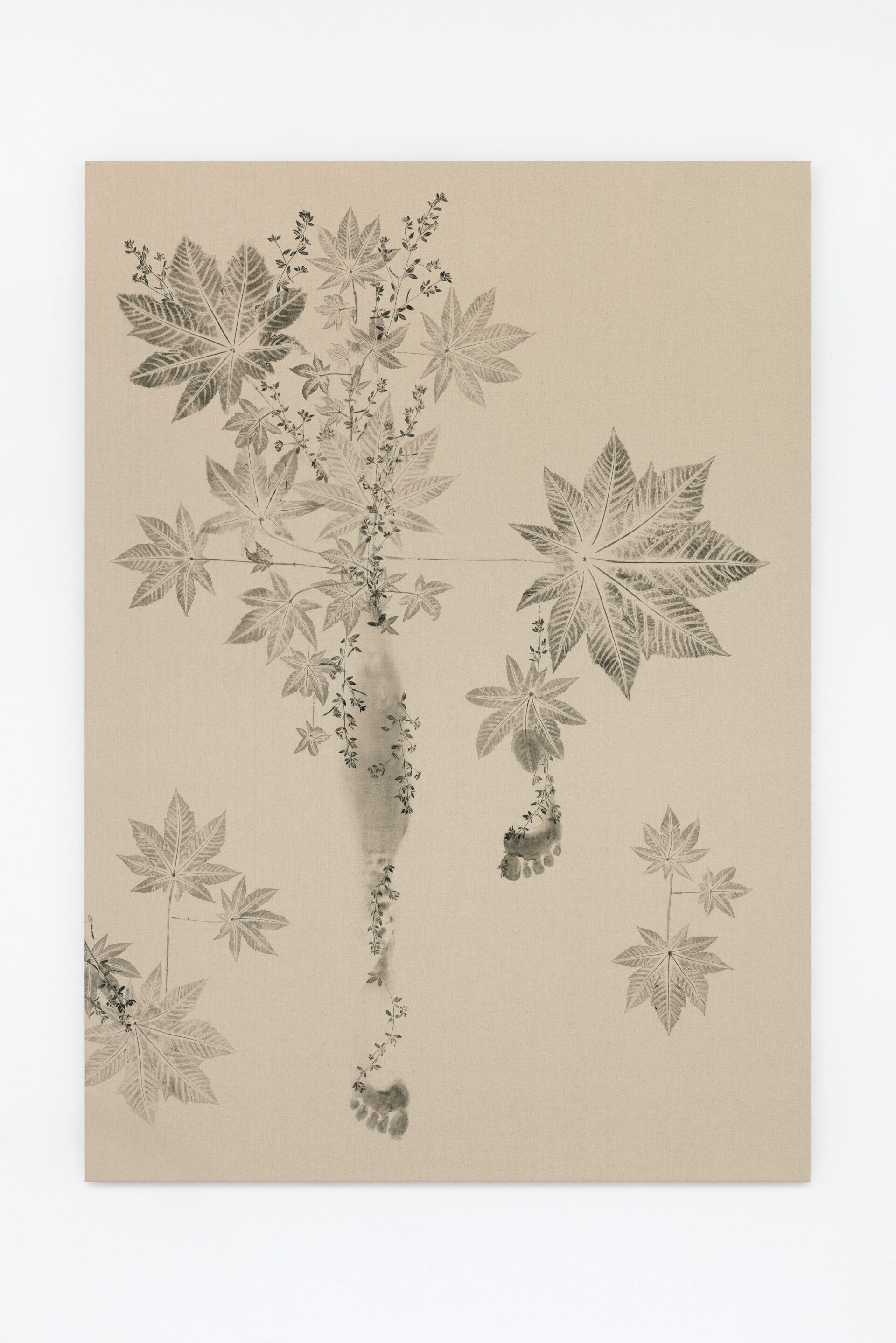
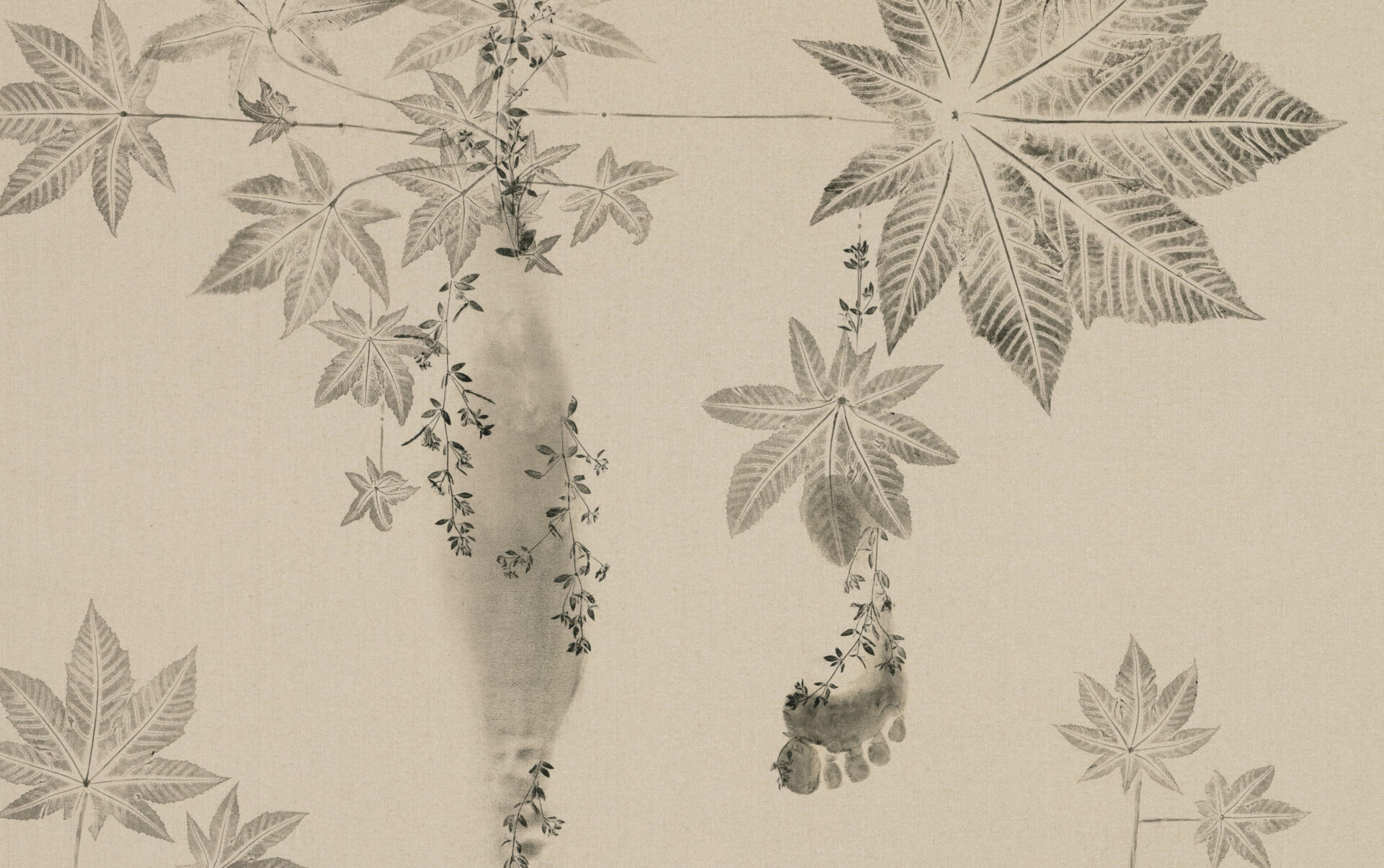
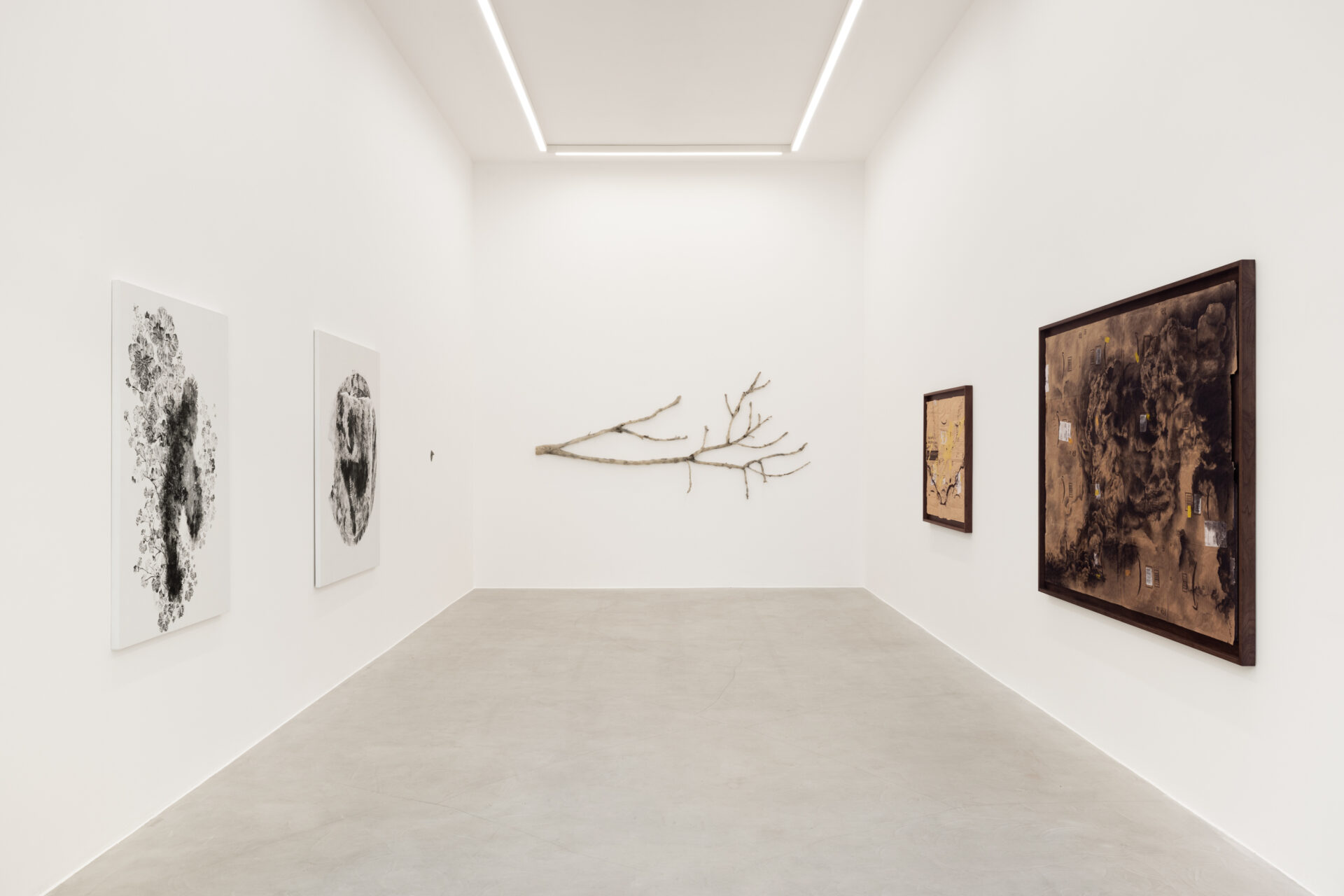
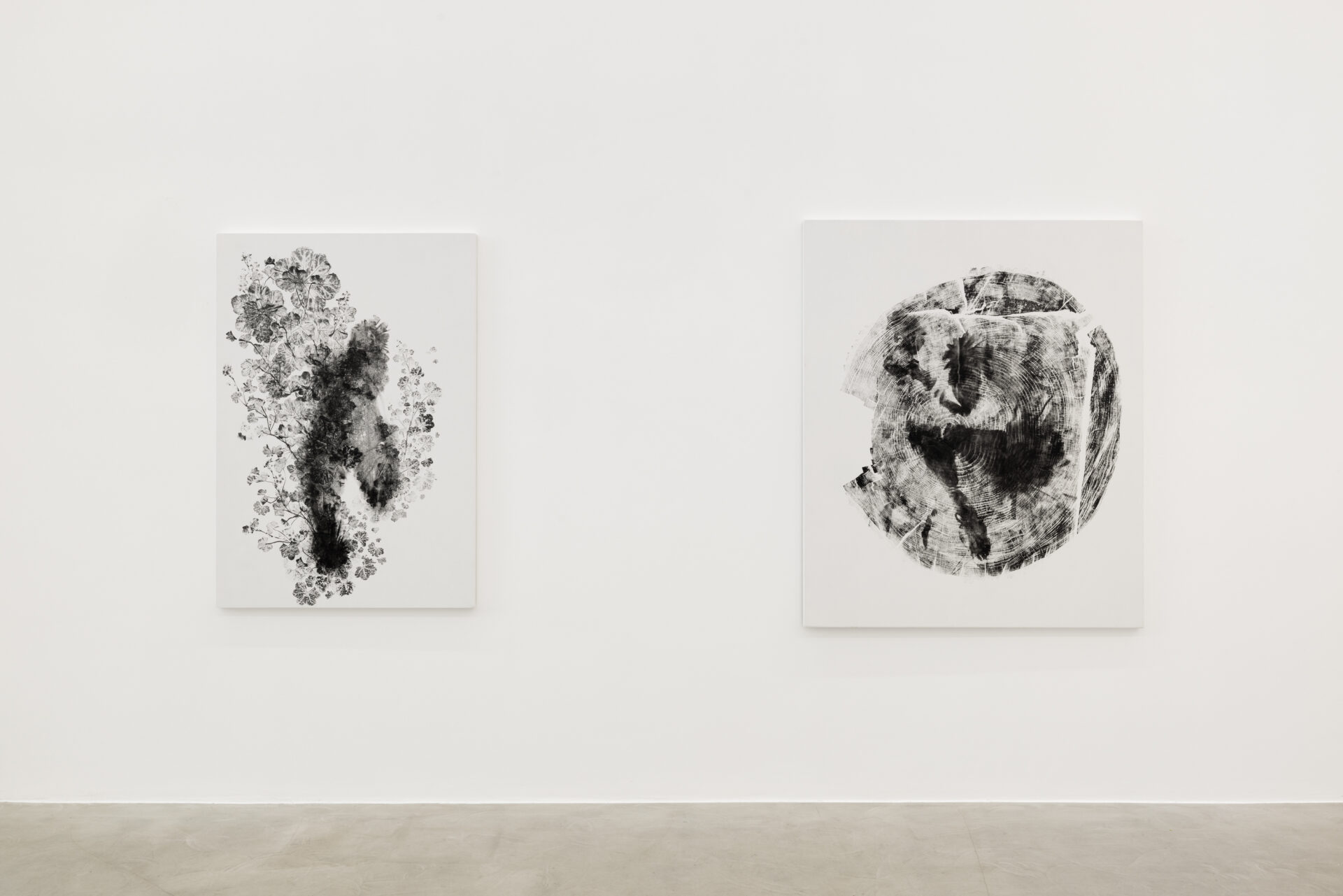
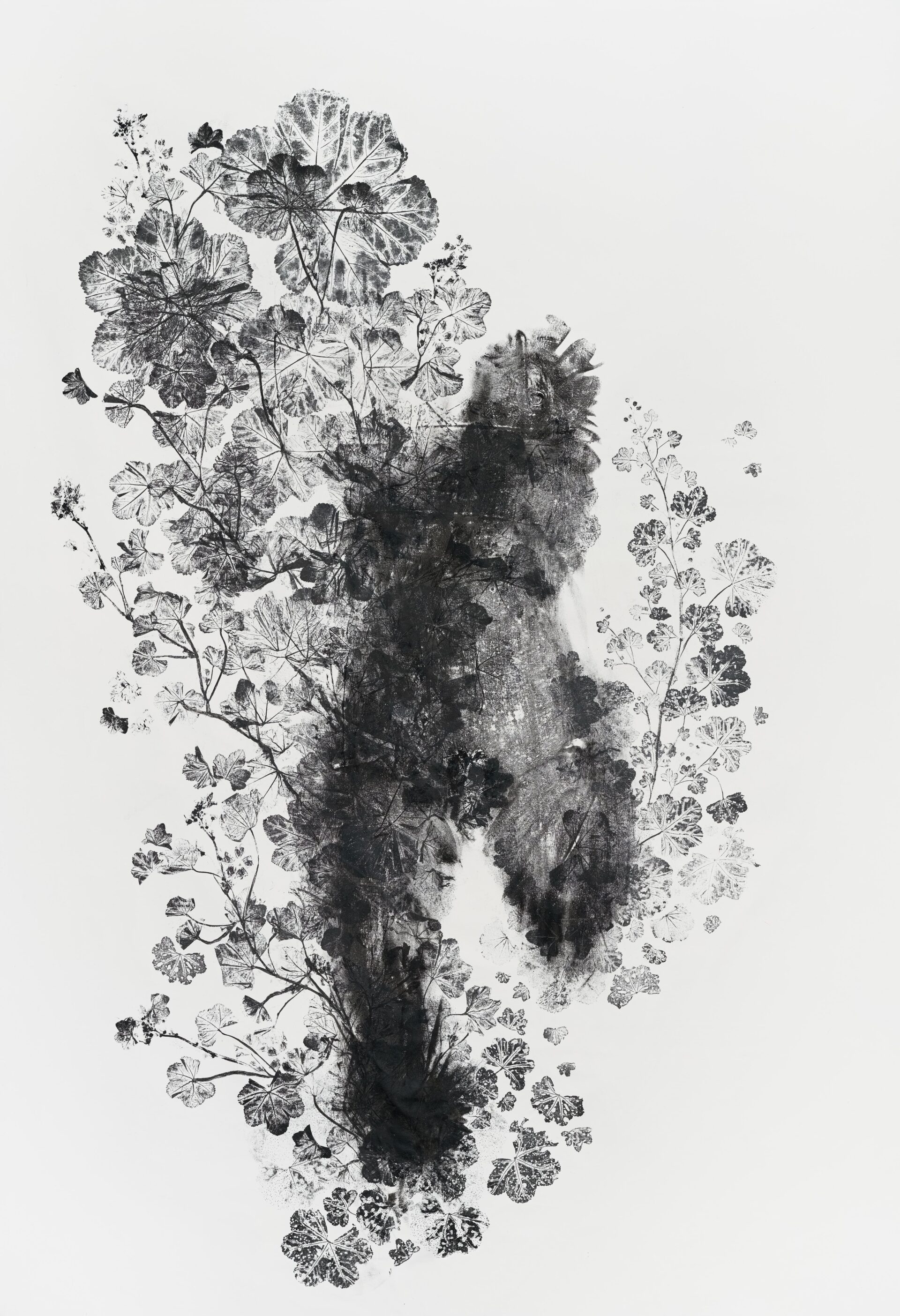
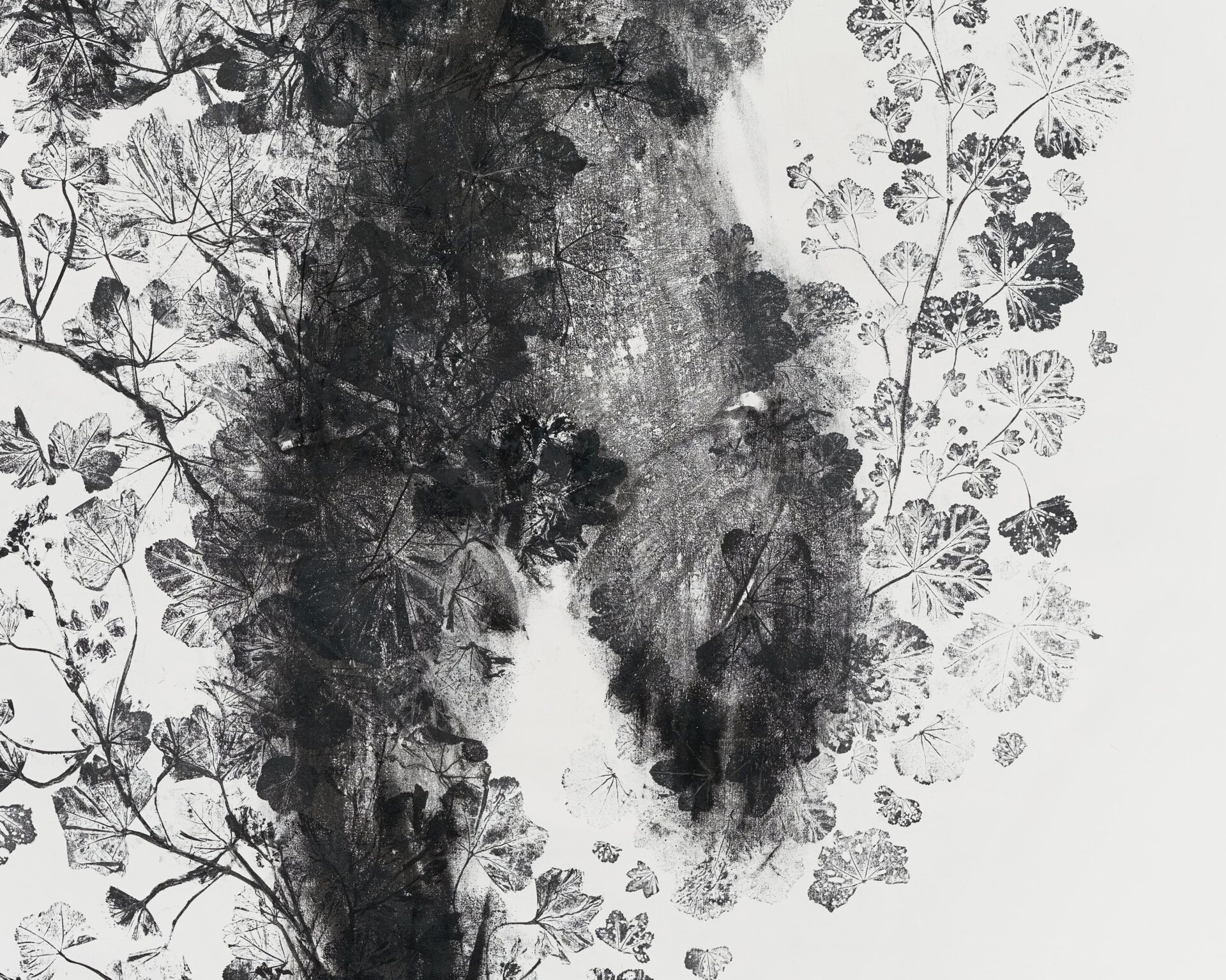
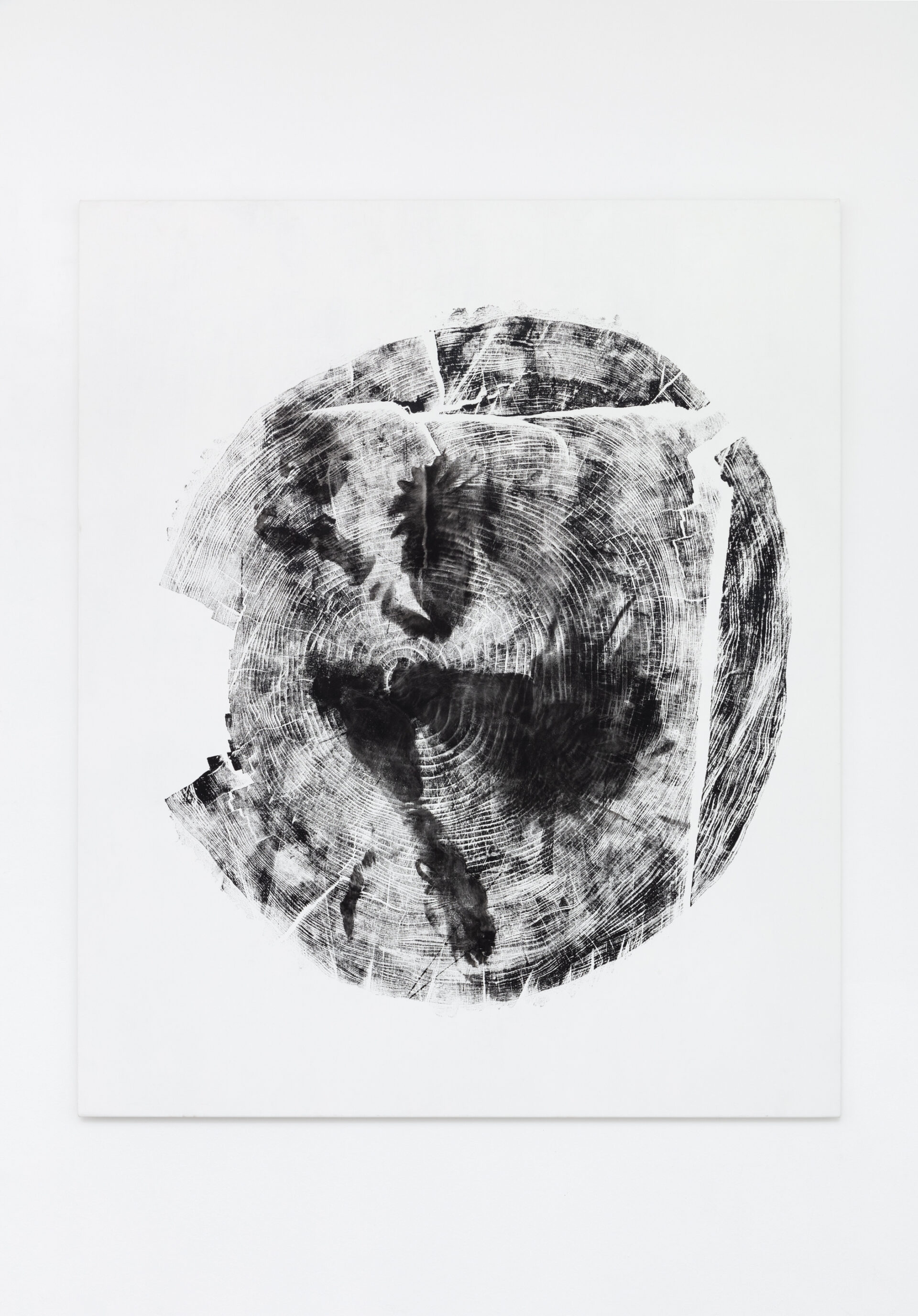
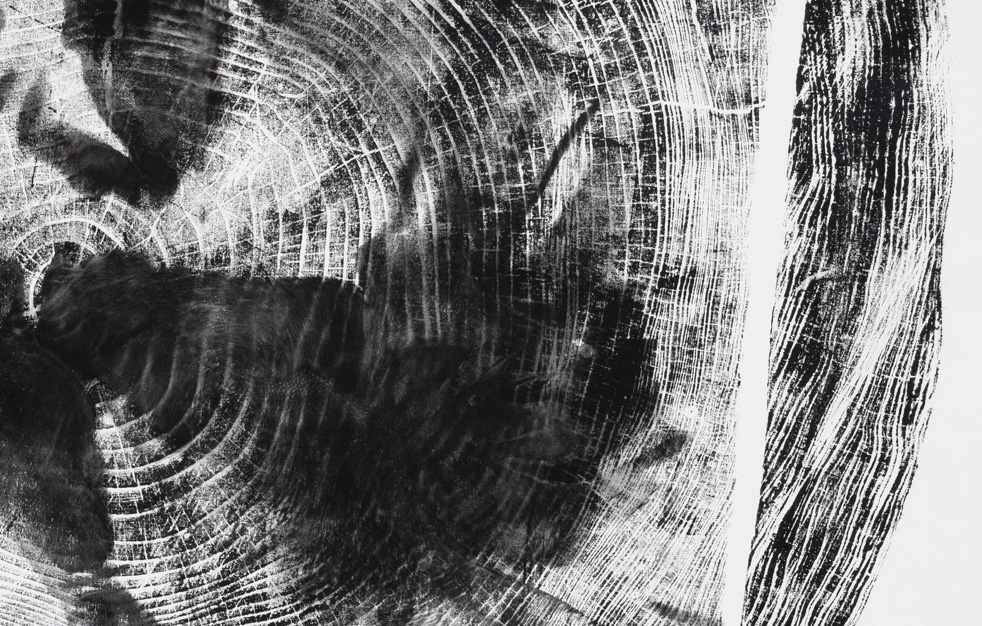
At the heart of the exhibition is the series Piante Vagabonde, first conceived during the artist’s residency at the American Academy in Rome in 2025. The works emerge from the direct encounter between the artist’s body and spontaneous plant species — so-called “wandering plants” — collected from urban margins, roadsides, and disturbed landscapes, and imprinted onto the surface of the canvas. The plants that lend the series its title are resilient organisms capable of growing in degraded soils and thriving under extreme conditions, actively contributing to the regeneration of damaged environments. Rather than functioning simply as botanical subjects, they become witnesses to forms of ecological adaptation that resonate with histories of migration, environmental transformation, and resistance. These works evoke the contact between body and vegetation as a space of mutual belonging, connecting the vulnerability of ecosystems with that of human bodies, while opening a reflection on the possibility of imagining new forms of coexistence in a time marked by the devastating consequences of climate change.
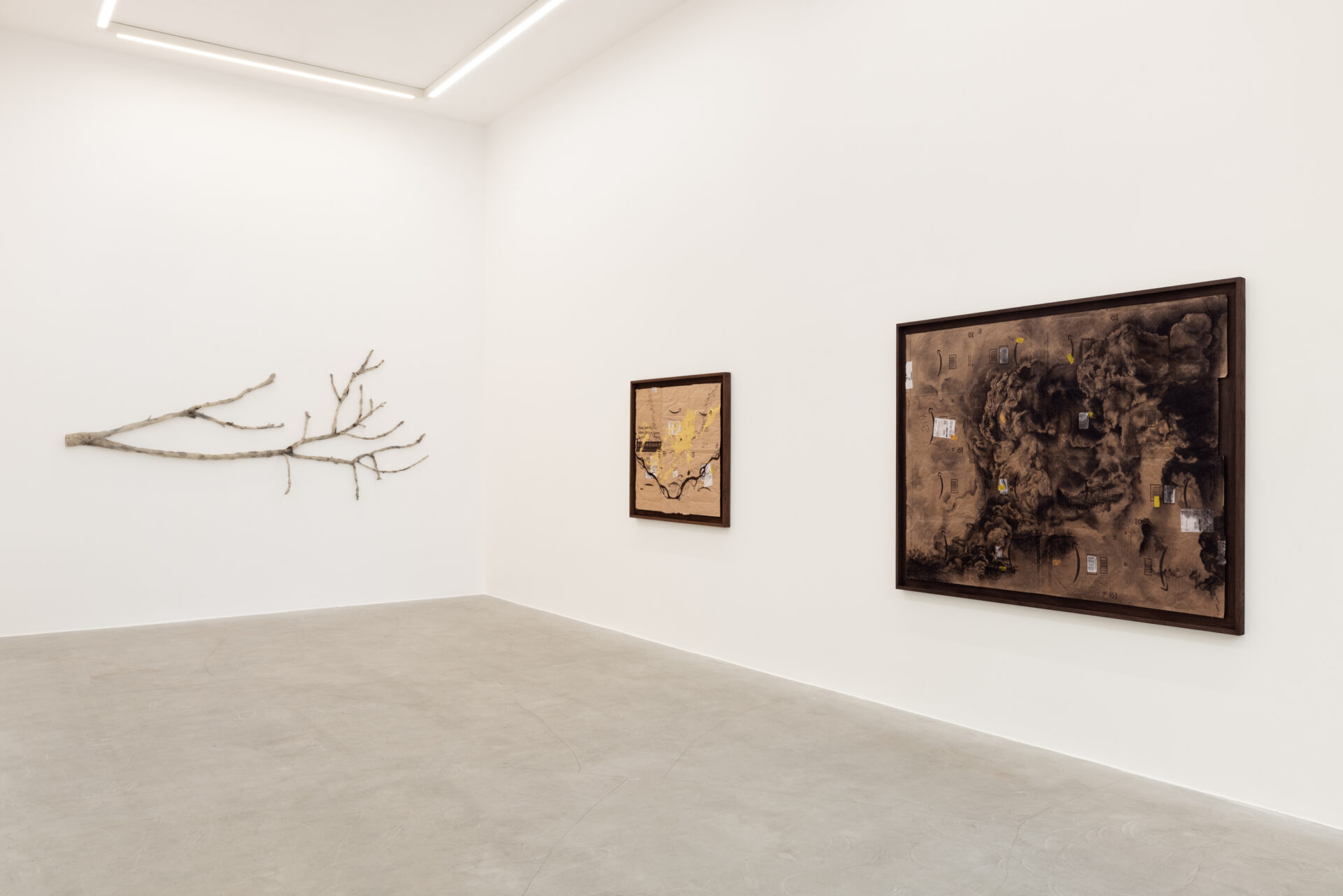
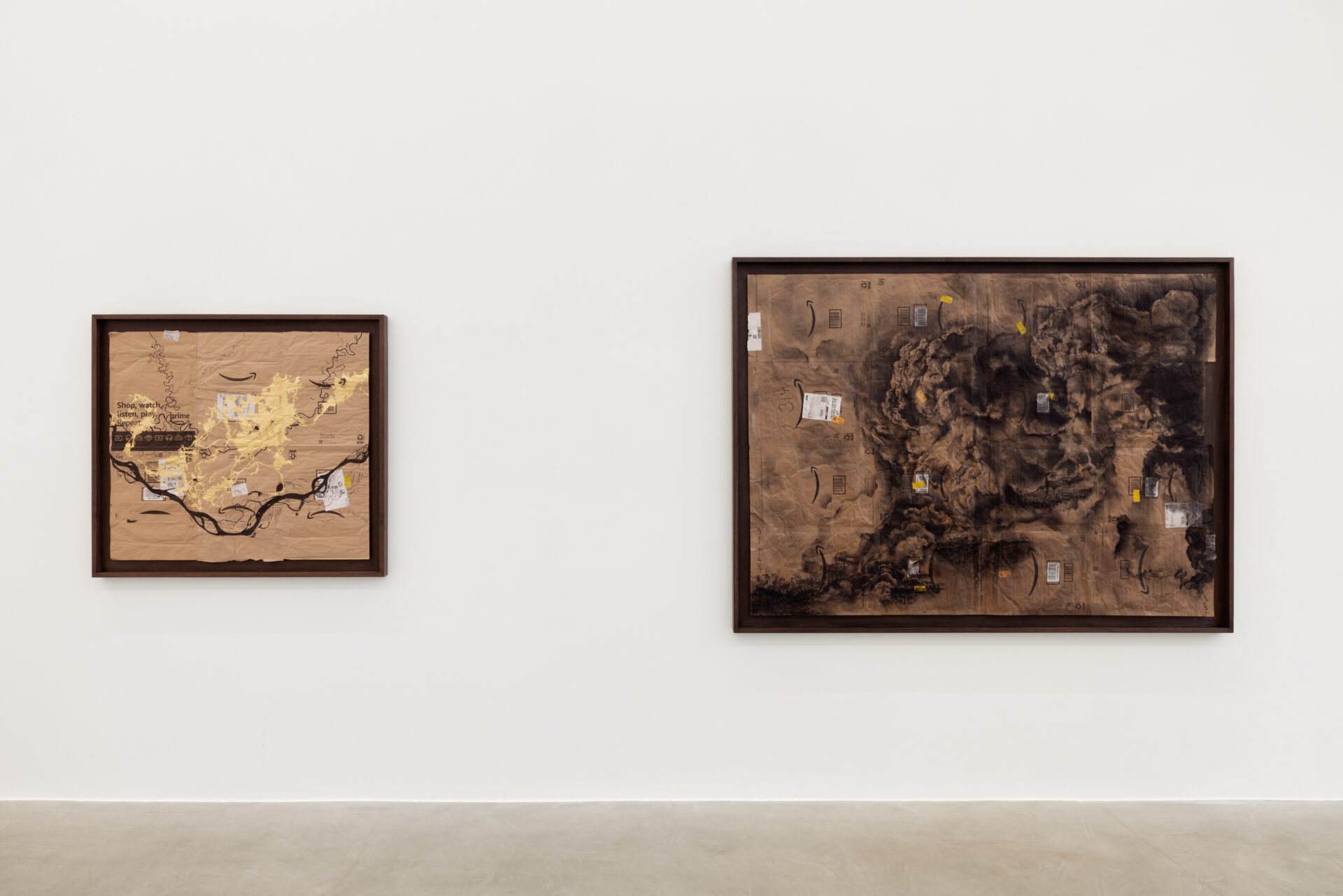
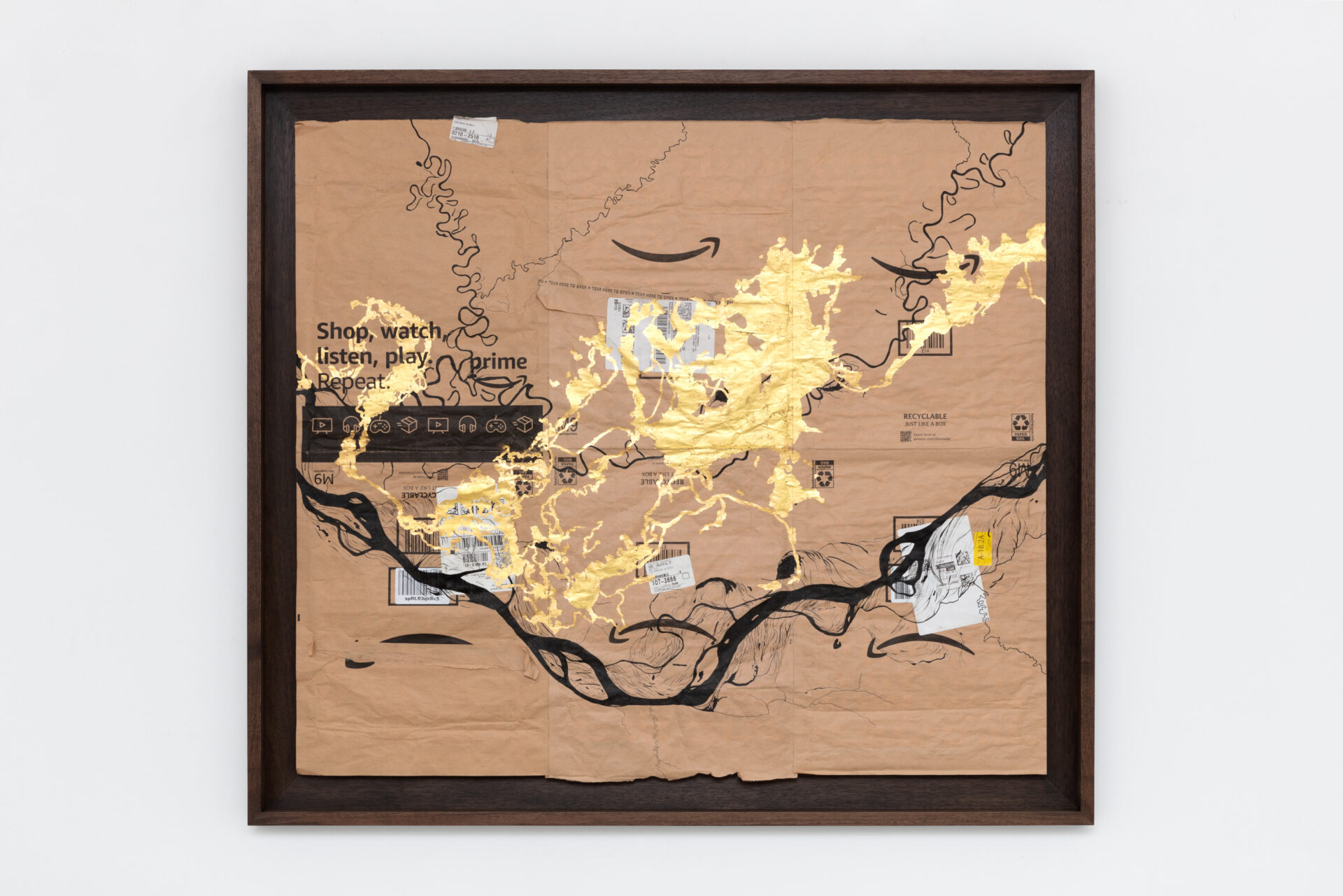
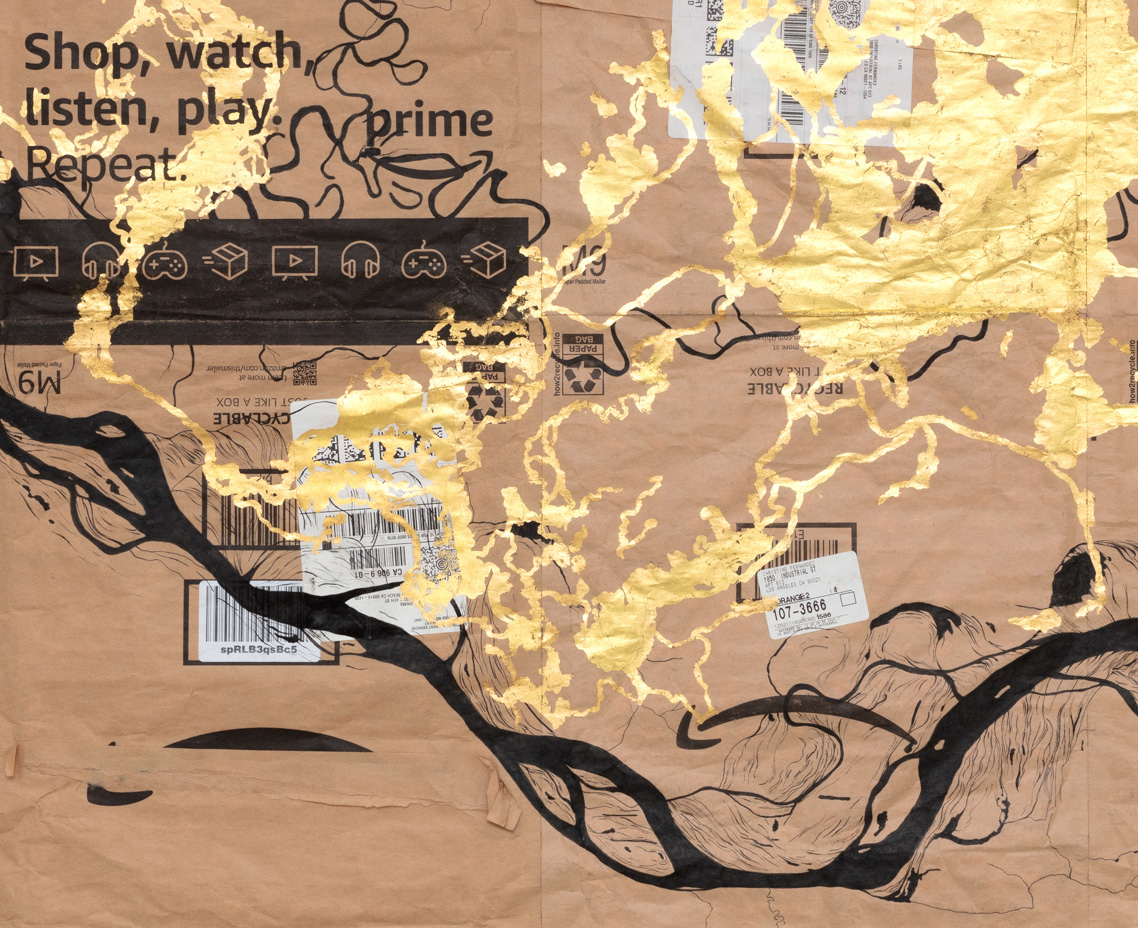
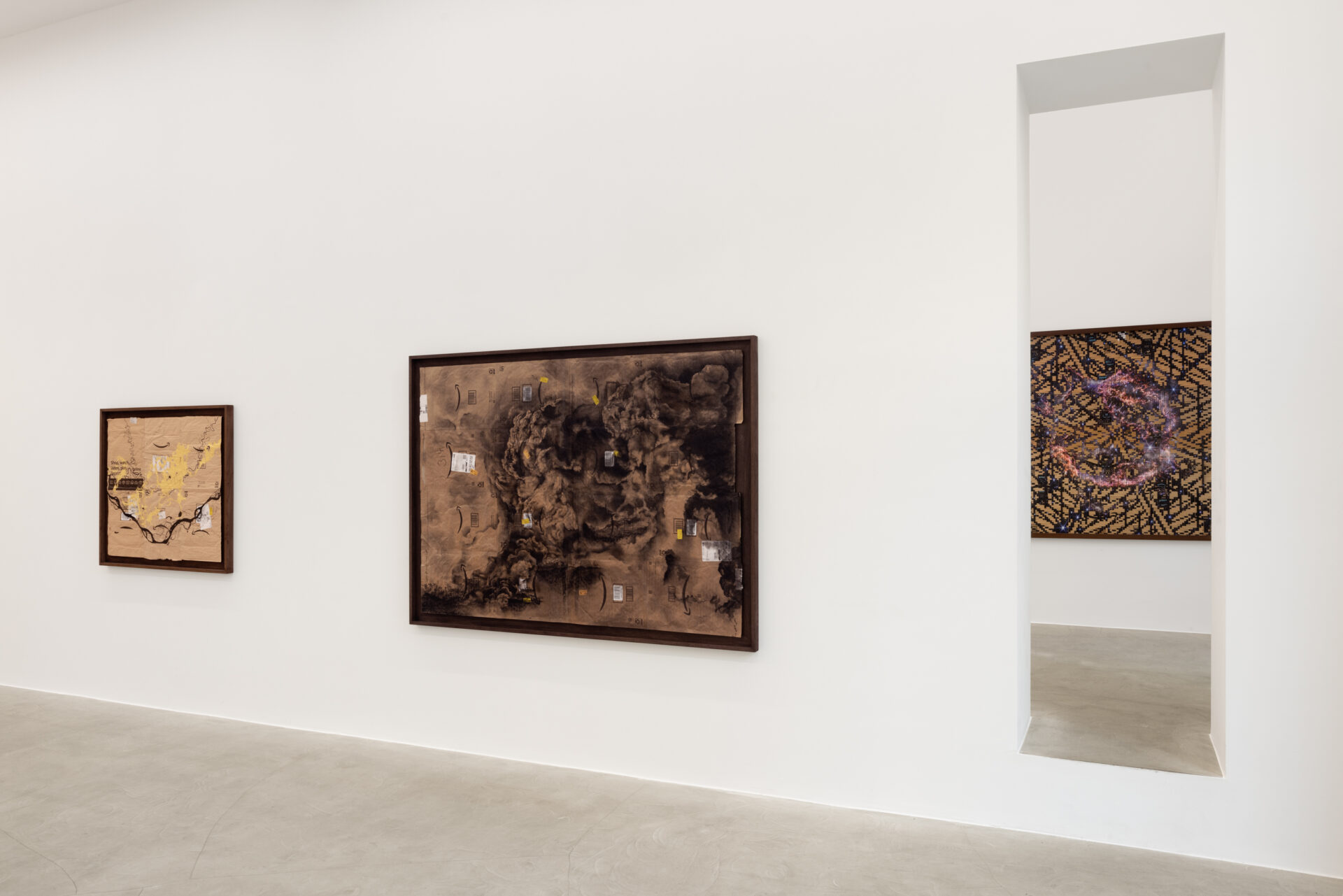
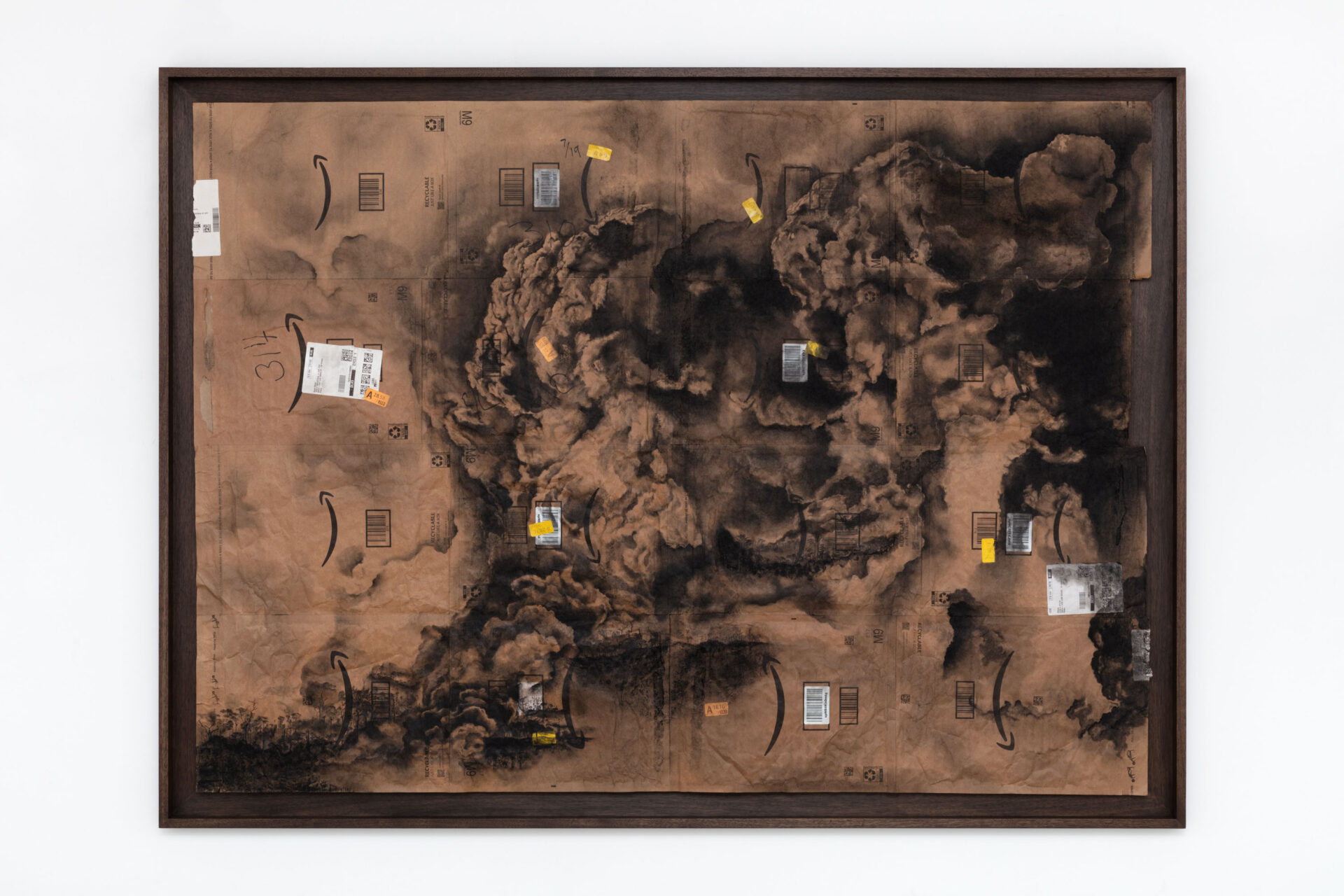
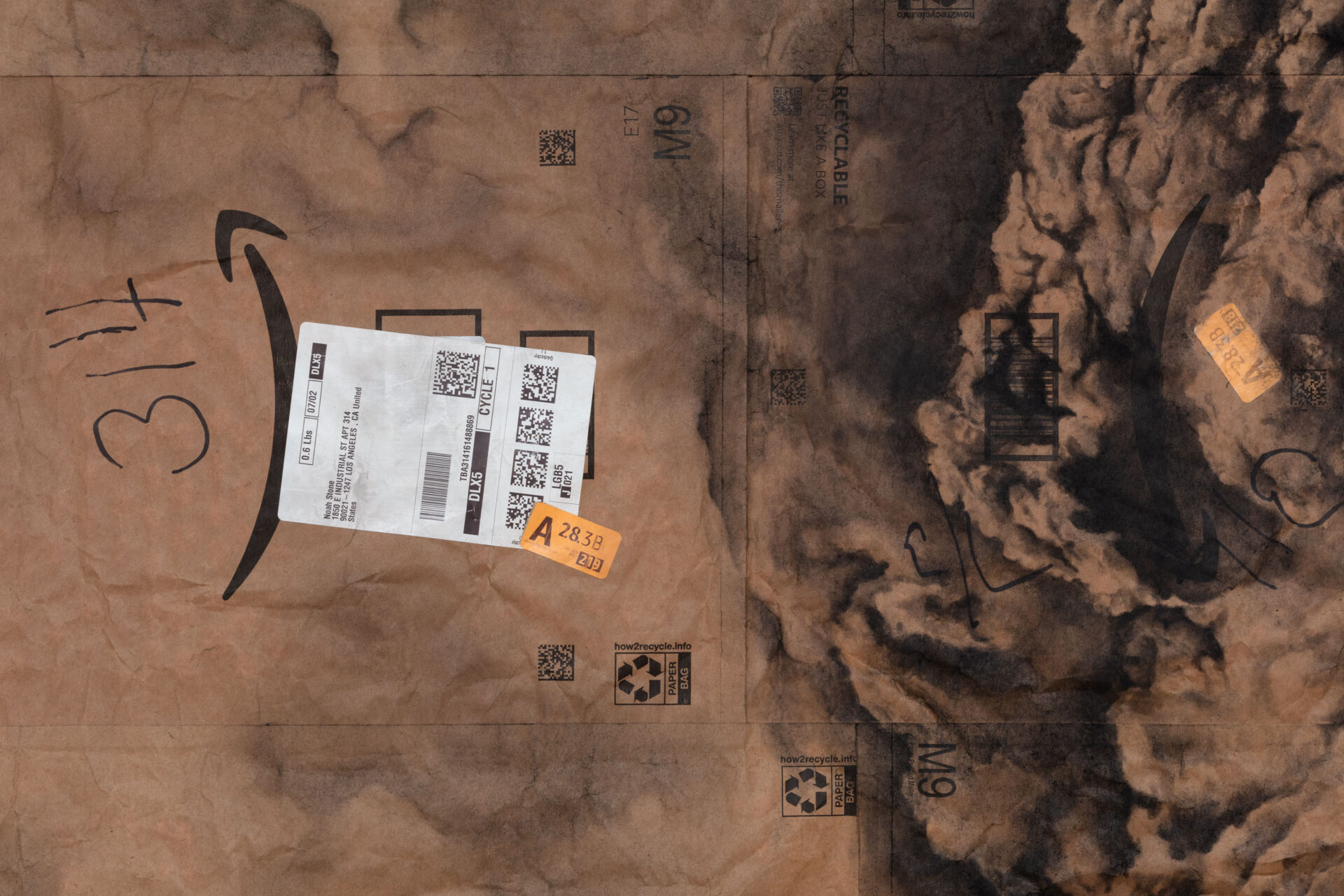
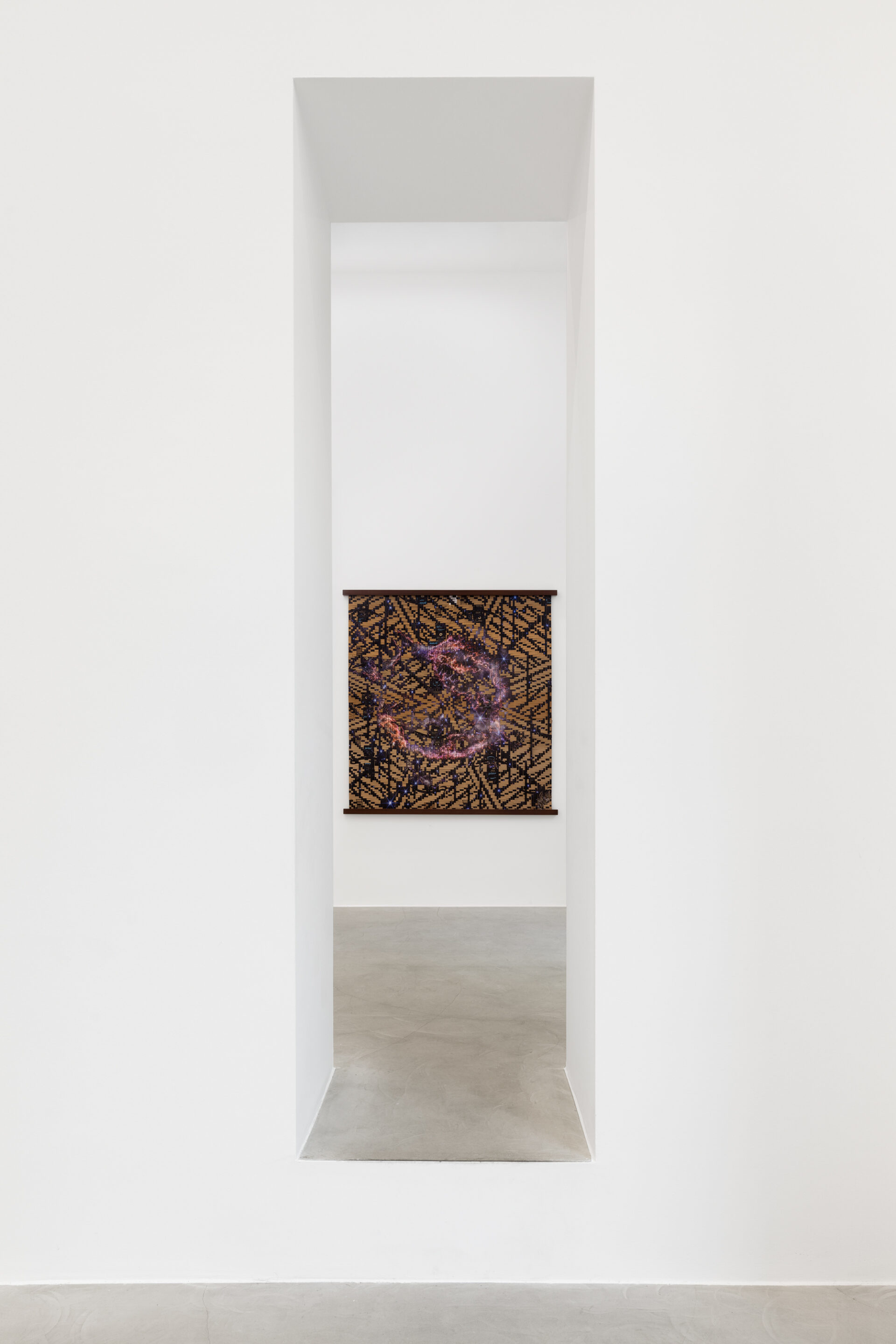
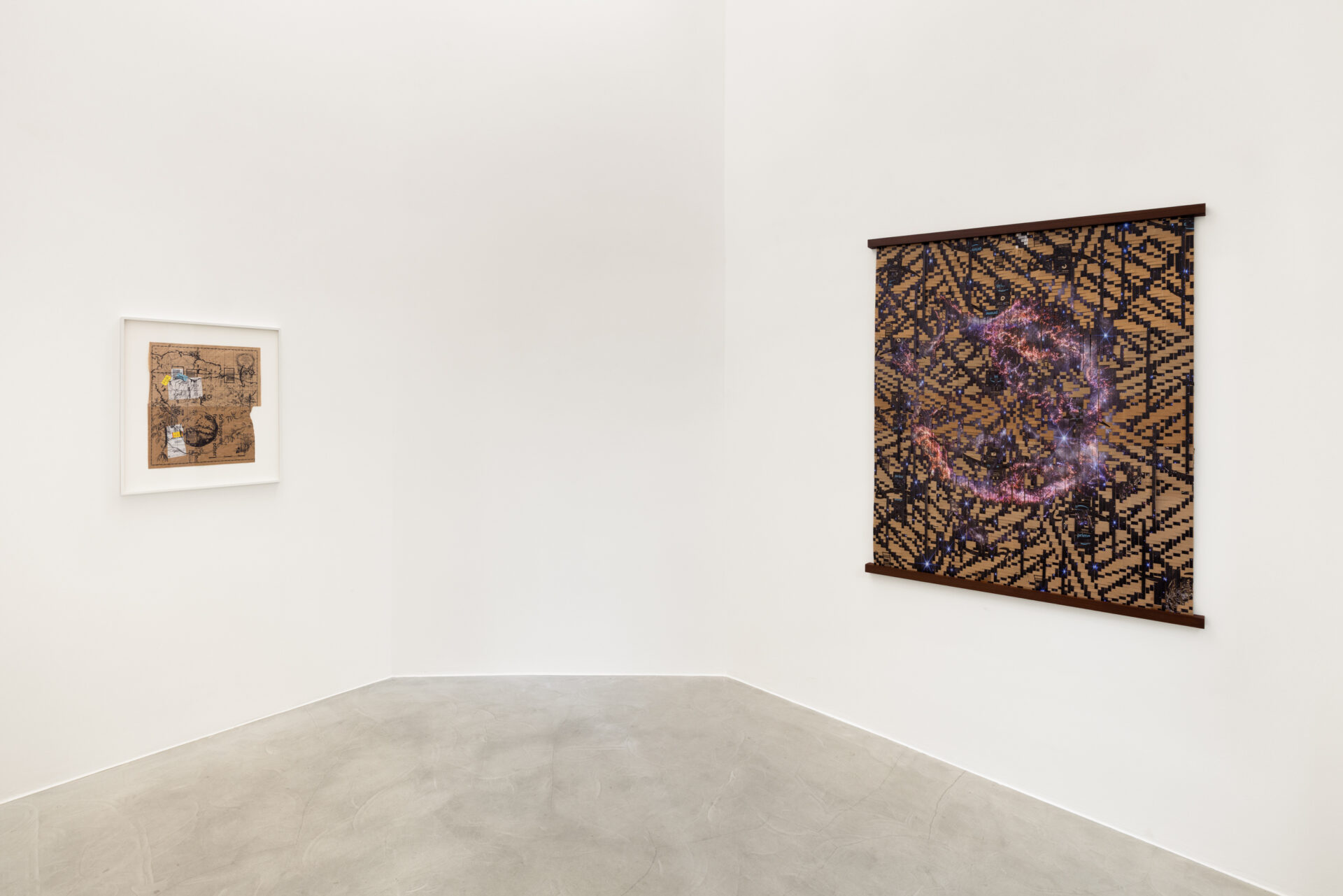
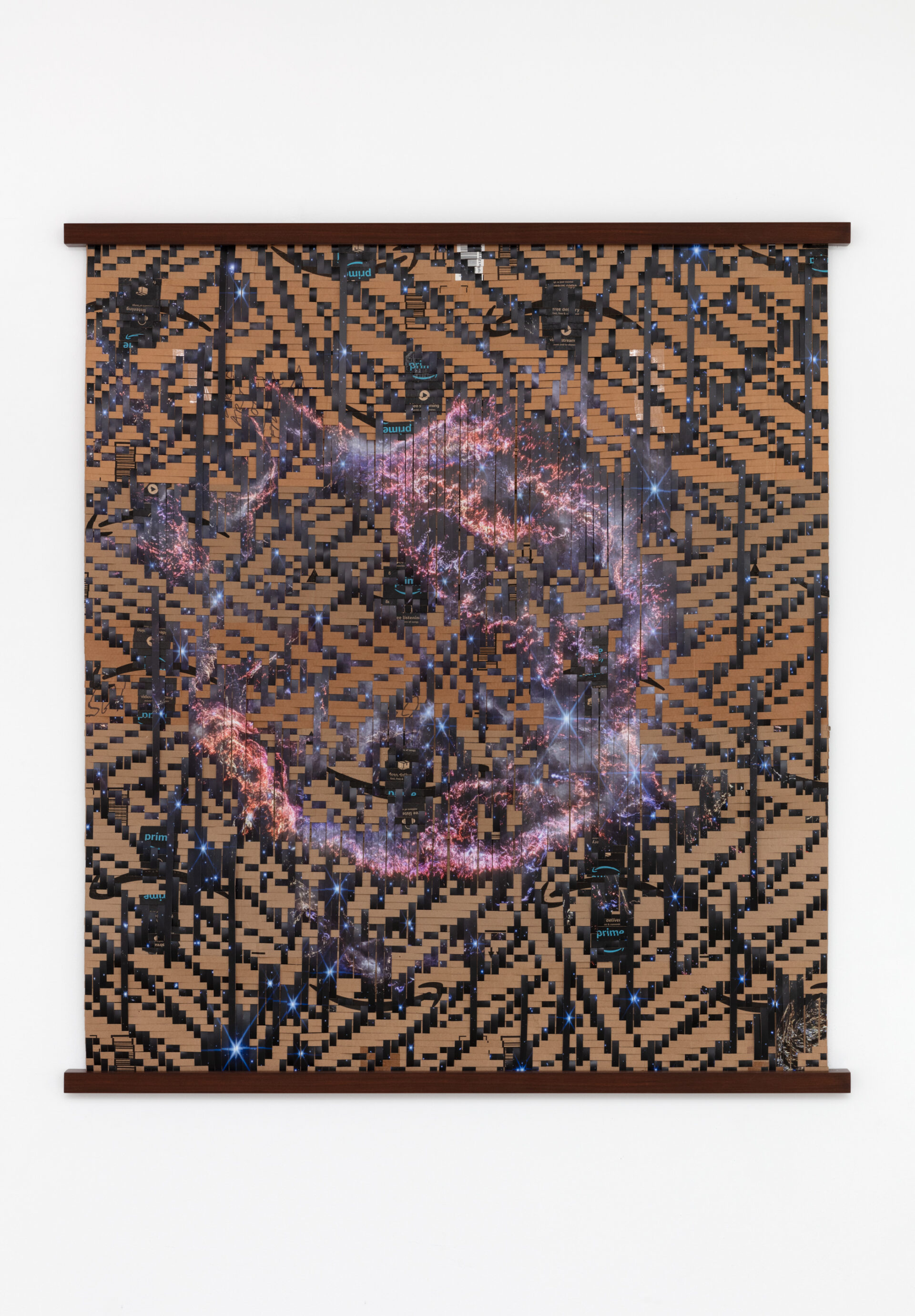
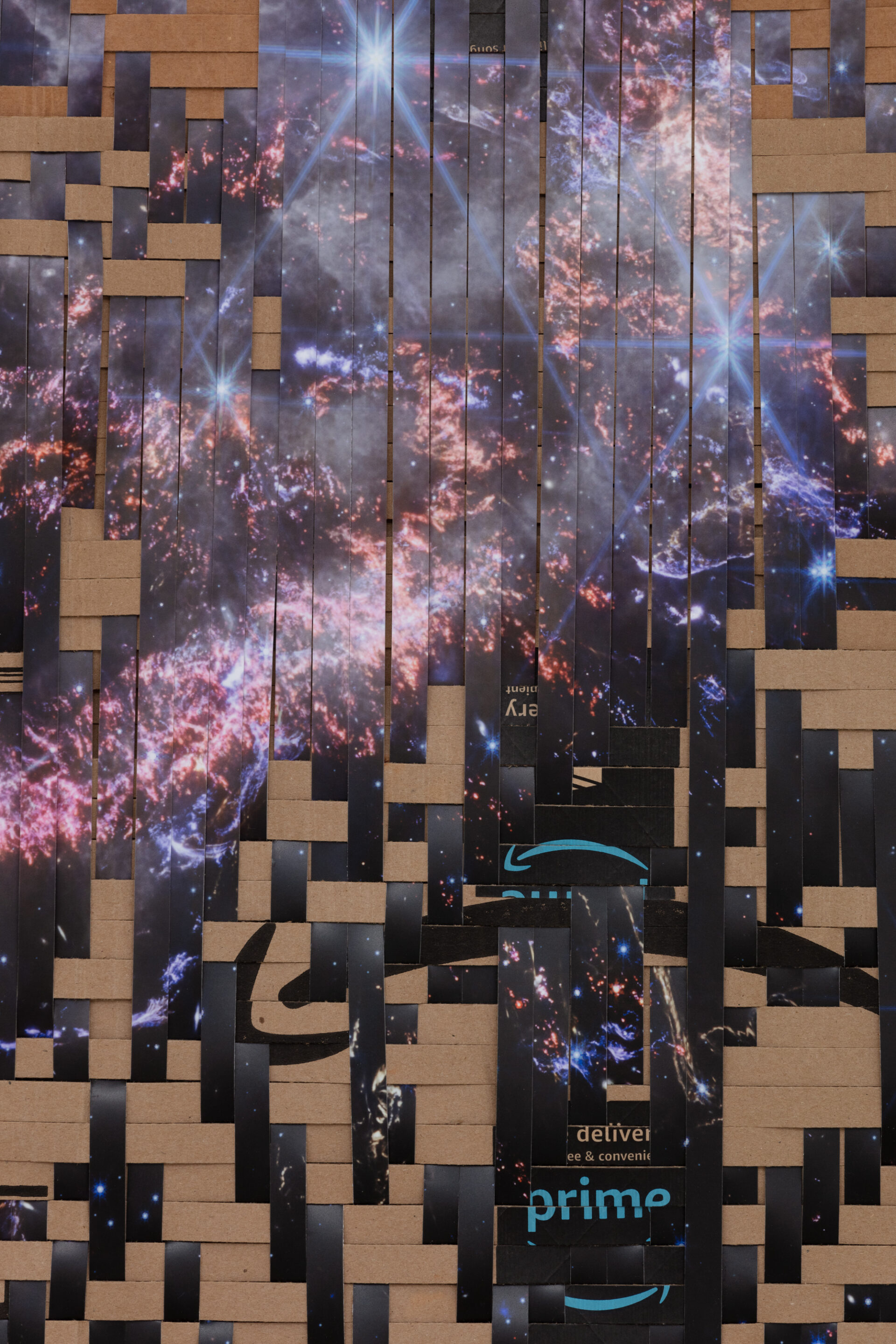
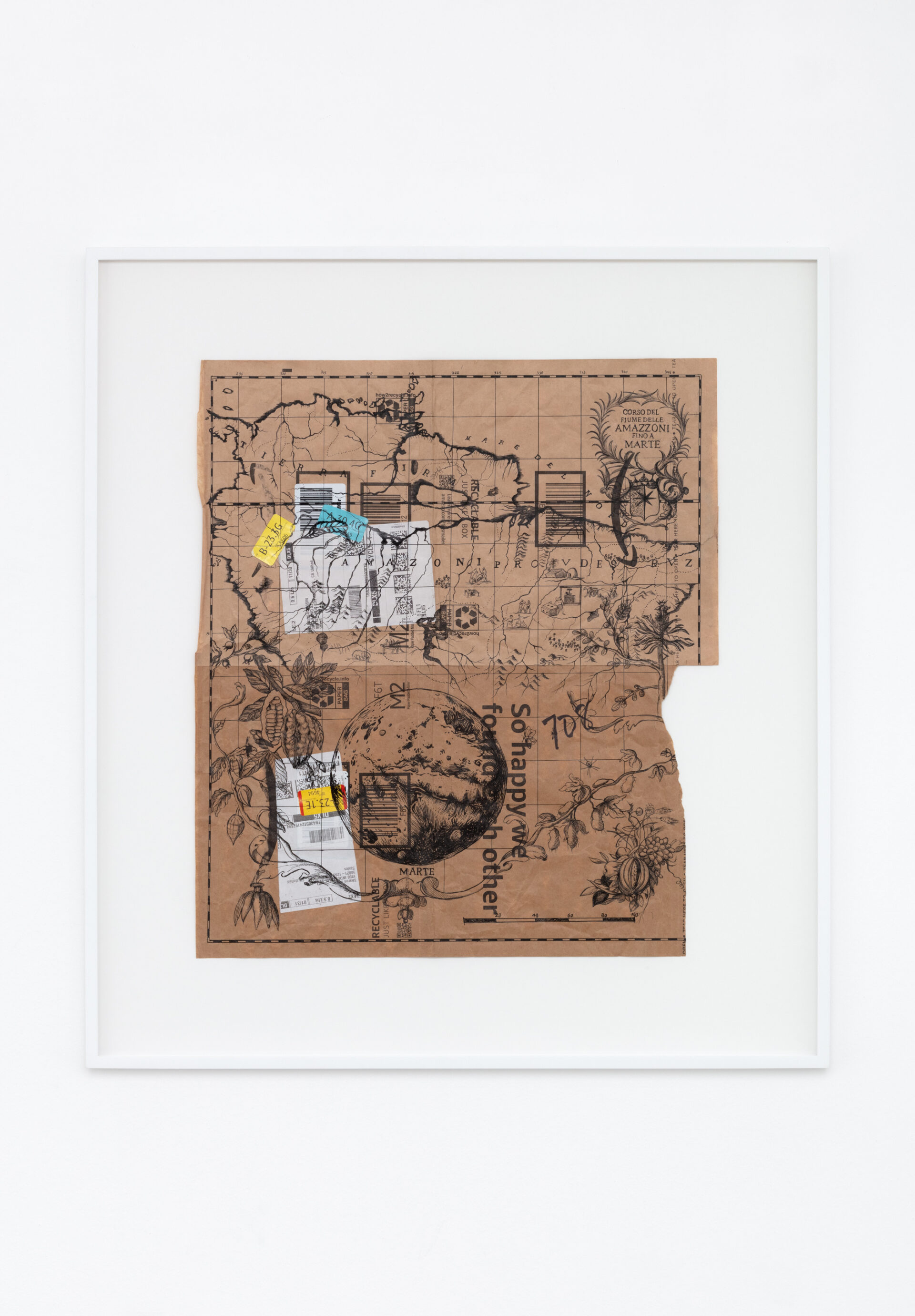
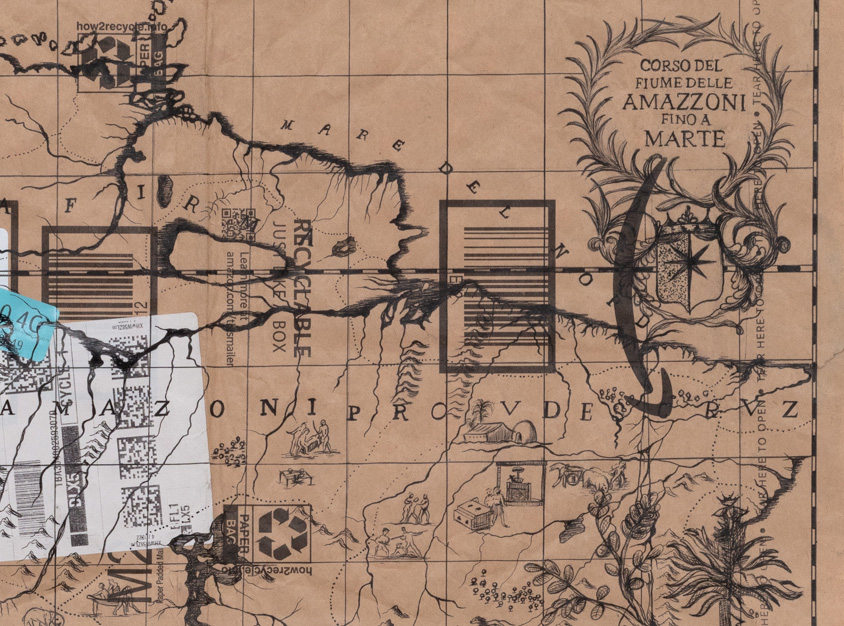
These same concerns run through a group of works made from recycled Amazon shipping boxes and envelopes. For years, Tossin has employed these materials — symbols of global logistics and the disposable economy — transforming them through a slow process of dismantling, weaving, and reassembling. Upon these surfaces emerge historical maps, satellite imagery, and representations of Brazil’s great rivers, bringing cartography into dialogue with contemporary technologies of territorial observation and control. The waterways of the Amazon basin, once routes of colonial expansion and the transport of resources to Europe, overlap with the infrastructures of global commerce and the new geographies of space exploration, suggesting how extractive logics continue to reshape territories that appear geographically distant. The manual gesture of weaving introduces an alternative temporality, countering the speed of global circulation with a practice rooted in care, repair, and the transformation of matter.
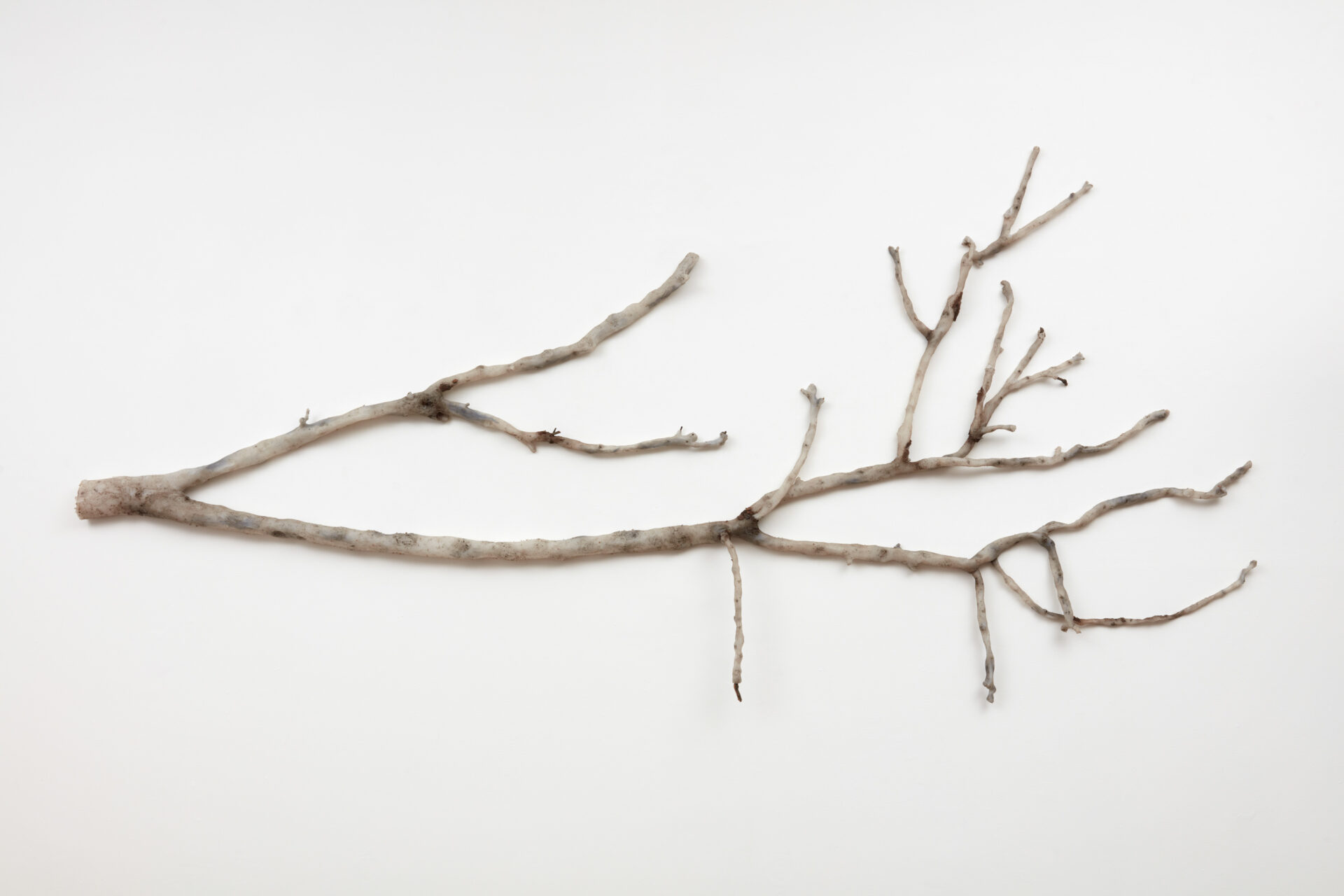
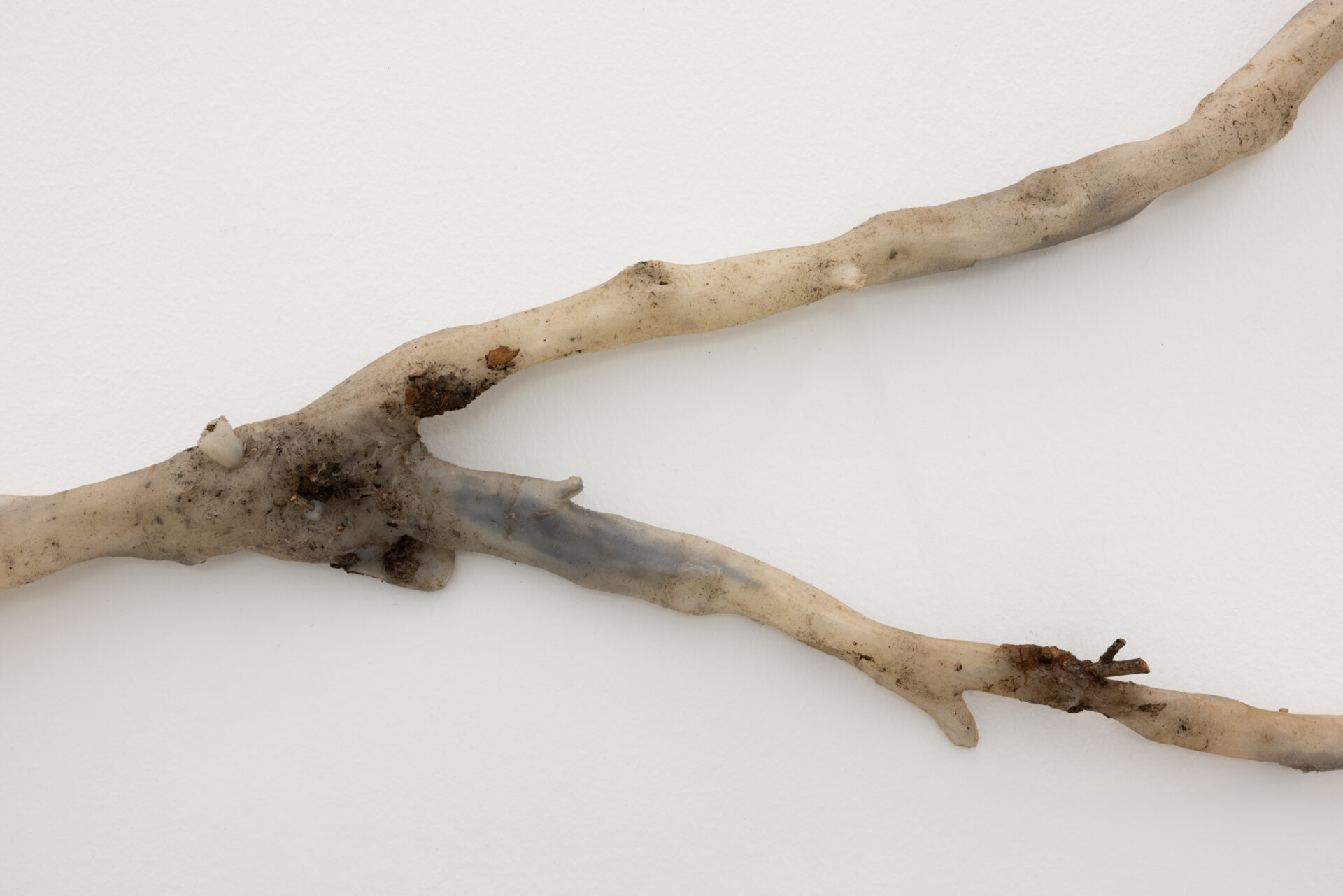
In Rising Temperature Casualty (Prunus persica var. nucipersica, home garden, Los Angeles) (2021), Tossin shifts the focus to the intimate scale of her own domestic garden. Cast in translucent silicone, the sculpture incorporates fragments of the original bark of a peach tree that died as a result of prolonged drought and rising temperatures in Los Angeles. The cast preserves the tree’s physical memory, transforming it into a fragile, almost epidermal presence in which organic and synthetic materials coexist. The work records the effects of the climate crisis not as an abstract phenomenon, but through the tangible loss of a single living organism.