

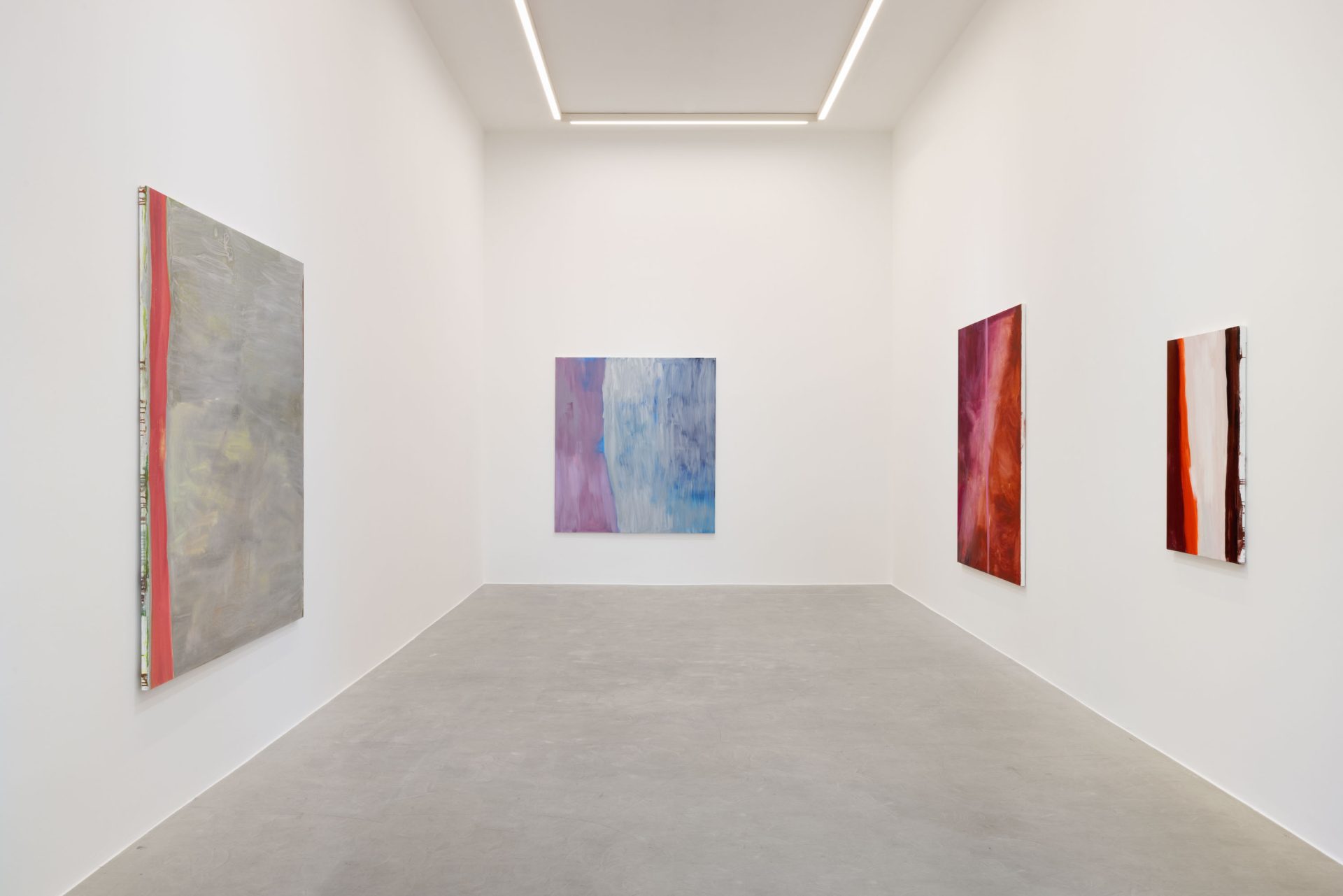
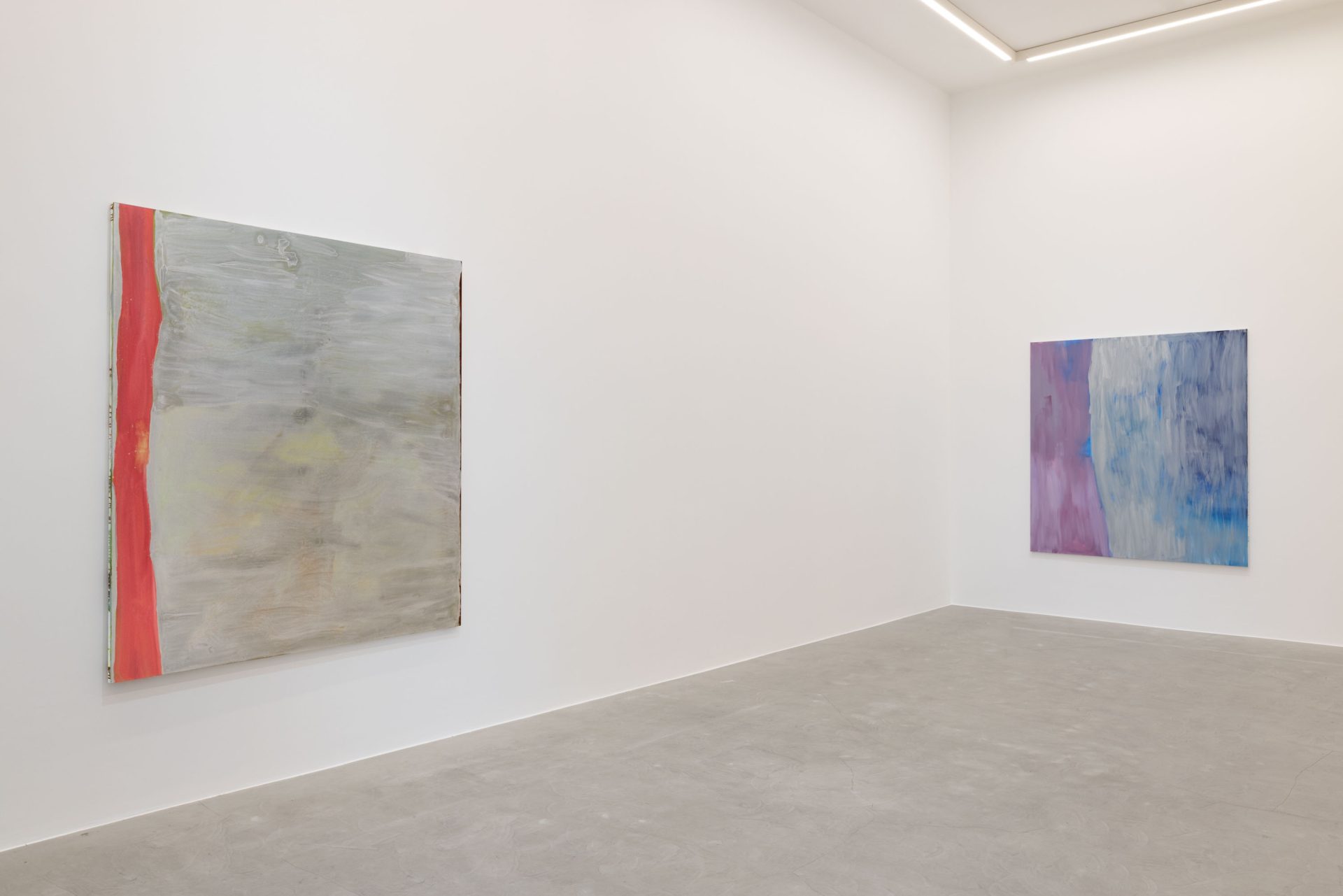
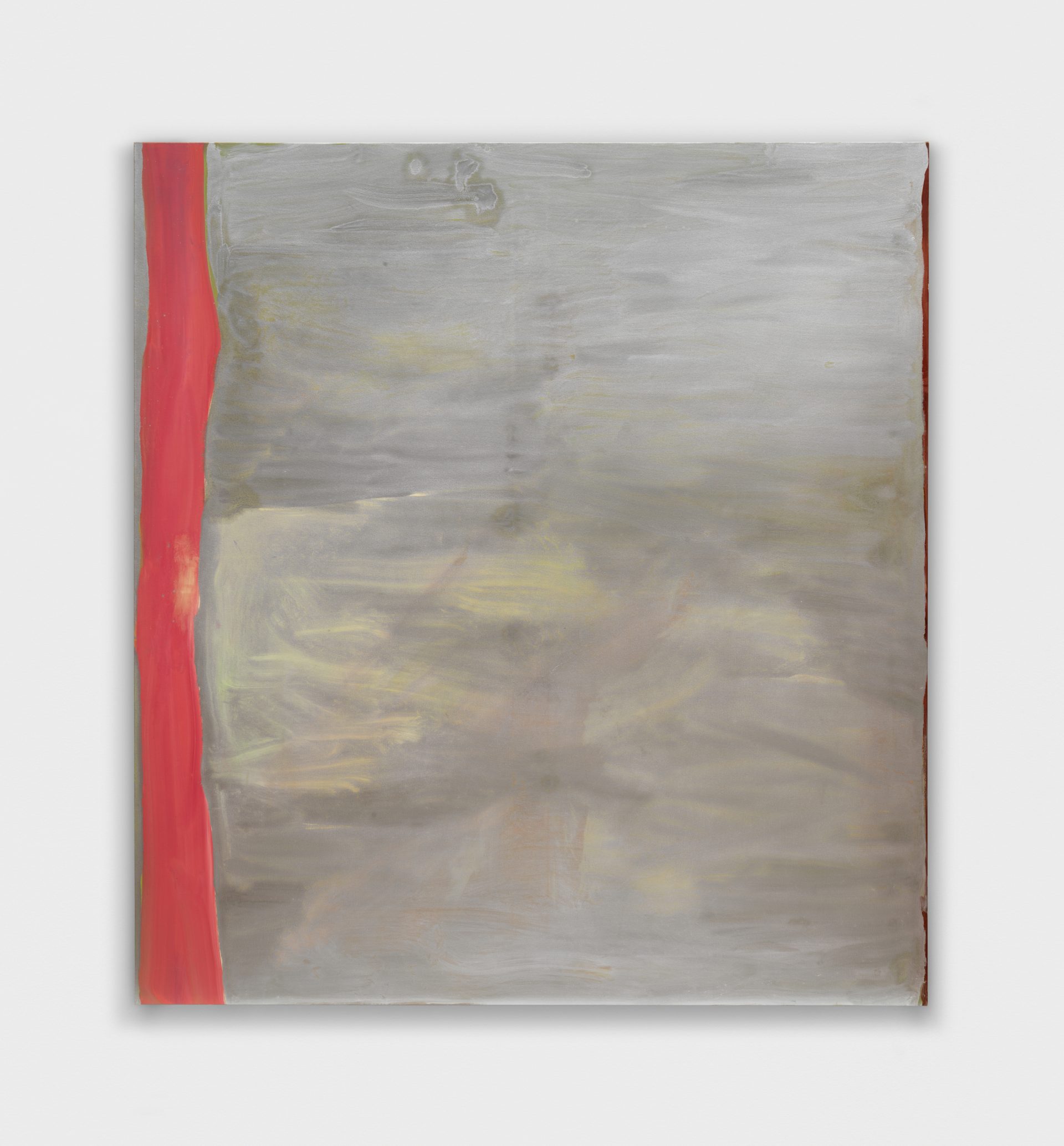
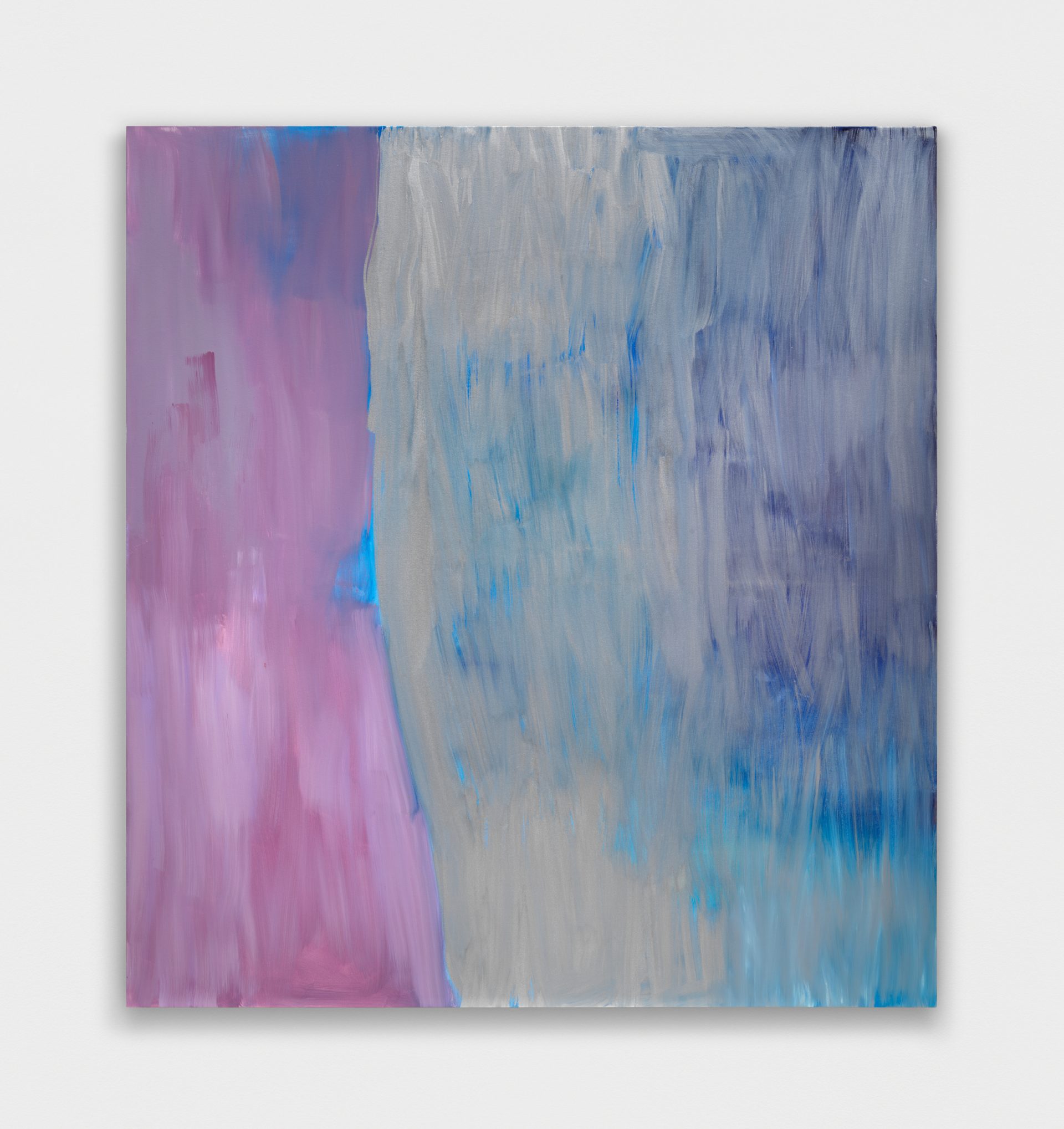
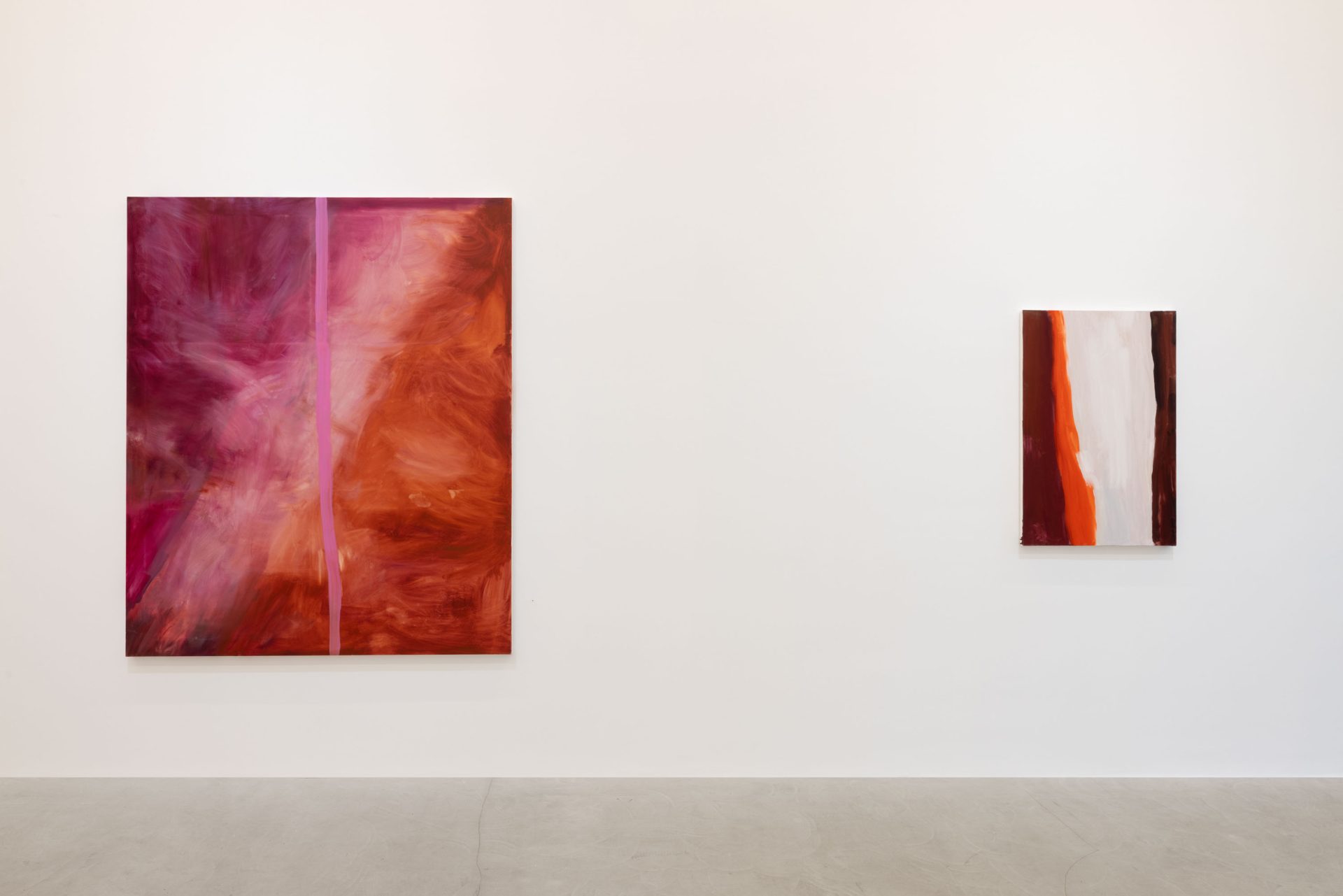
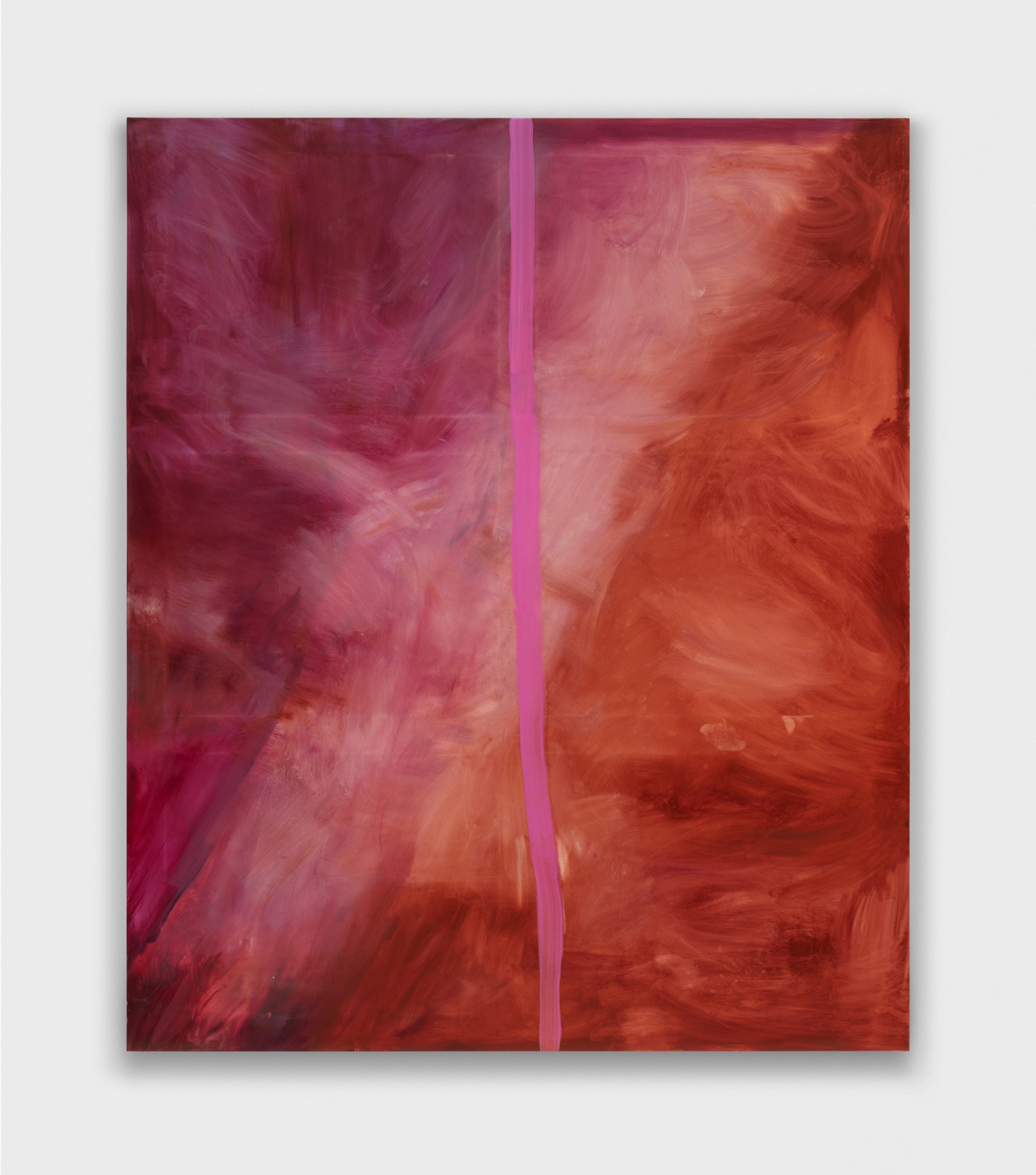
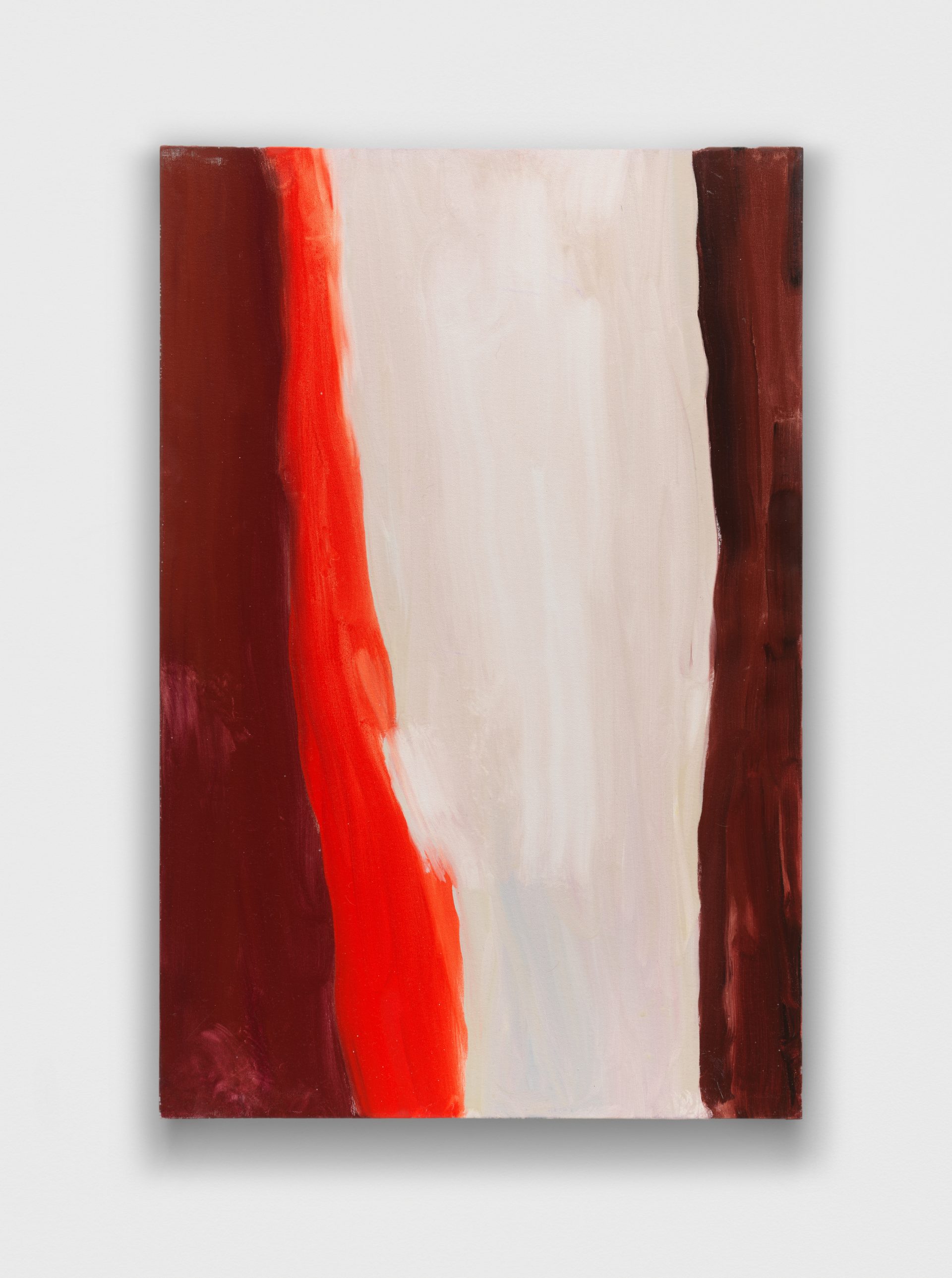
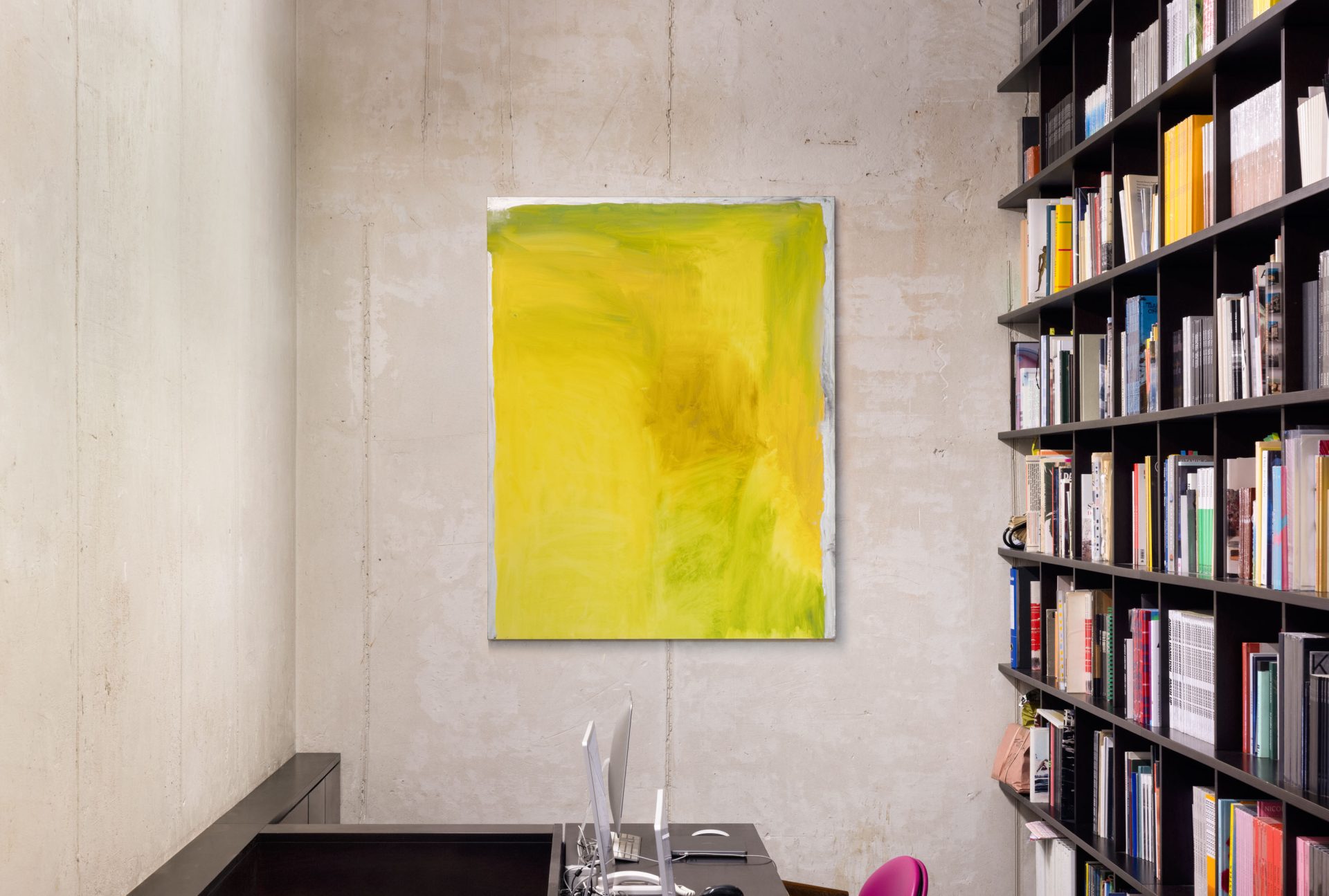
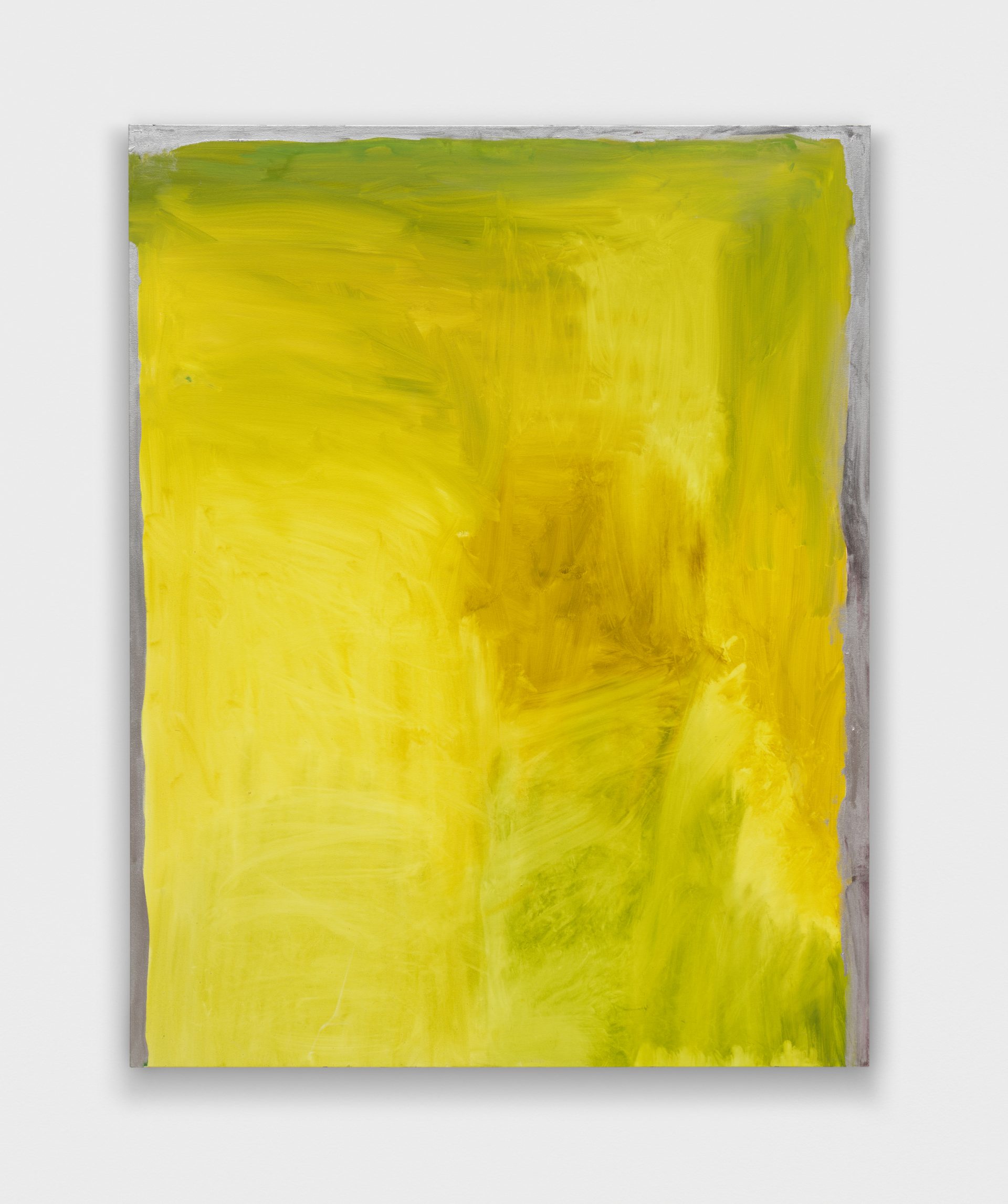
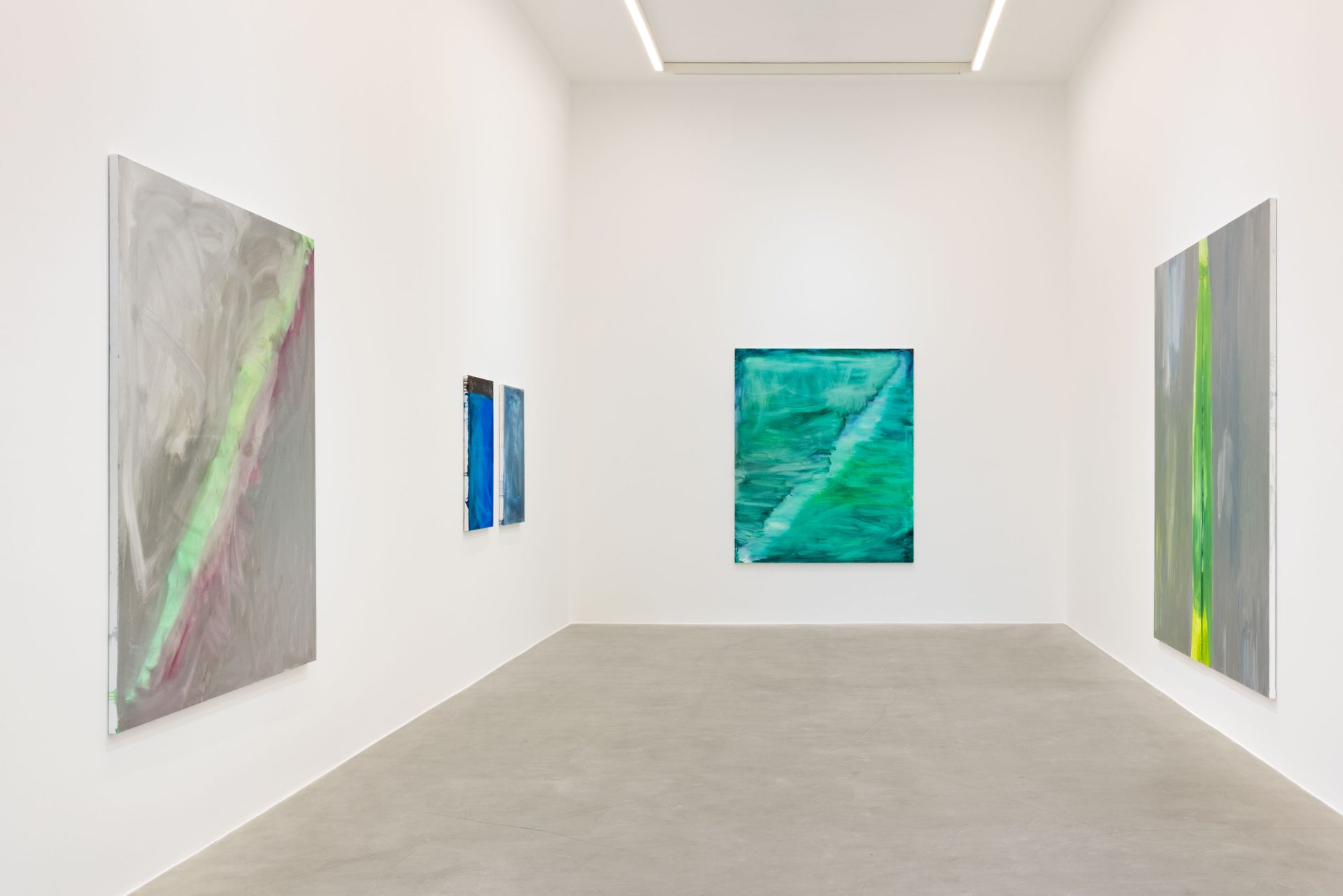
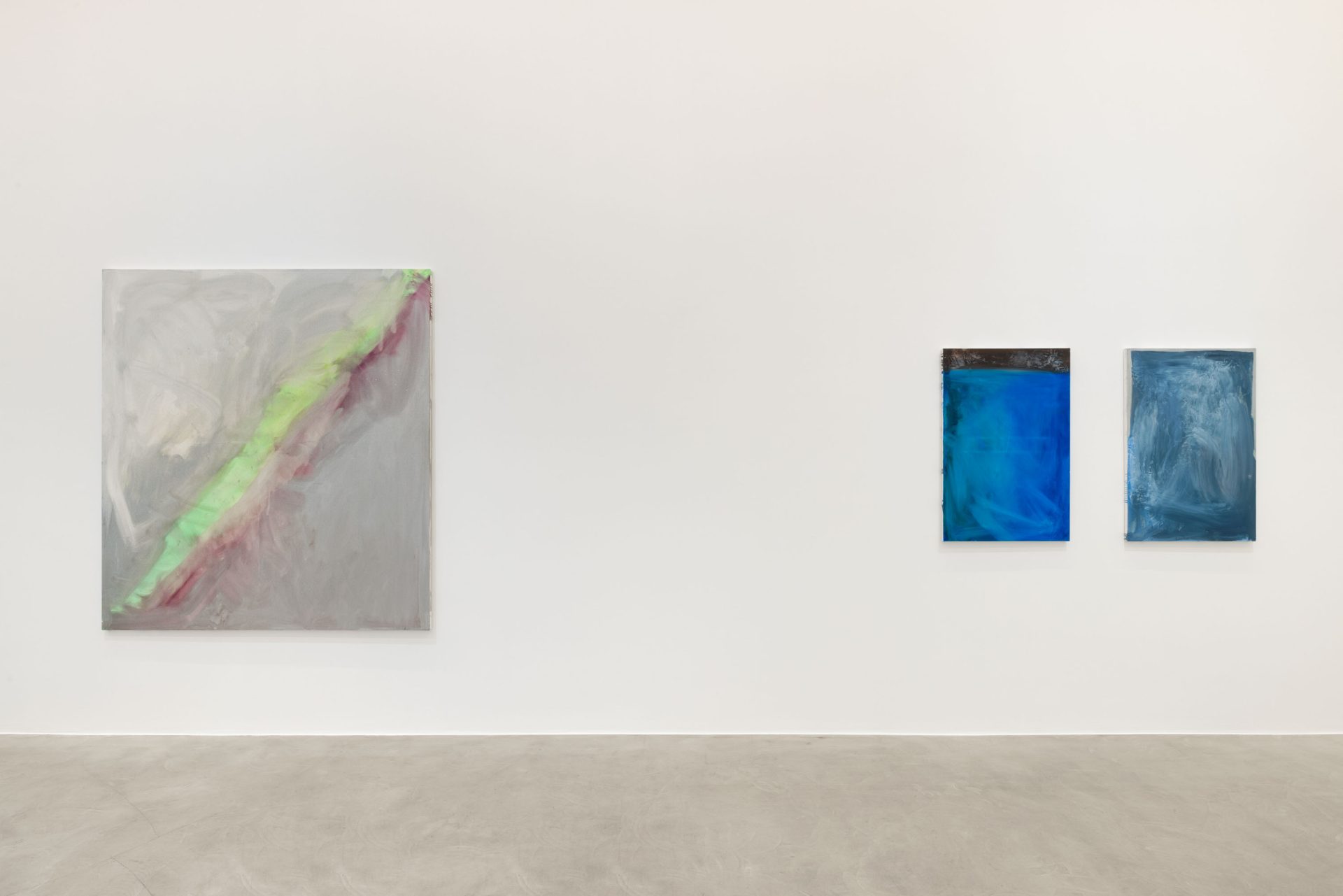
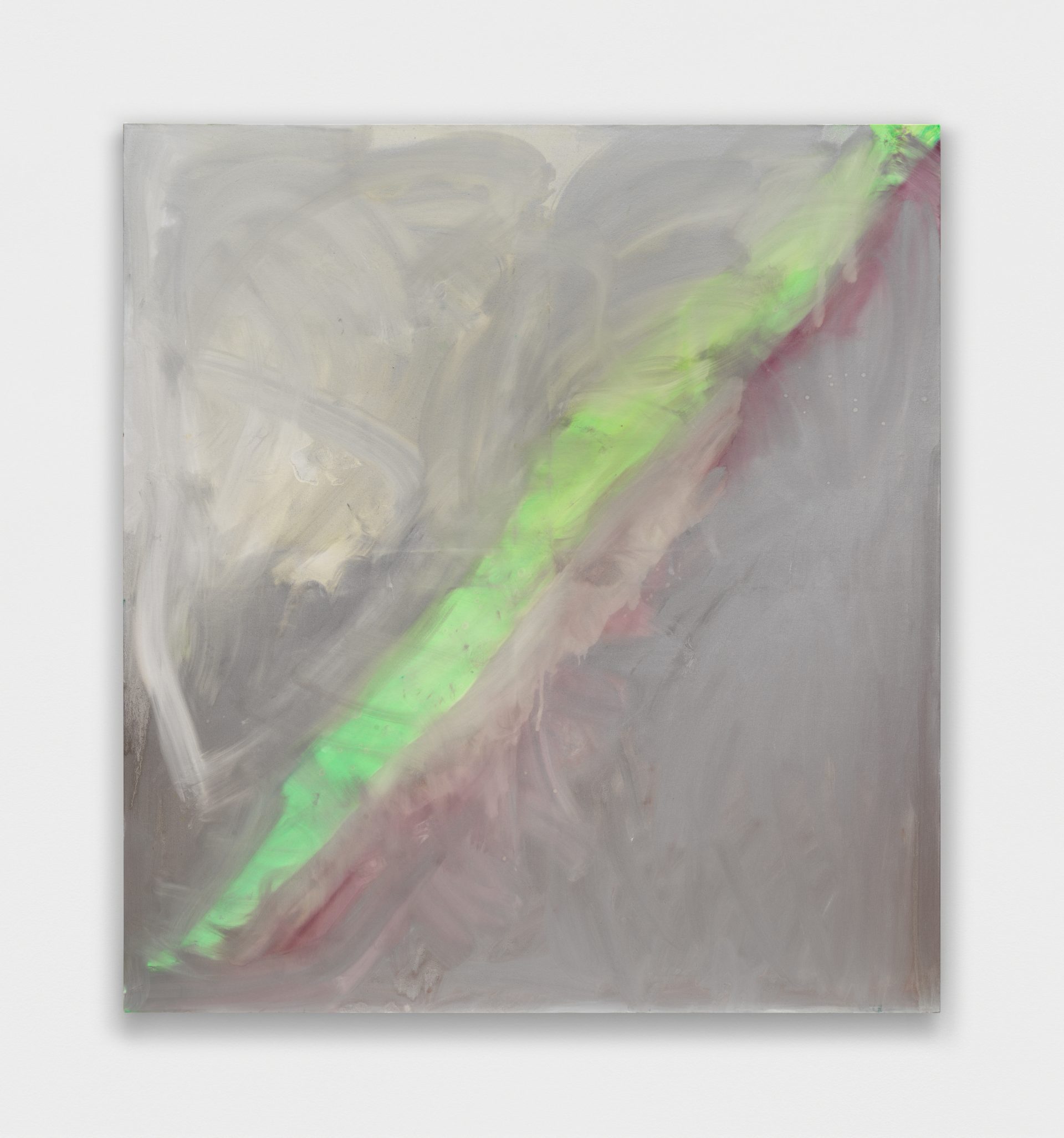
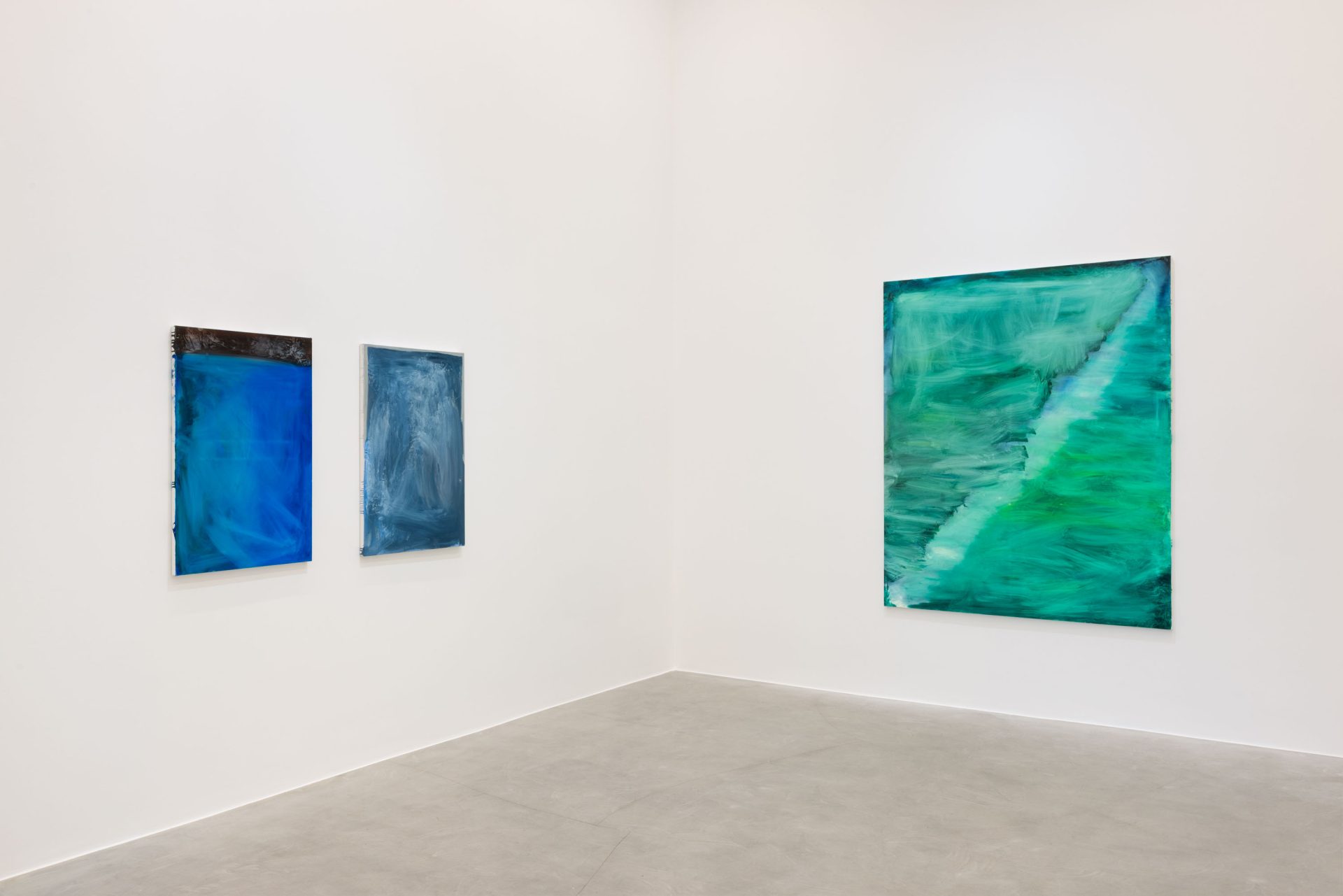
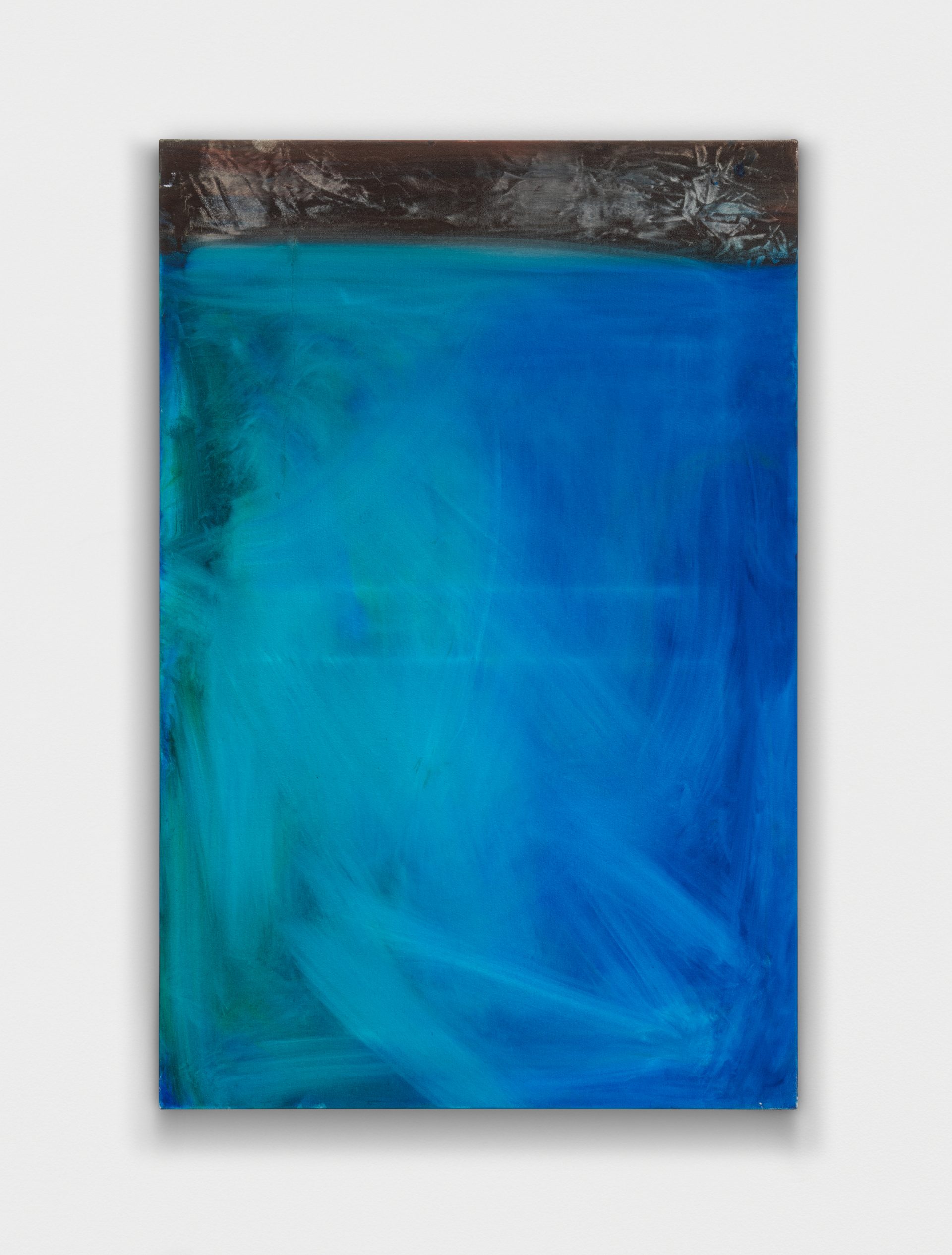
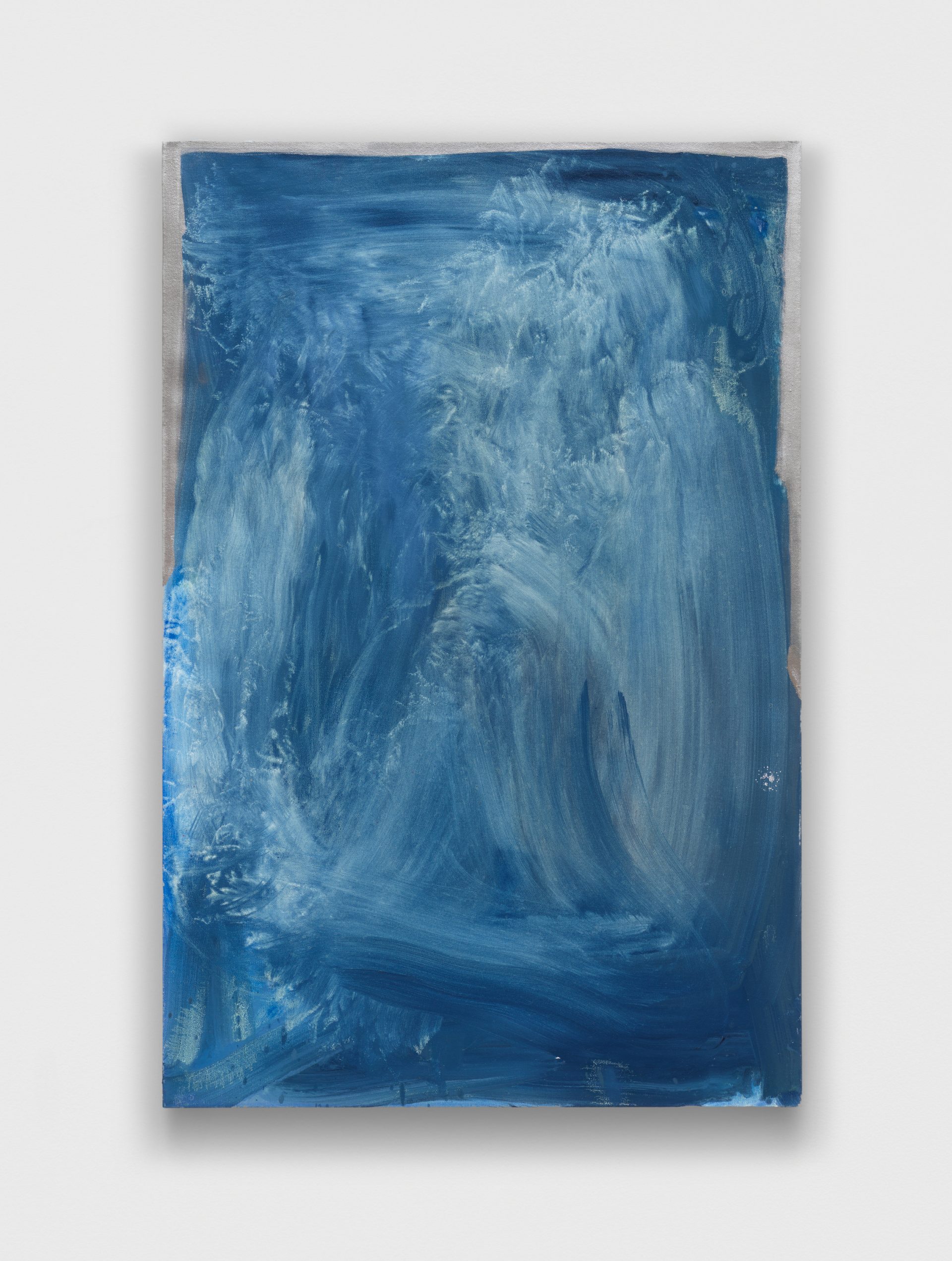
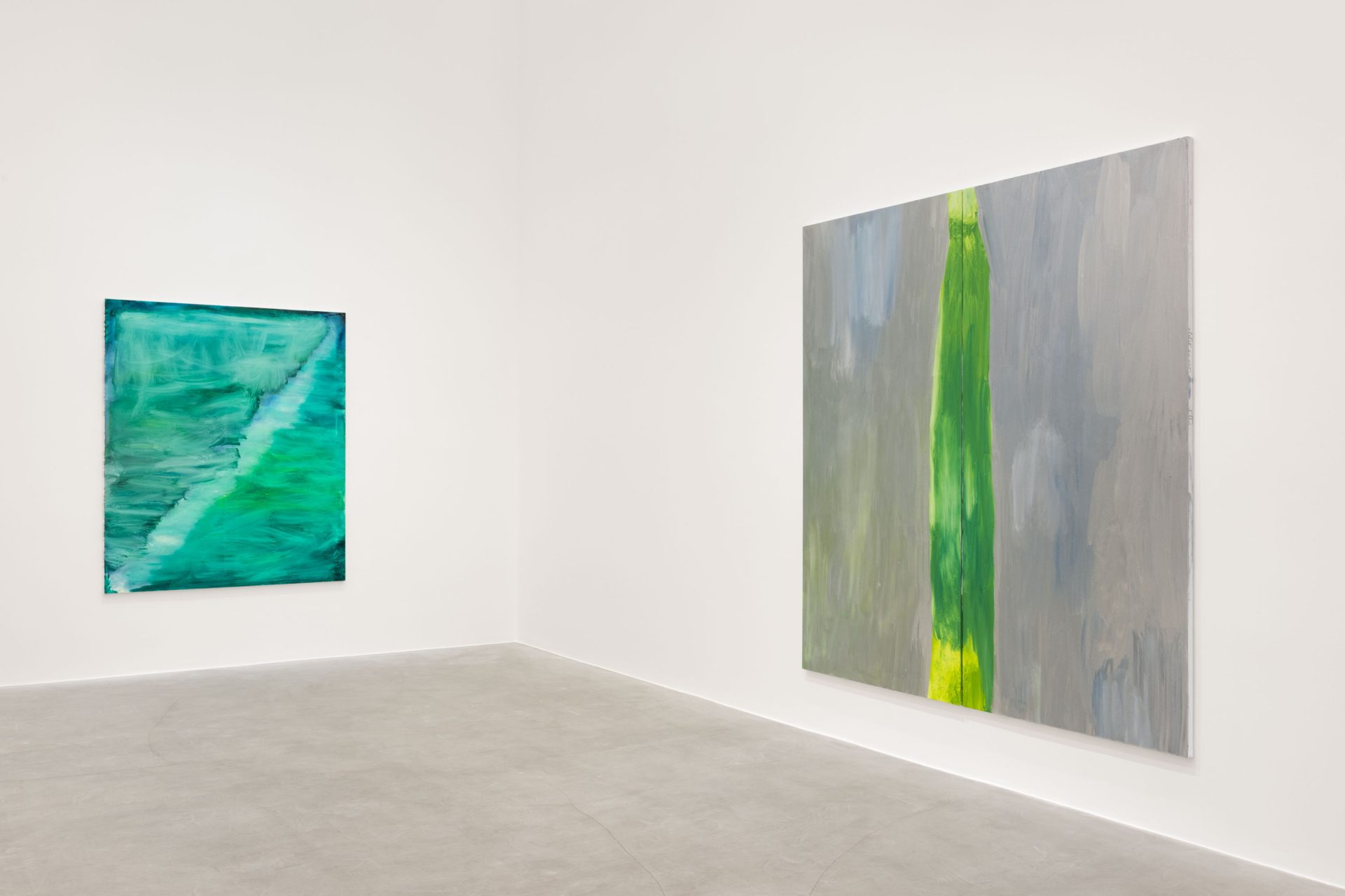
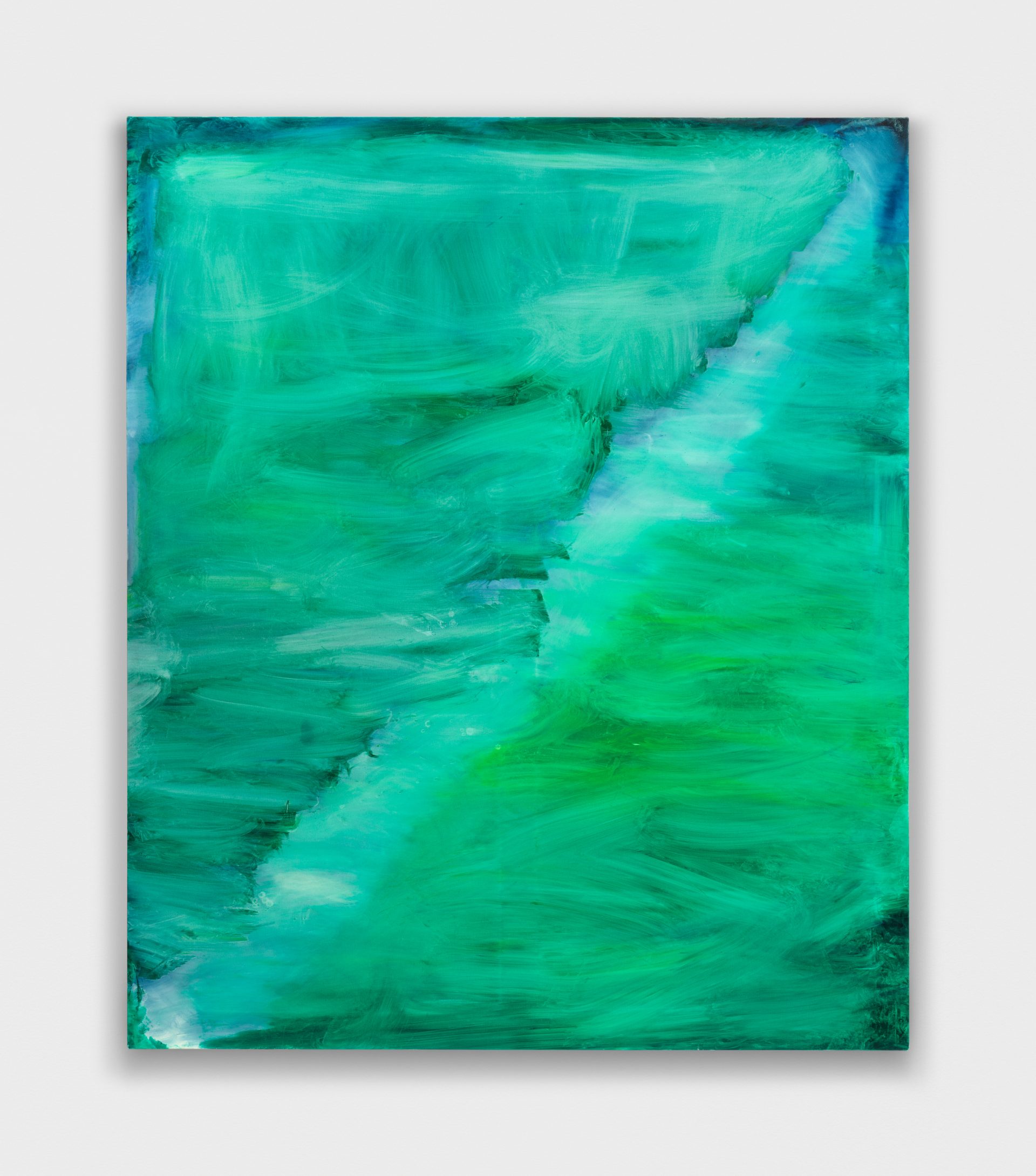
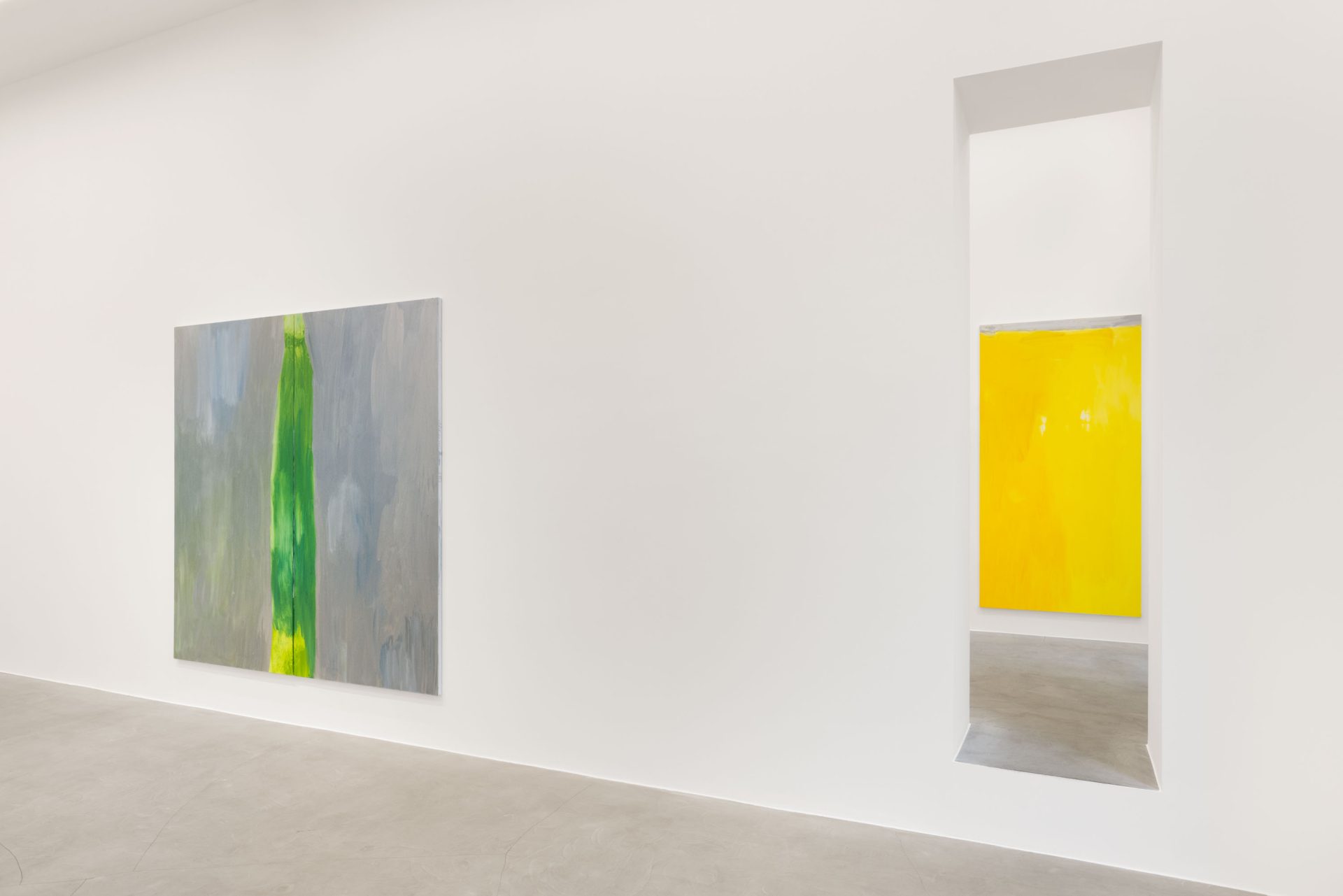
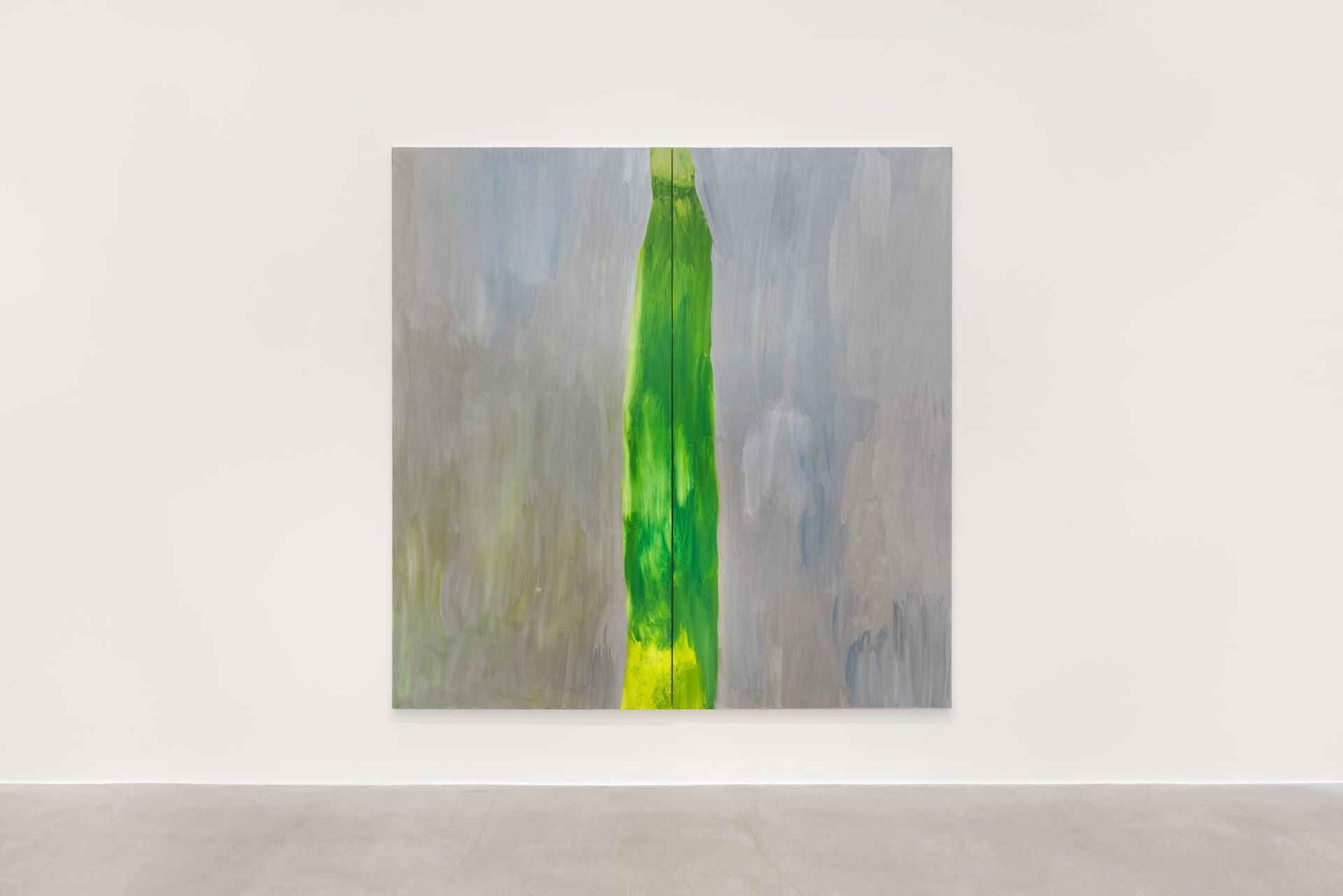
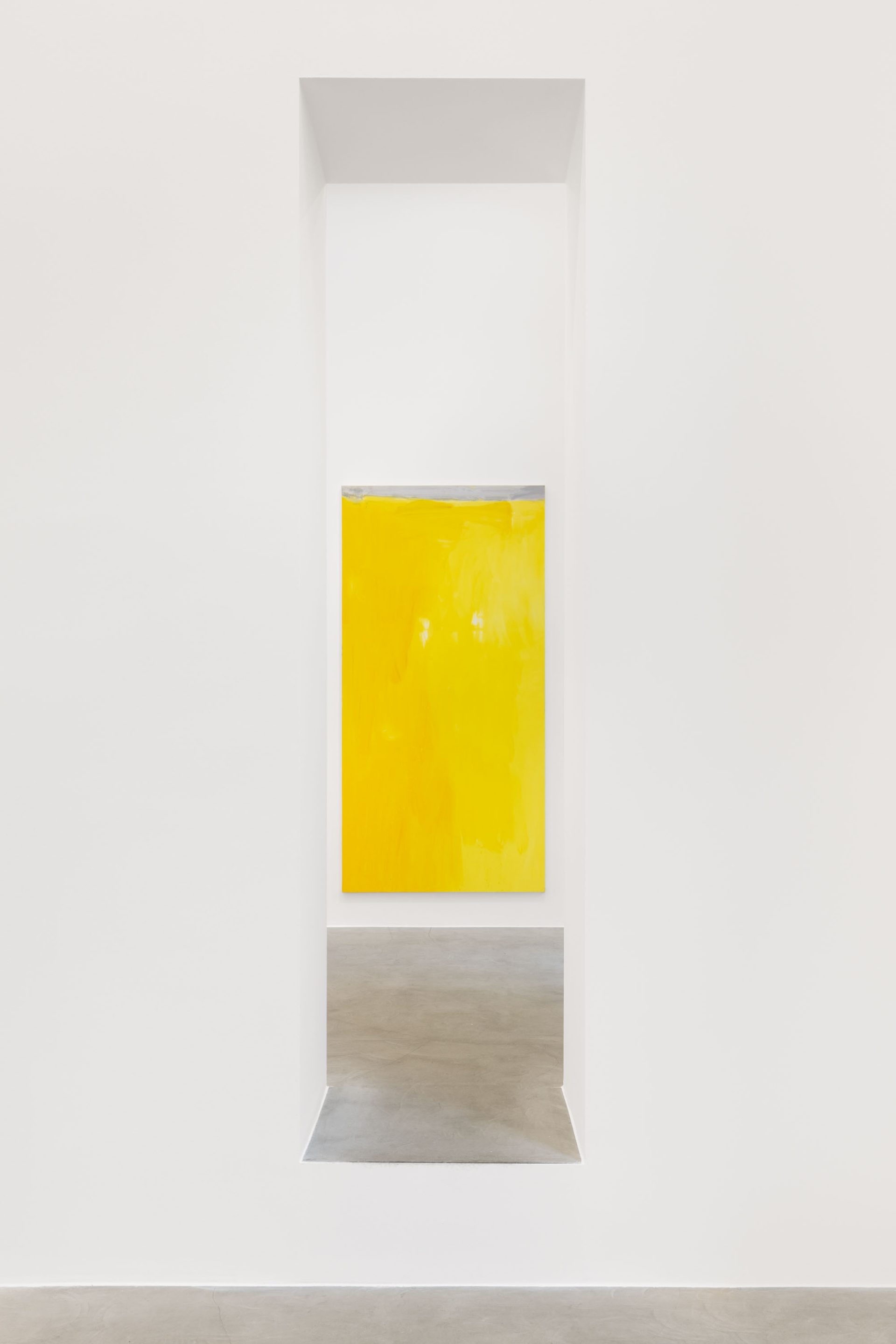
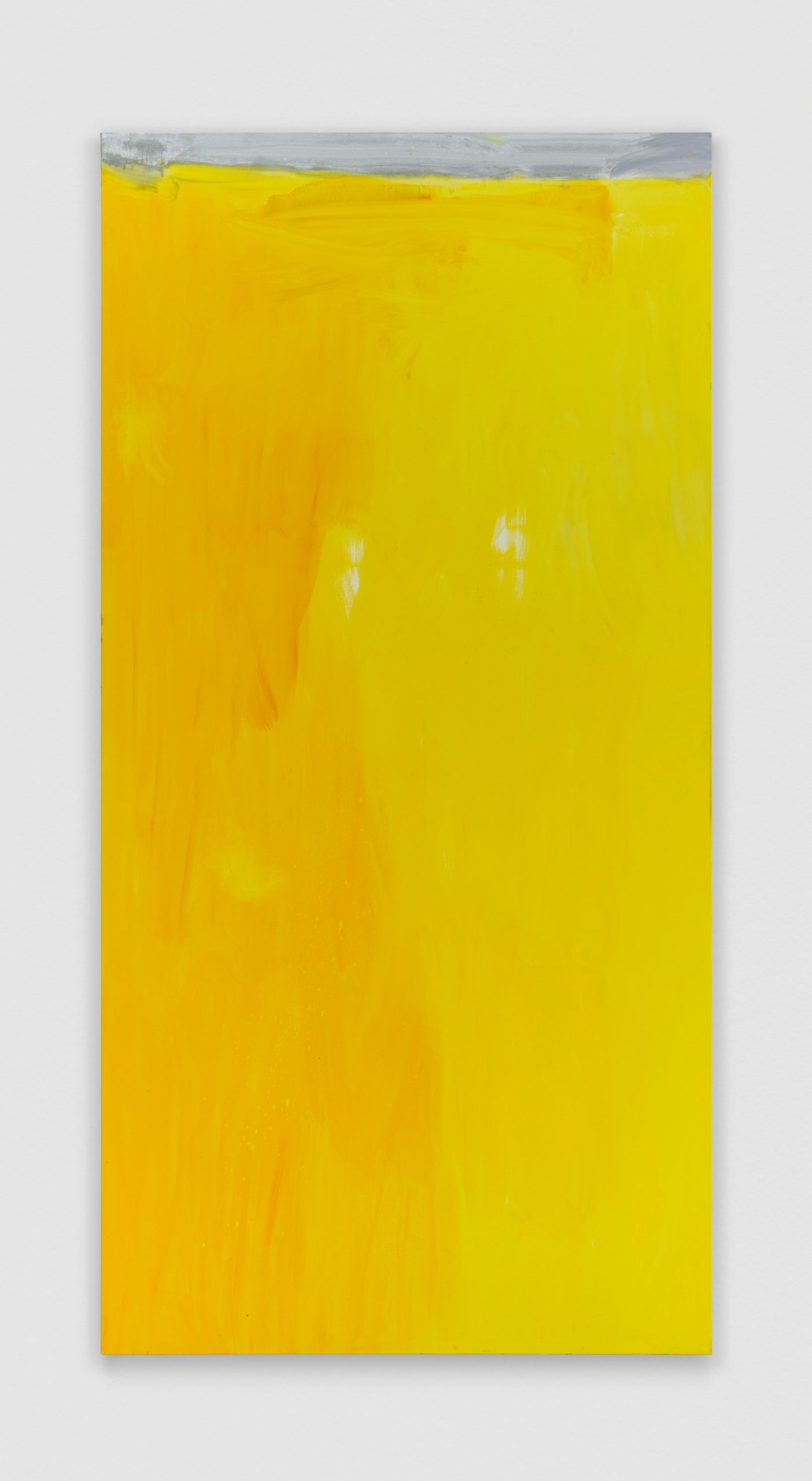
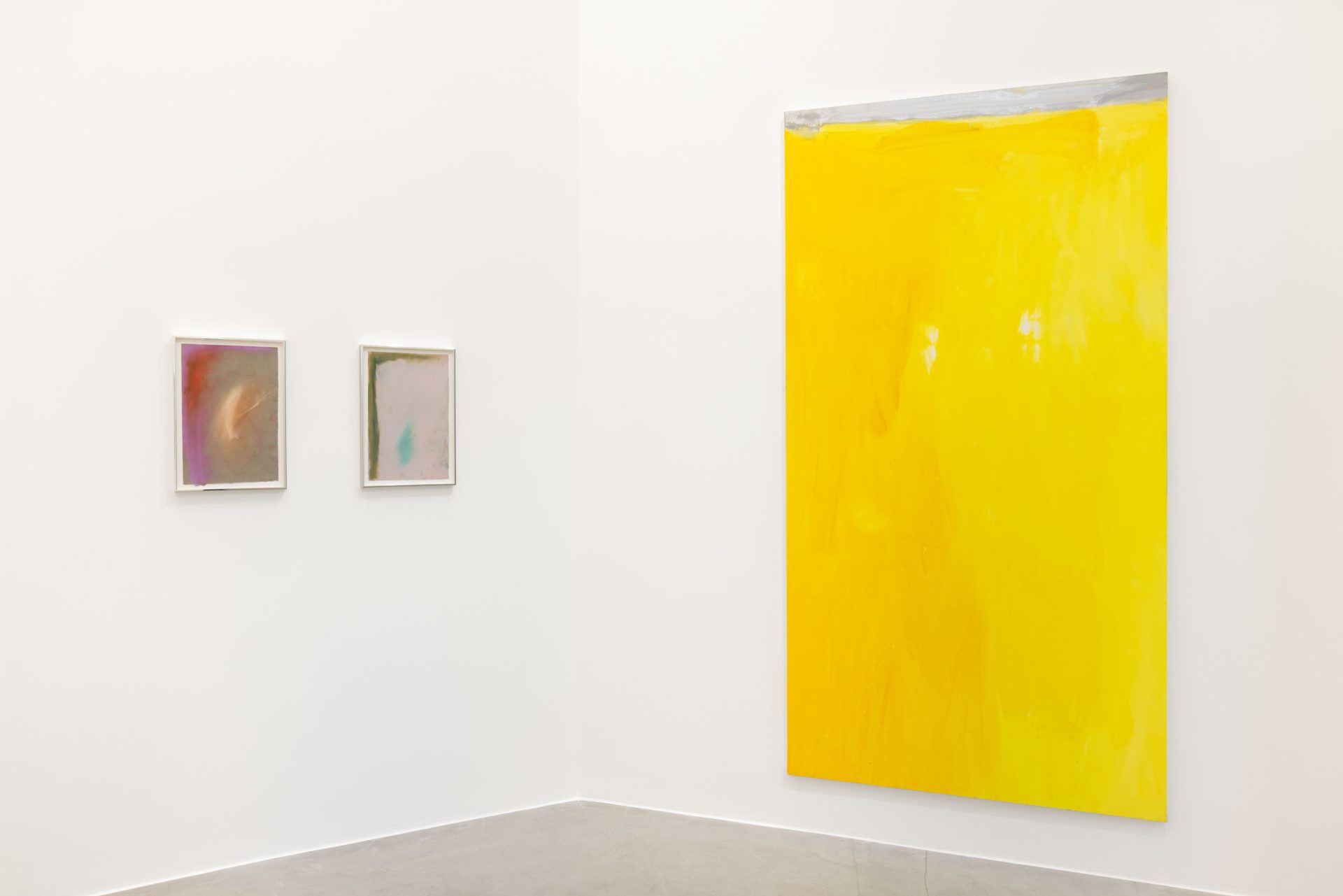
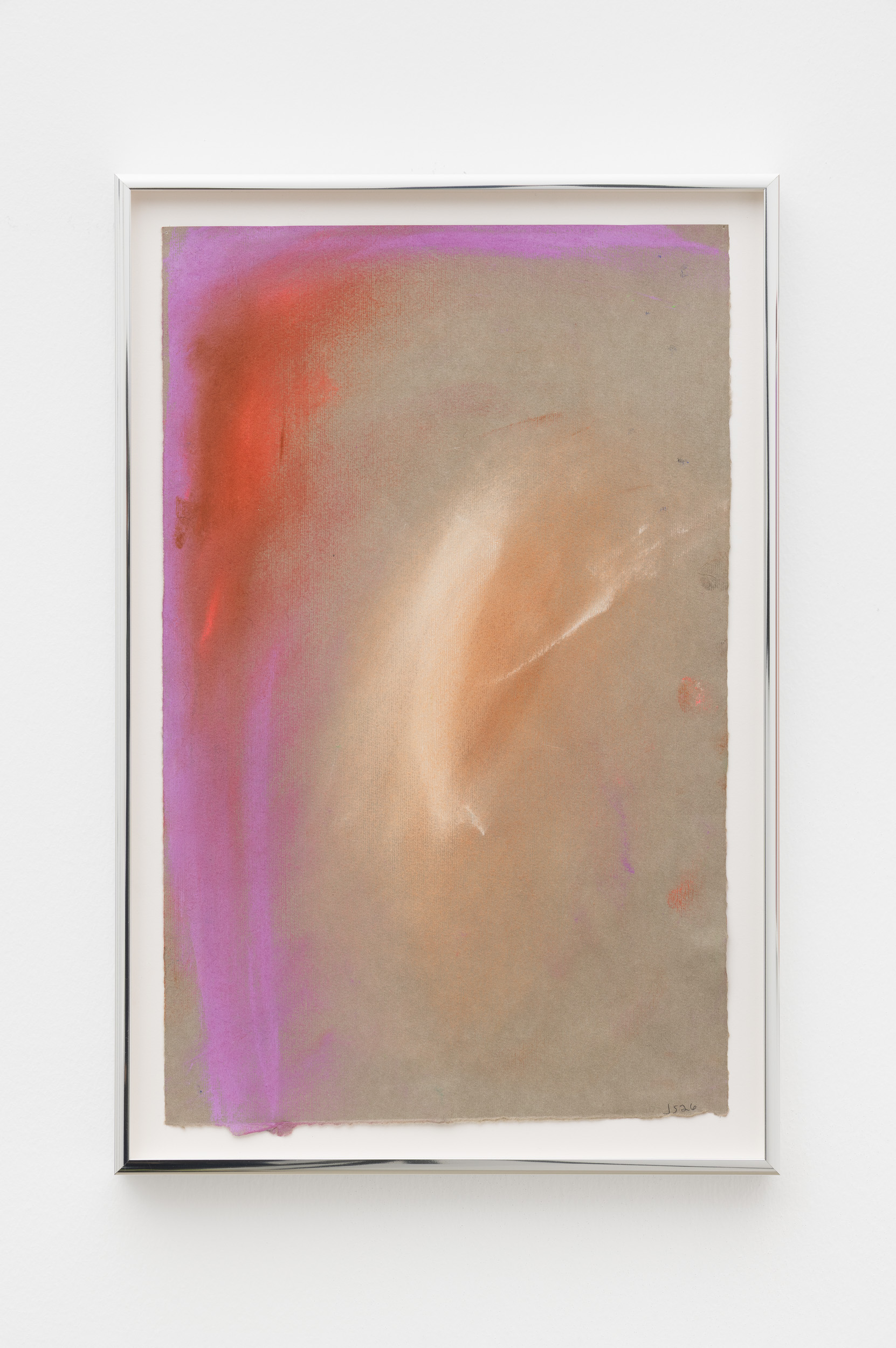
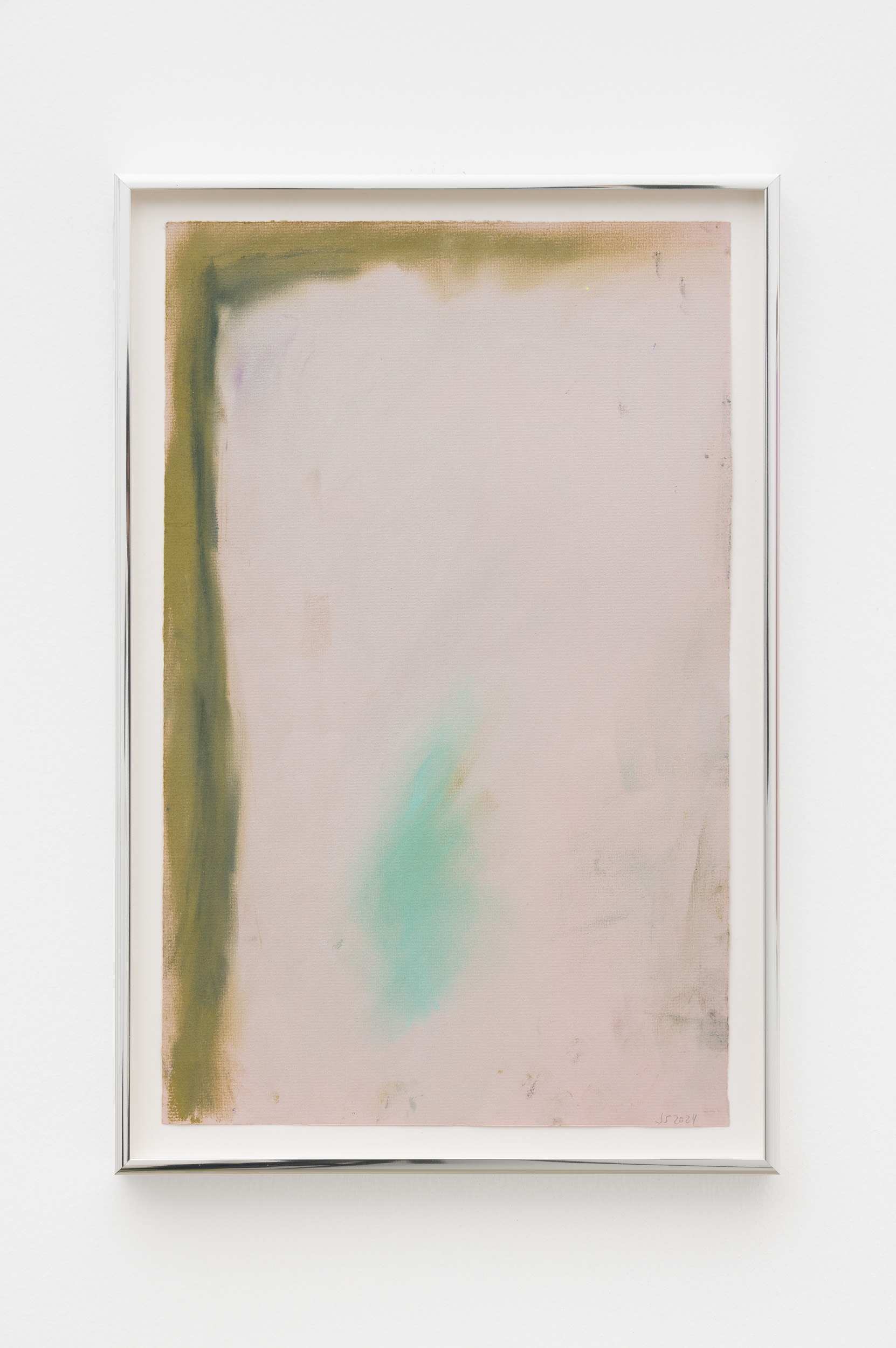
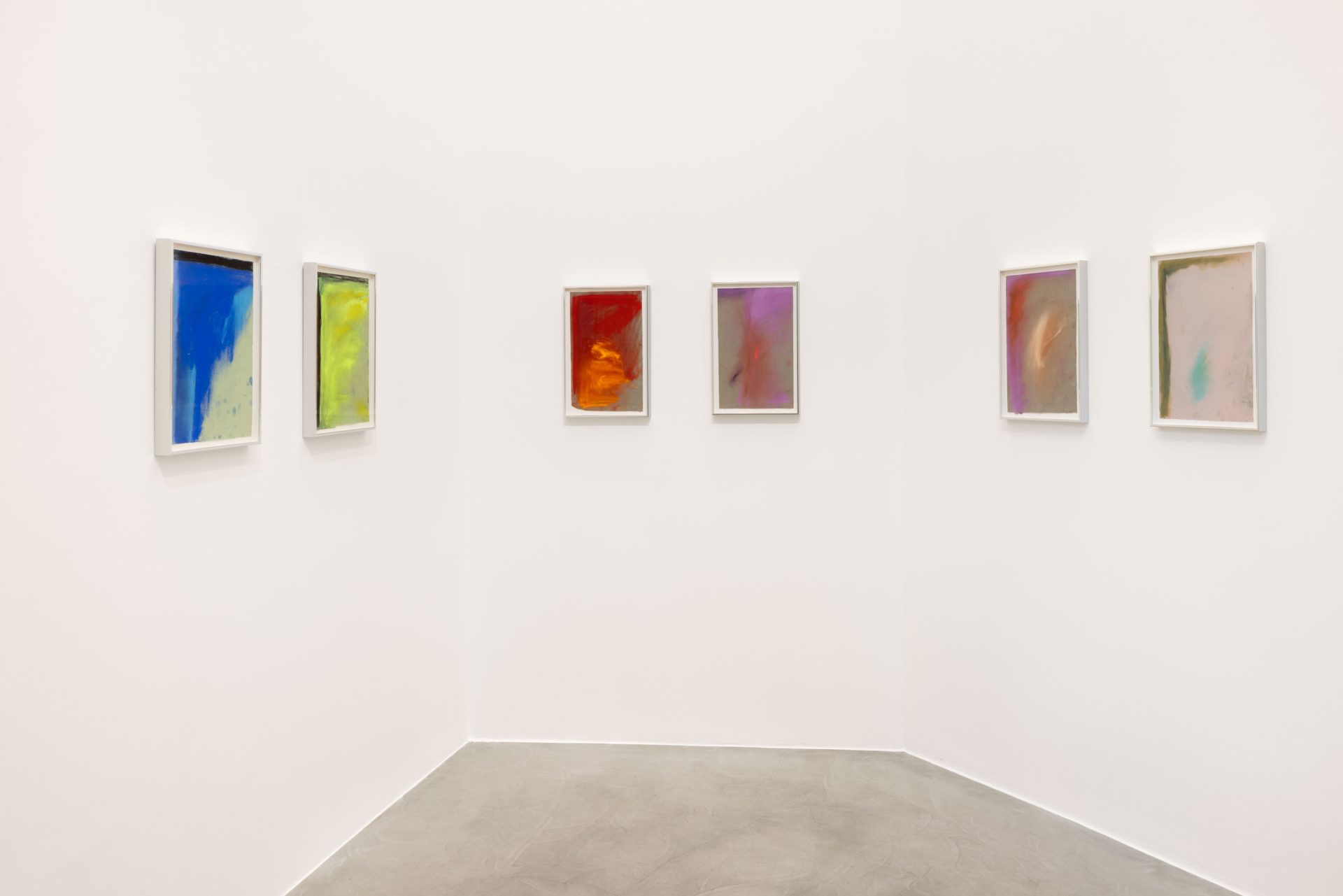
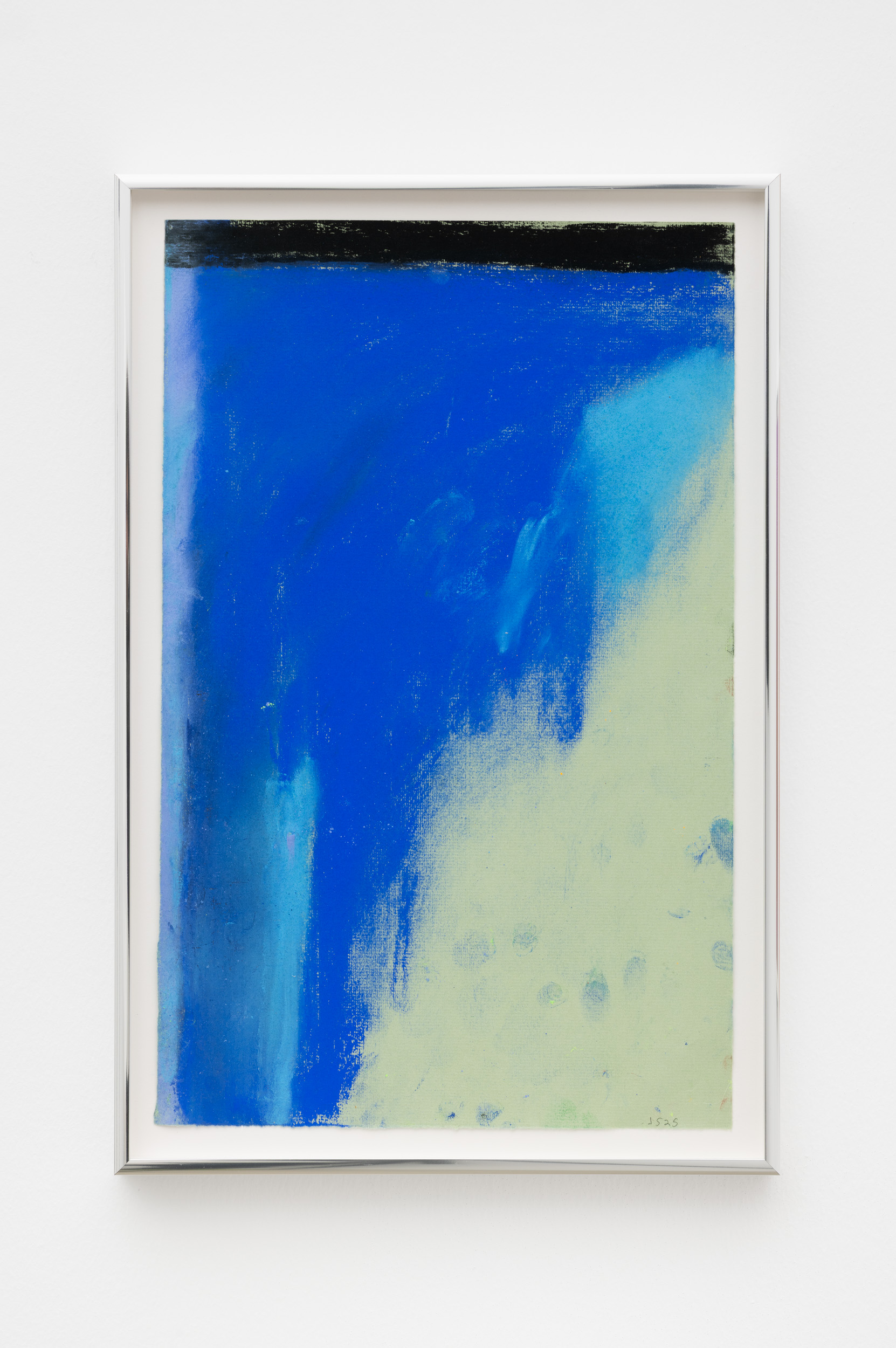
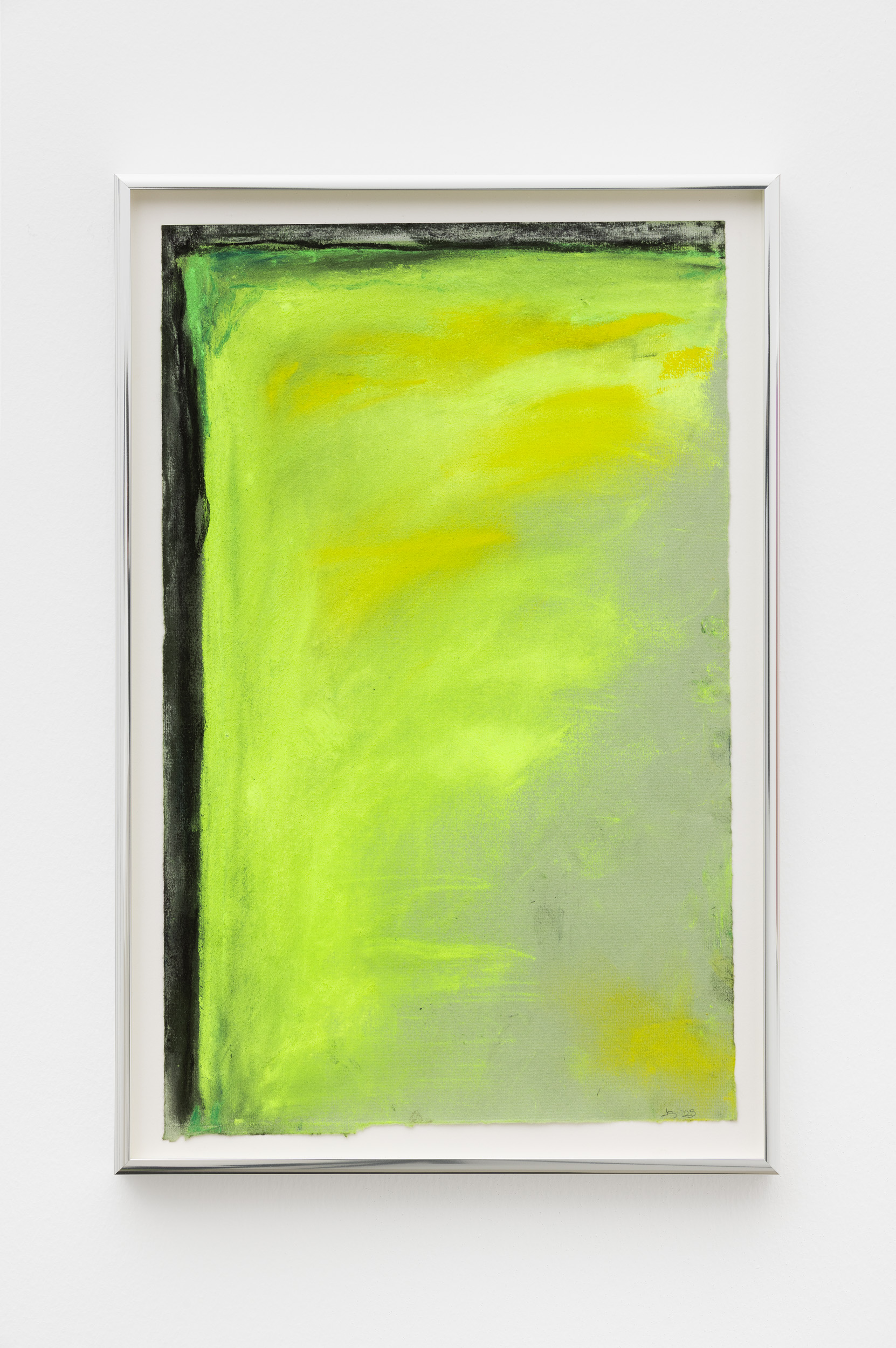
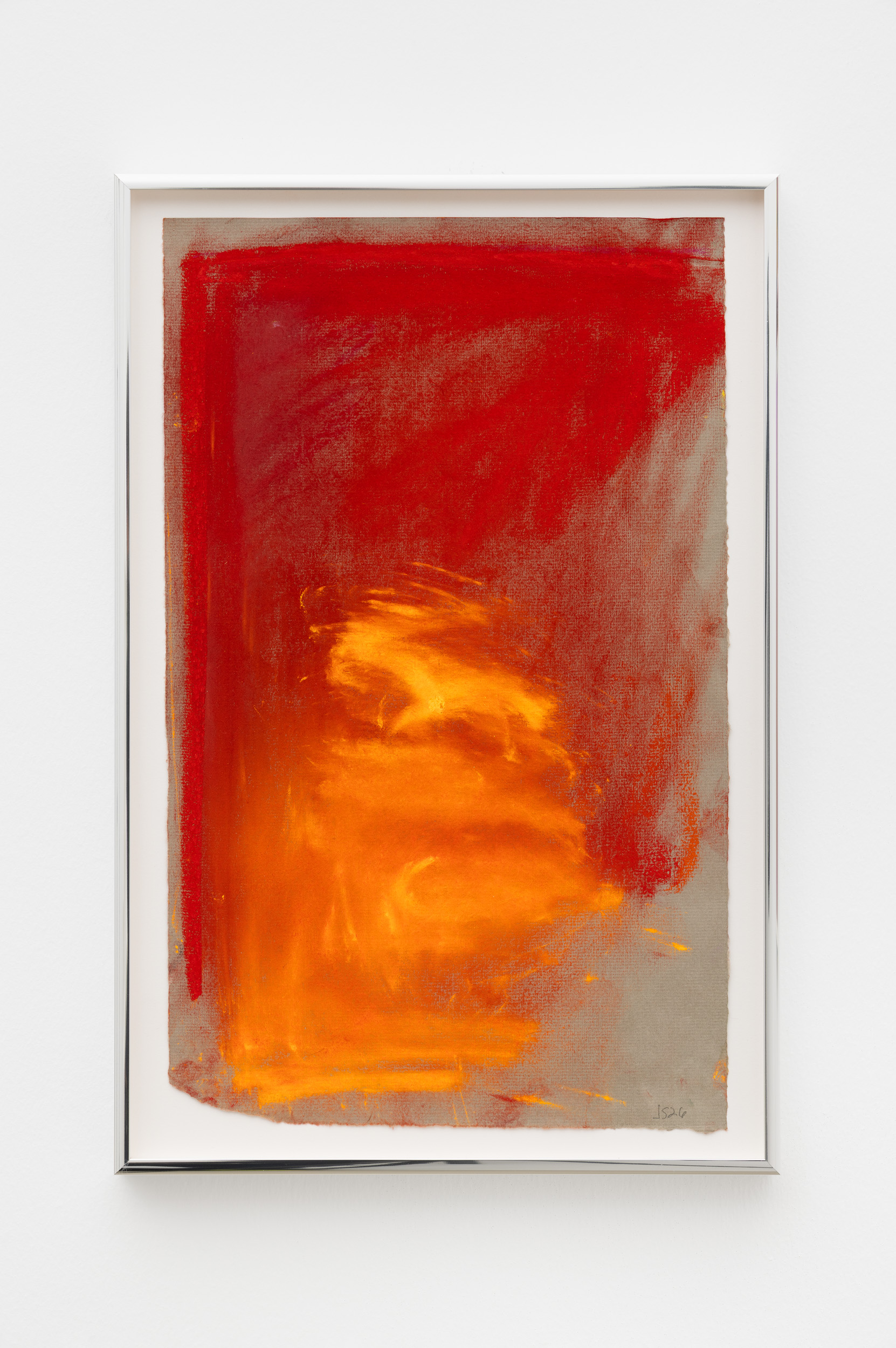
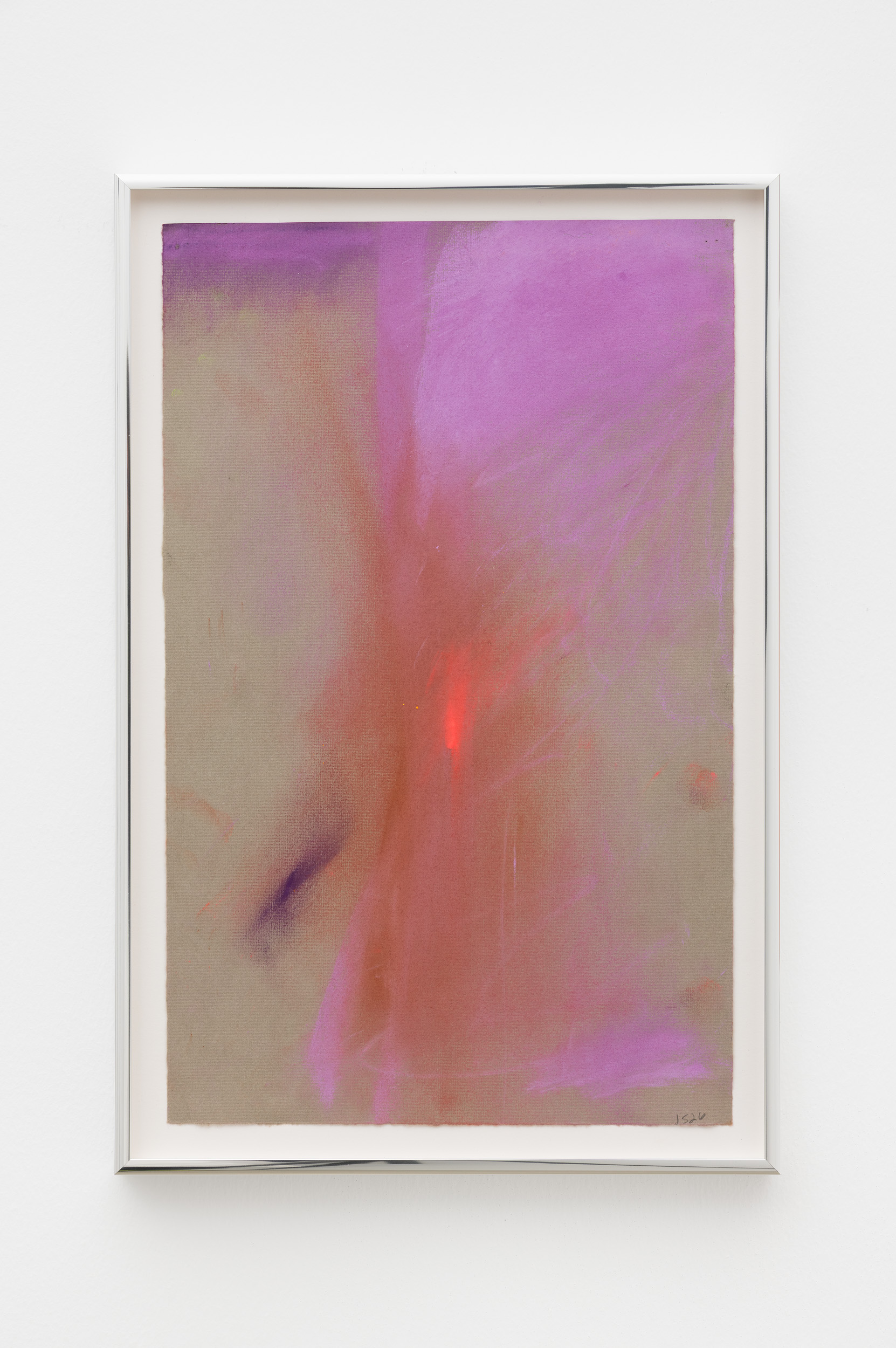
“The paintings point to the history of the medium while remaining firmly rooted in the present. I aim to create a space of light that can shift perception—at once familiar and unfamiliar—exploring the boundary between the conscious and the subconscious (…).”
— Jane Swavely, 2020
“The paintings are reductive but not minimalist. They embrace their objectness, leaving traces of their support and of the history of their making. The act is performative; the medium is the message (…). While they are being made, the painting itself is the subject.”
— Jane Swavely, 2024
I have known Jane Swavely for three years, since Paintings, her first exhibition at Magenta Plains in New York in 2024 — a true revelation. While certainly not her first exhibition overall, it marked an important moment: the first presentation of her work within that specific context, and the beginning of a dialogue that has continued ever since. We became friends shortly thereafter, and during my frequent visits to the city, I often go to see her.
When I enter her studio on the Bowery, Jane doesn’t immediately talk to me about the paintings.
She moves them.
She pushes the large canvases against one another, slides them across the floor, hides behind them only to suddenly reappear, as if the painting were a curtain or a theatrical wing. The relationship is physical, direct, almost choreographic. Jane wears Adidas track pants, a camel sweater, short hair, and bright red lipstick. She is effortlessly elegant. Her body — lean, swift, precise — measures the space as she shifts enormous surfaces dense with color, as if they were lighter than they truly are.
She flips through her work before my eyes, one painting after another.
She doesn’t comment on them: she shows them.
At a certain point, she has me sit on a chair that looks salvaged from the street, perhaps from the 1980s. It is uncomfortable, well-worn, perfectly off-kilter. Behind me is New York. In front of me, her paintings become windows: openings into a world that is not representational but mental — constructed through layers, residues, and restraint.
In that moment, I realize that Jane Swavely’s work does not stem from the idea of an image, but from a corporeal relationship with painting. Her canvases are never detached objects: they are presences that demand to be traversed, moved, and reactivated in space. For her, painting is something encountered with the body even before the gaze.
From this physicality — so concrete, so anti-rhetorical — a practice deeply rooted in American art history takes shape, yet never illustratively. It is a painting attentive to surface, pressure, and perception: one that carries traces of Bay Area light, the structural rigor of Brice Marden, and the tensions articulated by New Image Painting, while ultimately moving toward an increasingly radical engagement with light and color as material conditions rather than expressive devices.
But none of this is ever merely cited.
It is enacted.
The Bowery studio functions as a resonance chamber. The street enters through the glass, the architecture reflects the light, and the city constantly presses upon the interior. Jane paints within this pressure. The paintings absorb this urban energy, hold it, and filter it. They function less as views than as instruments: surfaces that register the condition of being in the city rather than depicting it.
Jane arrived in New York in 1980, bringing with her an education from Boston University and a deep familiarity with California’s Bay Area painting. In those years, artists such as Richard Diebenkorn proposed broad chromatic fields, complex spatial relationships, and an atmospheric approach to structure that left a lasting impression on Jane’s early thinking about painting. Diebenkorn, in particular, informed her understanding of the figure as a mark within a field rather than as a narrative protagonist — an idea she absorbed early through sustained engagement with catalogs and reproductions during her university years. In 1978, even before moving to New York, Jane encountered the landmark exhibition New Image Painting at the Whitney Museum of American Art, which reopened figuration after Minimalism, through reduced, emblematic forms. Artists such as Susan Rothenberg and Neil Jenney proposed a painting in which the figure functioned as a charged sign within a structured field — an approach that resonates with Jane’s understanding of painting as pressure rather than representation.
In 1980s New York, Jane worked as an assistant to Lois Lane, an experience that provided not only technical knowledge — particularly in handling and preparing large-scale canvases — but also an ethical discipline of making. From Lane, she absorbed the idea of a painting sustained by persistence: rigorous in gesture, yet open to emotional tension. Equally formative was her five-year period working with Brice Marden beginning in 1980. Marden offered Jane a structural grammar rather than a stylistic template. With him, painting became a plane: a flat object where surface, support, edge tension, and material decisions carry as much weight as color or mark. These lessons — often transmitted more through posture and practice than instruction — remain embedded in her work today: in the attention to stretcher bars, in compositional restraint, in the silence between one gesture and the next.
Jane’s involvement with A.I.R. Gallery also played a central role. As one of the first feminist artist-run spaces in the United States, A.I.R. functioned for her not merely as an exhibition venue but as a school of positioning. Painting there was understood as a relational act — shaped by dialogue, collective responsibility, and shared listening. This ethical dimension of painting as a communal practice continues to underpin her work. While Henri Matisse was an important reference during Jane’s earlier, more explicitly figurative period, her later work moves decisively elsewhere. Looking back, artists such as Clyfford Still and Barnett Newman — though not central to her thinking at the time — have become increasingly relevant points of reference. Their engagement with scale, chromatic intensity, and the painting as a total field resonates strongly with the direction her work has taken.
A pivotal shift occurred during the Covid period, when Jane began making what she calls her “green screen” paintings. Working constantly within this chromatic condition, the landscape gradually disappeared. Painting became fully abstract — not as a stylistic decision, but as a consequence of sustained looking and prolonged immersion. Color ceased to frame space and instead became space itself.
Alongside this artistic genealogy runs another equally decisive line: Jane’s daily, unmediated relationship with New York, and specifically with the Bowery, which she has inhabited for over forty years. From her lofts — first on Spring Street and later on the Bowery, both with floor-to-ceiling windows — she experienced the city almost at street level, as if inside its continuous flow.
She has witnessed the transformation of the neighborhood: the urban voids of the Eighties, the open light of the Lower East Side before the towers, the construction sites, demolitions, and the arrival of reflective architectures that now bounce and refract light back into the studio. This changing luminosity — no longer diffused but reflected, filtered, and intensified — has directly shaped her most recent paintings.
What makes Jane Swavely’s work so necessary today is precisely this capacity to hold together genealogy and vulnerability, discipline and risk, history and desire. Her paintings do not declare their sources; they activate them. They do not ask to be deciphered, but to be traversed.
– Fabio Cherstich